16.7 C
New York
Tuesday, May 5, 2026
Home Blog Page 201

Nestle fires boss after romantic relationship with employee

0


Nestle has fired its chief executive after just one year in the job because he failed to disclose a “romantic relationship” with a “direct subordinate”.

The Swiss food giant, which makes Kit Kat chocolate bars and Nespresso coffee capsules, said Laurent Freixe has been dimissed with “immediate effect” following an investigation led by Nestle’s chair and lead independent director.

The BBC understands the inquiry was triggered by a report made through the company’s whistleblowing channel.

Nestle chair Paul Bulcke, said: “This was a necessary decision. Nestlé’s values and governance are strong foundations of our company. I thank Laurent for his years of service at Nestlé.”

The relationship was with an employee who is not on the executive board and the investigation began because it represented a conflict of interest, the BBC has learned.

Mr Freixe had been with Nestle for nearly 40 years but stepped up to the global chief executive role last September, replacing Mark Schneider.

Philipp Navratil has been appointed as Mr Freixe’s successor.

Mr Bulcke said the company was “not changing course on strategy and we will not lose pace on performance”.

EU chief jet targeted by alleged Russian GPS jamming

0


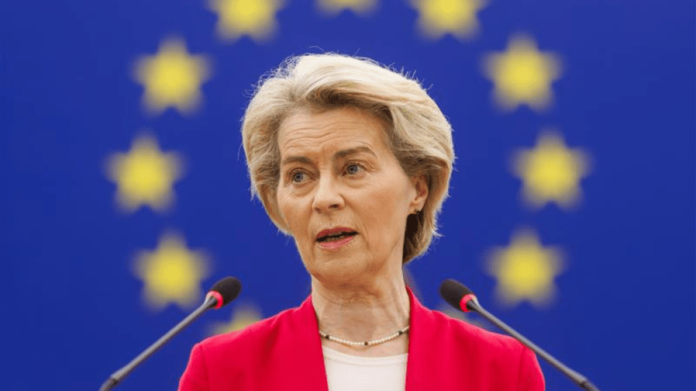
European Commission President Ursula von der Leyen’s plane was hit by GPS jamming in what her spokesperson said was a suspected Russian operation.

Von der Leyen landed safely in Bulgaria and was expected to resume her planned trip to frontline European countries. The pilot on the plane, after circling for the airport for an hour, landed the aircraft manually using paper maps, The Financial Times reported.

“We can confirm there was GPS jamming but the plane landed safe,” a commission spokesperson said in a statement to The Hill’s sister network, NewsNation.

“We have received information from Bulgarian authorities that they suspect this blatant interference was carried out by Russia,” the statement continued. “We are well aware that threats and intimidation are a regular component of Russia’s hostile actions.”

The spokesperson said the suspected Russian attack only reinforces the EU leader’s commitment to Ukraine.

“This will further reinforce our unshakable commitment to ramp up our defence capabilities and support for Ukraine,” the spokesperson said.

“This incident underlines the urgency of the President’s current trip to frontline Member States, where she has seen first hand the every day threats from Russia and its proxies,” the statement continued. “The EU will continue to invest in defence and in Europe’s readiness.”

The Kremlin did not respond to a request for comment.

It’s the latest instance of Russia being accused of interfering with GPS technology. The Associated Press reported that, for months, countries that border Russia have warned of the increasing electronic activity interfering with flights, ships and drones. 

These 4 Dividend Stocks Are Money-Printing Machines

0


  • Coca-Cola has paid nearly $100 billion in dividends over the past 15 years.

  • ExxonMobil returned $36 billion in cash to shareholders last year, the fifth-most among S&P 500 members.

  • Johnson & Johnson generated $20 billion in free cash flow last year, easily covering its dividend outlay.

  • 10 stocks we like better than Coca-Cola ›

Some companies excel at generating cash. They operate mature businesses that produce significantly more profit than they need to support their continued expansion. That gives them lots of money to pay dividends.

Here are four top money-printing dividend stocks.

A money-printing machine.
Image source: Getty Images.

Coca-Cola (NYSE: KO) owns an iconic portfolio of soft drinks, water, teas, and other beverage brands that generate substantial cash. Last year, the company produced $10.8 billion in free cash flow, $8.5 billion of which it paid out in dividends. Over the last 15 years, it has distributed nearly $100 billion in cash dividends to shareholders.

The company’s durable and growing cash flows have enabled it to steadily increase its dividend payment. Coca-Cola raised it by 5.2% earlier this year, the 63rd straight year it has increased its payout. That puts the beverage giant in the elite group of Dividend Kings, companies with at least 50 years of consecutive annual dividend increases.

The company expects to produce even more cash in the future. Its long-term target is to organically grow its revenue by 4% to 6% annually, which should drive annual growth in earnings per share in the mid to high single digits. Coca-Cola plans to convert 90% to 95% of its growing earnings into free cash flow, which should support continued dividend increases.

ExxonMobil (NYSE: XOM) runs a large-scale global energy business that consistently produces significant cash flows. Last year, Exxon generated $55 billion in cash flow from operations, marking its third-best year in a decade, even though oil and gas prices were around their historical averages.

The company produced $36.2 billion in free cash flow and returned $36 billion to shareholders via dividends ($16.7 billion) and share repurchases ($19.3 billion). Those cash returns led the oil sector and ranked as the fifth-highest among S&P 500 companies.

The oil giant expects to invest $165 billion into major growth projects and its Permian Basin development program through 2030. These high-return investments should grow its annualized cash flows by $30 billion by 2030, assuming stable oil prices.

That has it on pace to produce a huge gusher of $165 billion in cumulative surplus cash over the next five years, which should support continued payout increases. With 42 straight years of dividend growth, Exxon has reached a level that only 4% of companies in the S&P 500 have achieved.

All of the deals on transfer deadline day in one place

0


Check out the significant signings and departures in the Premier League, Scottish Premiership, EFL and Women’s Super League.

Where in the US can you see the northern lights tonight for Labor Day?

0


(NEXSTAR) – There’s a good chance many states in the northern part of the U.S. will catch a glimpse of the northern lights to round out the holiday weekend.

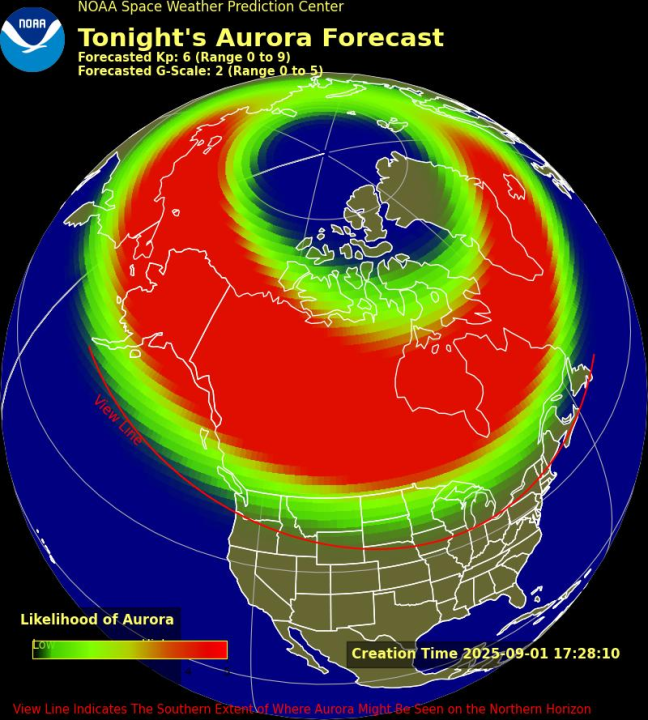
According to the National Weather Service, a coronal mass ejection (CME) erupted from the sun over the weekend and will give roughly 18 states a chance at catching one of the best displays of the aurora borealis since the spring.

The CME is expected to impact Earth between Monday night and Tuesday morning, with models suggesting geomagnetic storms to range between G2 and G3 storms, according to the NOAA. They are also forecasting a 6 on the KP Index (a measure of geomagnetic activity that ranges from 0 to 9) for Monday night.

(Credit: NOAA)

The following states will have the best shot, pending local weather, at catching a glimpse of the northern lights tonight: Alaska, Montana, North Dakota, Minnesota, Wisconsin, Michigan, Maine, South Dakota, Vermont, New Hampshire, Idaho, Washington, Oregon, New York, Wyoming, Iowa, Nebraska, and Illinois.

To learn more about the northern lights and if your area will be able to see them tonight, check out the NOAA’s website.

How AI will shape 4 investment banking careers, from ECM to trading

0


Woman using AI tools to simulate market predictions
Artificial intelligence will impact workflows in mergers, debt, equity, and trading in the next five years in specific ways, according to a new report.primeimages/Getty Images
  • AI may be responsible for up to a third of investment banking tasks by 2030, a report found.

  • But the impact will vary across roles, from equity capital markets to trading and M&A.

  • Here’s how AI could reshape 4 different investment banking career paths.

Everyone says artificial intelligence will change the way we work. But on Wall Street, where investment banking jobs range from high-touch dealmaking to split-second trading, what will that actually look like? And who’s most at risk?

Each role in financial services will be impacted differently as AI spreads through the industry, a process that’s well underway. JPMorgan and Citi have rolled out in-depth AI strategies; Goldman Sachs has made its AI chatbot sidekick available firmwide.

Business Insider spoke to Sumeet Chabria, a former Bank of America executive turned founder of consultancy ThoughtLinks, whose firm recently produced a report forecasting precisely which tasks in the investment banking world will be overtaken by AI, and what humans will be doing.

Sumeet Chabria
Sumeet Chabria, founder and CEO of ThoughtLinks.Courtesy of Sumeet Chabria/ThoughtLinks

He offered detailed case studies covering four specific areas: M&A, sales and trading, equity underwriting, and debt underwriting — for each one, breaking down the roles AI will likely to overtake, and where humans will remain indispensable.

Chabria’s research predicts that AI could transform as much as 33% of IB workflows by 2030, meaning it will handle everything from data analysis and document drafting to simulating market scenarios. Here’s a look at how the dynamic between people and the machines will play out for four specific Wall Street career tracks by 2030.


M&A bankers will review potential risks, provide important context, and take the lead on final due diligence — especially in complex areas like tax, reputation, and integration planning, where human judgment is essential. They’ll continue shaping deal strategy, advising clients, and leading negotiations.

  • AI agents will work around the clock scanning public/private data, news, and CRM platforms to identify strategic targets.

  • AI will flag operational, market, and geopolitical risks, delivering summarized insights to deal teams.


Lead ECM bankers will still oversee bookbuilding in real time, step in to adjust investor allocations when needed, and handle negotiations with key investors. They will also remain in charge of taking deals live, how a company’s story is told, and getting sign-off from company leadership. Even with advanced models, understanding investor mood and managing tricky company situations will require human judgment and experience.

Keir Starmer backs Angela Rayner over Hove flat row

0


Becky MortonPolitical reporter

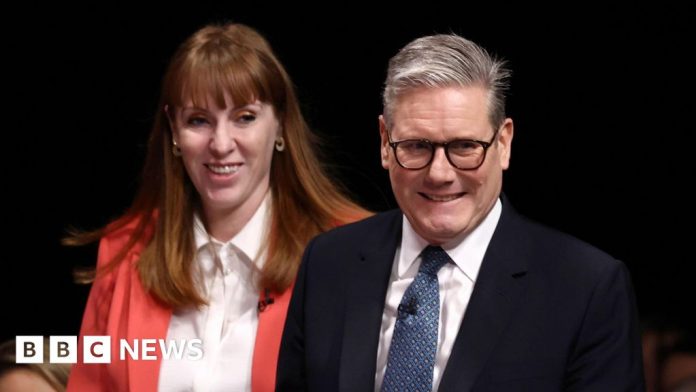
Getty Images Angela Rayner and Sir Keir Starmer pictured ahead of a speech in Buckinghamshire in 2024Getty Images

Prime Minister Sir Keir Starmer has backed his deputy Angela Rayner, as she continues to face Tory criticism over the purchase of a flat in Hove.

The Daily Telegraph reported she saved £40,000 in stamp duty when buying the £800,000 flat in East Sussex, after allegedly telling tax authorities it was her main home.

However, she told the local council it was her second home – and pays a higher level of council tax there as a result.

There is no suggestion she has broken any laws, but the Tories have accused her of hypocrisy and called for an investigation by the PM’s standards adviser.

Sir Keir told the BBC he was “proud” of his deputy and that “talking her down” was “a big mistake”.

A spokesperson for Rayner previously said she paid “the relevant duty” owed on the Hove property “entirely properly”.

Asked earlier if Sir Keir had confidence in his deputy, the PM’s official spokesman told reporters: “Yes, the prime minister works closely with the deputy prime minister… on delivering on the public’s priorities.

“There is a court order which restricts her from providing further information, which she’s urgently working on rectifying in the interests of public transparency.”

In recent weeks, Rayner has faced negative newspaper stories about her housing and tax affairs.

In an interview with BBC Radio 5 Live’s Matt Chorley, Sir Keir was asked if Rayner was the victim of a sexist and classist “briefing war”, as some of her allies have claimed, or whether she has questions to answer.

Defending his deputy, the PM said: “Angela came from a very humble background, battled all sorts of challenges along the way, and there she is proudly – and I’m proud of her – as our deputy prime minister.”

He described her as a “great story of British success”, saying she gave working-class children “a real sense of aspiration”.

Sir Keir added: “Angela has had people briefing against her and talking her down over and over again. It’s a mistake, by the way.”

Allies of Rayner have said her “primary residence” for council tax purposes remains her family home in her Greater Manchester constituency of Ashton-under-Lyne, Tameside, but that following her divorce she ceased to own a stake in the property.

This meant she was able to avoid the higher rate of stamp duty that would have been applicable when buying the Hove flat if it had been classed as a second home, the Telegraph reported.

She paid £30,000 in stamp duty on the £800,000 flat in Hove, instead of £70,000, according to the newspaper.

Stamp duty is a tax paid when buying a property over a certain price in England and Northern Ireland, with the rate varying depending on how many properties someone owns.

In last autumn’s Budget, the government increased the additional rate of stamp duty when buying a second home to 5%, on top of the standard rate.

The Conservatives have called for the prime minister’s independent standards adviser to investigate whether Rayner broke ministerial rules.

The party accused her of “hypocritical tax avoidance”, while supporting higher taxes on second homes.

As secretary of state for housing, communities and local government, Rayner is responsible for council tax and housing policy.

Conservative leader Kemi Badenoch said: “I think people would appreciate clarity from Angela Rayner.

“I don’t know the details of the house purchases, but the reason why people are asking, as they have been in my constituency, is that they’re worried about hypocrisy.”

The Tories have claimed the deputy PM had breached the Ministerial Code because “her tax affairs are not in good order”.

Under the rules, ministers are asked to confirm their tax affairs are up to date and consistent with their overarching duty to comply with the law.

A spokesperson for Rayner previously said: “The deputy prime minister paid the relevant duty owing on the purchase of the Hove property in line with relevant requirements and entirely properly, any suggestion otherwise is entirely without basis.”

The Tories are also questioning whether Rayner’s grace-and-favour flat in Admiralty House in central London is actually her main home, where she spends most of her time as a minister, and have called for her to cover the council tax bill there.

Rayner is entitled to use the flat due to her role as deputy prime minister.

The Ministerial Code states that where a minister is given an official residence, they must personally pay any council tax.

However, the Cabinet Office has previously said that where a minister occupies an official residence as a second home, the relevant government department pays the council tax for the property.

It said this had been the case “for successive administrations”.

The BBC has approached the Cabinet Office and Rayner’s team for a response to the Conservatives calling for her to pay the council tax for the Admiralty House flat.

Thin, red banner promoting the Politics Essential newsletter with text saying, “Top political analysis in your inbox every day”. There is also an image of the Houses of Parliament.

A downturn in international travel to US may last beyond summer, experts warn

0


LAS VEGAS (AP) — For a few hopeful weeks this summer, a bright billboard on the major highway linking Toronto to New York greeted Canadian drivers with a simple message: “Buffalo Loves Canada.”

The marketing campaign, which included a $500 gift card giveaway, was meant to show Buffalo’s northern neighbors they were welcome, wanted and missed.

At first, it seemed like it might work, said Patrick Kaler, CEO of the local tourism organization Visit Buffalo Niagara. More than 1,000 people entered the giveaway. But by the end of July, it was clear the city’s reliable summer wave of Canadian visitors would not arrive this year.

Buffalo’s struggle reflects a broader downturn in international tourism to the U.S. that travel analysts warn could persist well into the future. From northern border towns to major hot spots like Las Vegas and Los Angeles, popular travel destinations reported hosting fewer foreign visitors this summer.

Experts and some local officials attribute the trend that first emerged this winter to President Trump’s return to the White House. They say his tariffs, immigration crackdown and repeated jabs about the U.S. acquiring Canada and Greenland alienated travelers from other parts of the world.

“To see the traffic drop off so significantly, especially because of rhetoric that can be changed, is so disheartening,” Kaler said.

Forecasts show US losing foreign travelers

The World Travel & Tourism Council projected ahead of Memorial Day that the U.S. would be the only country among the 184 it studied where foreign visitor spending would fall in 2025. The finding was “a clear indicator that the global appeal of the U.S. is slipping,” the global industry association said.

“The world’s biggest travel and tourism economy is heading in the wrong direction,” Julia Simpson, the council’s president and CEO, said. “While other nations are rolling out the welcome mat, the U.S. government is putting up the ‘closed’ sign.”

Travel research firm Tourism Economics, meanwhile, predicted this month that the U.S. would see 8.2 percent fewer international arrivals in 2025, an improvement from its earlier forecast of a 9.4% decline but well below the numbers of foreign visitors to the country before the COVID-19 pandemic.

“The sentiment drag has proven to be severe,” the firm said, noting that airline bookings indicate “the sharp inbound travel slowdown” of May, June and July would likely persist in the months ahead.

Deborah Friedland, managing director at the financial services firm Eisner Advisory Group, said he U.S. travel industry faced multiple headwinds — rising travel costs, political uncertainty and ongoing geopolitical tensions.

Since returning to office, Trump has doubled down on some of the hard-line policies that defined his first term, reviving a travel ban targeting mainly African and Middle Eastern countries, tightening rules around visa approvals and ramping up mass immigration raids. At the same time, the push for tariffs on foreign goods that quickly became a defining feature of his second term gave some citizens elsewhere a sense they were unwanted.

“Perception is reality,” Friedland said.

International arrivals down from Western Europe, Asia and Africa

Organizers of an international swing dancing said an impression of America’s hostility to foreigners led them to postpone the event, which had been scheduled to take place this month in the Harlem area of New York City.

About three months into Trump’s second term, international competitors began pulling out of the world finals of the International Lindy Hop Championships, saying they felt unwelcome, event co-producer Tena Morales said. About half of attendees each year come from outside the U.S., primarily from Canada and France, she said.

Contest organizers are considering whether to host the annual competition in another country until Trump’s presidency ends, Morales said.

“The climate is still the same and what we’re hearing is still the same, that (dancers) don’t want to come here,” she said.

The nation’s capital, where the Trump administration in recent weeks deployed National Guard members and took over management of Union Station, also has noticed an impact.

Local tourism officials have projected a 5.1 percent dip in international visitors for the year. Marketing organization Destination DC said last week it planned to “counter negative rhetoric” about the city with a campaign that would feature residents and highlight the “more personal side” of Washington.

U.S. government data confirms an overall drop-off in international arrivals during the first seven months of the year. The number of overseas visitors, a category that doesn’t include travelers from Mexico or Canada, declined by more than 3 million, or 1.6 percent, compared to the same period a year earlier, according to preliminary figures from the National Travel and Tourism Office.

As a tourist generator, Western Europe was down 2.3 percent, with visitors from Denmark dropping by 19 percent, from Germany by 10 percent, and from France by 6.6 percent. A similar pattern surfaced in Asia, where the U.S. data showed double-digit decreases in arrivals from Hong Kong, Indonesia and the Philippines. Fewer residents of countries throughout Africa also had traveled to the U.S. as of July.

However, visitors from some countries, among them Argentina, Brazil, Italy and Japan, have arrived in greater numbers.

Filling a void left by Canadian tourists

Neither did all U.S. destinations report sluggish summers for tourism.

On eastern Wisconsin’s Door Peninsula, which straddles Lake Michigan and Green Bay, a steady stream of loyal Midwest visitors helped deliver a strong summer for local businesses, according to Jon Jarosh, a spokesperson for Destination Door County.

Many business owners reported a noticeable uptick in foot traffic after a quieter start to the season, Jarosh said, and sidewalks were bustling and restaurants were packed by midsummer.

Executives from the major U.S. airlines said last month that American passengers booking premium airfares helped fill their international flights and that demand for domestic flights was picking up after a weaker than expected showing in the first half of 2025.

The Federal Aviation Administration said it was gearing up for what is expected to be the busiest Labor Day weekend in 15 years. Bookings for U.S. airlines were up about 2 percent compared to 2024 for the long holiday weekend that started Thursday, aviation analytics firm Cirium said.

As the summer winds down, though, the absence of foreign visitors in Buffalo was still visible, according to Kaler, the head of Visit Buffalo Niagara.

Canada sent over 20.2 million visitors to the U.S. last year, more than any other country, U.S. government data showed. But this year, residents of Canada have been among the most reluctant to visit.

In a major U-turn, more U.S. residents drove into Canada in June and July than Canadians making the reverse trip, according to Canada’s national statistical agency. Statistics Canada said it was the first time that happened in nearly two decades, with the exception of two months during the pandemic.

In July alone, the number of Canadian residents returning from the U.S. by car was down 37 percent from the year before, and return trips by plane fell 26 percent, the agency said.

As a result, Visit Buffalo Niagara shifted its marketing efforts this summer to cities like Boston, Philadelphia and Chicago. Amateur children’s sporting events also helped fill the void left by Canadian tourists.

“We will always welcome Canadians back when the time is right,” Kaler said. “I don’t want Canadians to feel like we see them as just dollar signs or a transaction at our cash registers. They mean more to us that that.”

CapVest to buy control of generics giant Stada in €10bn deal

0


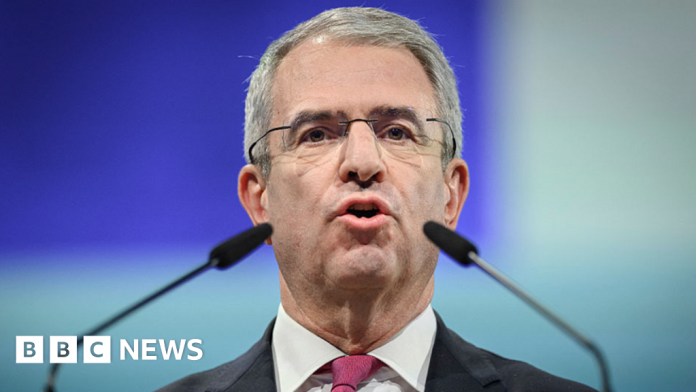
CapVest Partners has agreed to purchase a majority stake in German generics manufacturer Stada Arzneimittel, marking one of the largest deals in the healthcare sector this year.

Takeover company CapVest, which has around €12bn ($14bn) of assets under management, will purchase Stada from private equity owners, Bain Capital and Cinven, both of whom will keep a minority holding after the transaction, as per a 1 September statement.

Financial terms of the deal were not disclosed, though Reuters reported that the stake being sold is 70%, with a valuation of Stada asserted at about €10bn ($11.7bn). The transaction is expected to be completed in early 2026.

Bain Capital and Cinven bought Stada for €5.3bn in 2017 in a deal that delisted the pharma company from the Frankfurt stock exchange, along with placing one of Europe’s largest generics manufacturers into private control.

Buoyed by strong growth across its consumer healthcare division, generic drugs segment, and speciality medication portfolio, Bain and Cinven mulled a sale for the company in 2023.

Amid a tepid mergers and acquisitions (M&A) landscape, the strategy switched to an initial public offering (IPO). However, this too was pivoted away from amid market volatility, finally leading to a discussion with takeover firm CapVest.

Approximately 40% of Stada’s revenues are generated from its consumer health products, which include cough and cold products, dermatology drugs, and painkillers. Generics contribute another 40% to Strada’s revenue streams, which come from more than 100 countries.

According to CapVest, since 2017, Stada generated revenues in excess of €4bn, delivering a compound annual net sales growth rate of 9%, and more than doubling earnings before interest, taxes, depreciation, and amortisation (EBITDA). The firm currently employs approximately 11,600 people worldwide.

Matthew Fargie of CapVest said: “We have admired Stada for several years… Stada is a unique strategic platform through which we will leverage our significant healthcare and consumer expertise to accelerate the development of the company in Germany and internationally. We intend to deploy significant new capital towards this objective.”

A recent report by GlobalData projects that the share of global drug sales under patent protection will decline by 2030, representing a boost to the generics and biosimilars markets. Only 4% of global drugs will have patent protection, compared to 12% and 6% in 2022 and 2024, respectively.

Trade channels for generics have been an ongoing discussion point in the pharma industry this year amid US President Trump’s tariffs. The US administration has been seeking efforts to decrease reliance on imported drugs, though Trump stated that certain generics will be exempt from levies, such as the 15% blanket rate agreed with Europe.

Navigate the shifting tariff landscape with real-time data and market-leading analysis. Request a free demo for GlobalData’s Strategic Intelligence here.

“CapVest to buy control of generics giant Stada in €10bn deal” was originally created and published by Pharmaceutical Technology, a GlobalData owned brand.


The information on this site has been included in good faith for general informational purposes only. It is not intended to amount to advice on which you should rely, and we give no representation, warranty or guarantee, whether express or implied as to its accuracy or completeness. You must obtain professional or specialist advice before taking, or refraining from, any action on the basis of the content on our site.

Boy, 13, arrested after Logan Carter, 12, dies in roundabout fall

0


Jonny HumphriesBBC News, Cheshire

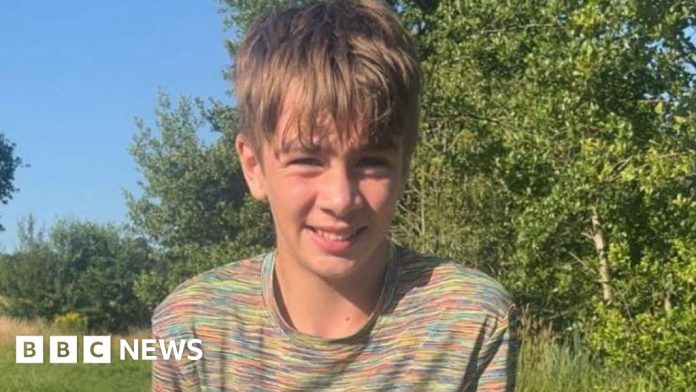
Family handout Logan Carter smiles for the camera in front of a backdrop of trees. He has blond hair and is wearing a stripy multi-coloured top.Family handout

Logan Carter, 12, was described by his family as “everyone’s therapy person”

A 13-year-old boy has been arrested after a 12-year-old boy fatally fell from a roundabout in a playground.

Cheshire Police believe Logan Carter died after the wheels of an e-bike were used to propel the roundabout in the park in Winsford on Friday.

The boy was arrested on suspicion of causing death by dangerous driving and has been released under investigation.

The roundabout has been covered with red and white tape while flowers and other tributes have been left nearby.

Logan died at the scene of the incident at the Wharton Recreation Ground, off Ledward Street, at about 18:00 BST.

The teenage suspect was arrested later that evening, police added.

A green and yellow children's roundabout encircled with red and white tape. In the distance flowers and balloons can be seen lying at the base of a tree.

Police said they were looking into suggestions an e-bike was used to propel the roundabout

Cheshire Police said it was exploring a “number of lines of inquiry” into what had happened.

A force spokesperson said: “As part of this, officers are exploring reports that an e-bike was used to propel a children’s roundabout in the park at around the time of the incident occurring.”

People in the town told the BBC the community was “in shock”.

Throughout the day mourners, including staff from Logan’s school, visited the playground to lay flowers and cards.

Trevor Bell, 64, said Logan would often give his dog a stroke while he was out walking in the park, adding that he seemed a “real lovely lad”.

Mr Bell said: “He’s just a happy-go-lucky little lad and it’s a tragedy, it really is.

“It shook everyone up here.

“Everywhere’s gone quiet. You know, I think we’re all still in a bit of a shock, actually.”

Bunches of flowers, cards, a white football, and a Liverpool FC football shirt surround the base of a tree in a park.

Tributes for Logan were left at the scene by local people

In a statement issued via Cheshire Police on Sunday, Logan’s family said he “made every day worth living”.

They added: “He had an infectious personality and a beautiful smile.

“Everyone wanted to be where Logan was. He was a little boy who was so full of life and wanted to make everyone laugh.”

His family described him as “everyone’s therapy person” who “will be missed more than we can ever put into words”.

“We are taking comfort from the words of support we have received whilst we take time to come to terms with the untimely loss of our blue-eyed boy,” they added.