18.4 C
New York
Sunday, May 10, 2026
Home Blog Page 270

5 things to know about California's special election on redistricting

0


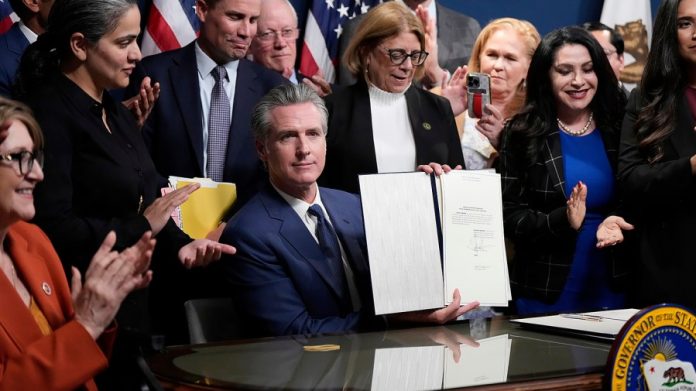
California will ask voters this fall to decide whether to redraw this state’s congressional lines after its Democratic-controlled Legislature formally approved a sweeping redistricting plan on Thursday, a response to GOP-led efforts in Texas. 

The plan, if voters give it the green light, could give Democrats five additional House seats, potentially nullifying the gains Republicans hope to get through Texas redistricting.

Here are five things to know about the Golden State’s redistricting plan:

What does the ballot measure say?

The measure approved by the state legislature is set to go on a November special election ballot as Proposition 50, a proposed constitutional amendment named for the 50 states. 

Prop 50 would, if approved by California voters in November, allow for the adoption of new congressional maps that were laid out in a separate bill passed by the legislature, aiming to create five Democratic pickup opportunities. 

The current districts, drawn by the citizens redistricting commission after the last census, would be bypassed until the commission draws new boundary lines in 2031. 

The text of the amendment proposal cites President Trump’s call for Republican-led states “to undertake an unprecedented mid-decade redistricting of congressional seats to rig the 2026 United States midterm elections before voting begins,” pointing out efforts in Texas, Florida, Ohio and elsewhere. 

“It is the intent of the people that California’s temporary maps be designed to neutralize the partisan gerrymandering being threatened by Republican-led states without eroding fair representation for all communities,” the resolution section reads. 

How much support is there for redistricting?

Democratic leaders in and out of California have rallied support behind the redistricting effort.

Still, Newsom and Golden State Democrats will likely have to campaign to make sure the measure gets the majority vote it needs to pass. 

California’s independent redistricting commission, which typically redraws lines once a decade, was a popular move — and experts predict voters will need clear assurances that bypassing it is temporary. 

A Politico-Citrin Center-Possibility Lab survey taken earlier this month found that just 36 percent of California voters support returning congressional redistricting authority to the state legislature, compared to 64 percent who back the independent redistricting commission — though the poll question notably didn’t specify whether such a change would be temporary. 

But a POLITICO-UC Berkeley Citrin Center survey conducted last week found that while 70 percent of Democratic voters across the country think gerrymandering is “never acceptable,” 63 percent majority think California should nevertheless “fight back” against efforts in red states.

Despite bypassing its citizen commission for the temporary redistricting, the proposed measure text itself acknowledges that it’s California policy “to support the use of fair, independent, and nonpartisan redistricting commissions nationwide” and calls on Congress to pass federal legislation for a U.S. Constitutional amendment that requires the system nationwide. 

Which Republicans will be affected by the new maps?

California’s map proposal would give Democrats a chance at five more House seats in the Golden State, where they already hold 43 of 52 slots. 

Rep. Kevin Kiley (R), who has proposed federal legislation that would ban mid-decade redistricting nationwide, would be one of the lawmakers most impacted. Kiley on Thursday claimed he was “the No. 1 target” and challenged Newsom to a debate “on the merits of his proposal.” 

Rep. Doug LaMalfa’s (R) seat would jump from a district Trump won by double digits to one that would have gone to former Vice President Harris by more than 10 points, according to Cook Political Report. Rep. Ken Calvert’s (R) seat would be effectively replaced by a new Latino-majority seat in central Los Angeles County that could make for a strong Democratic pickup opportunity. 

Republican Reps. Darrel Issa and David Valadao would also be drawn into more competitive districts, though election analysts suggest both seats could still be tough for Democrats to flip. 

Meanwhile, Democrats who saw tough fights in 2024 could get a boost for the midterms with safer lines.

Republicans hold a slim 219-212 majority in the House, and control of Congress could come down to just a few seats next November. 

When and for how long would the maps take effect?

If voters approve the maps in the special election, they’ll take effect ahead of next year’s high-stakes midterms and hold through the ’26, ’28 and ’30 elections. 

The maps, proposed in part by the Democrats’ House campaign arm, will effectively circumvent the independent redistricting commission until the end of the decade. After 2030, the power to redistrict would revert back to the independent commission, and the Golden State would resume redrawing its lines once a decade, in line with the U.S. Census. 

Advocates for the redistricting plan have stressed that it’s a temporary change, made necessary by the GOP efforts elsewhere. 

Top Democrats have lauded California’s maneuvering. 

Former President Obama told a Tuesday fundraiser for the National Democratic Redistricting Committee that -– though he sees a “long-term goal” to end political gerrymandering in America — Newsom is taking “a reasonable approach” with the temporary plans, according to excerpts shared by CNN

What are critics saying? 

Opponents of the redistricting plan say it goes against the will of the voters, who approved the independent redistricting commission back in 2008 and 2010. 

“If we abandon the independent redistricting process that Californians created, we don’t just lose a tool, we lose trust,” said Assemblymember Greg Wallis (R) on Thursday.

Reform California is one group calling for a no vote on Prop 50, arguing that the special election is a “costly and unnecessary” venture that would “end fair elections” in California. 

An estimate by Assembly Republicans calculated that the venture would cost taxpayers more than $235 million, CalMatters reports. 

During hours of debate over the legislative package on Thursday, Republicans also railed against the pace of action, which included a gut-and-amend process to move the material forward, and questioned who drew the maps

California GOP legislators earlier this week filed suit with a petition asking the state Supreme Court to block action on the legislation, arguing that the sprint to vote on the legislation package violated the state constitution. The state court rejected that petition on Wednesday, allowing the efforts to move forward in the Legislature.

Former California Gov. Arnold Schwarzenegger (R) is among the Golden State Republicans who have vowed to fight the redistricting effort by campaigning against the measure. 

McKinsey, BCG, and Deloitte's new competition is small, fast, and driven by AI

0


McKinsey, BCG, and Deloitte's new competition is small, fast, and driven by AI

Turkey’s first lady Ermine Erdogan urges Melania Trump over Gaza children

0


Turkey’s first lady has urged Melania Trump to speak out for children suffering in Israel’s war in Gaza.

Emine Erdogan praised the US first lady’s support for children affected by Russia’s full-scale invasion of Ukraine, asking Trump to “extend the advocacy” to Palestinians.

In a letter published by the Turkish presidency on Saturday, Mrs Erdogan said Gaza had become a ‘”children’s cemetery”, telling Mrs Trump: “We must unite our voices and strength against this injustice.”

It comes as UN- backed food security experts have assessed half a million people are suffering from famine in Gaza City – and 132,000 children’s lives are threatened by malnutrition.

“The phrase ‘unknown baby’ written on the shrouds of thousands of Gazan children opens irreparable wounds in our consciences,” Mrs Erdogan wrote.

The letter calls on Mrs Trump to “show the same sensitivity to Gaza that you have shown to Ukrainian children who have lost their lives in the war”.

Mrs Erdogan also encouraged Mrs Trump to appeal directly to Israeli Prime Minister Benjamin Netanyahu to “end to the humanitarian crisis in Gaza”.

Earlier this month, Mrs Trump sent Russian President Vladimir Putin a letter, imploring him to consider children, but did not reference any specific children.

The Turkish first lady does not usually involve herself in politics, more often choosing to be active in environmental issues – which has earned her praise from UN Secretary General Antonio Guterres.

But Mrs Erdogan has written letters to the partners of world leaders in the past, in 2016 on behalf of Syrians caught up in civil war and condemning Israel’s actions in Gaza in March.

The letter was published in the wake of a damning report into the humanitarian situation in Gaza.

The Integrated Food Security Phase Classification (IPC) report confirmed a famine in and around Gaza City – warning that more than 640,000 people will face “catastrophic conditions” between mid-August and the end of September.

In Friday’s report, the IPC noted the particular toll food shortages had taken on children – roughly one in three in Gaza are acutely malnourished.

It also projects that up to June 2026, malnutrition will threaten the lives of 132,000 children aged under five.

The Hamas-run health ministry has said 112 of the 273 people who have died from malnutrition are children.

Israel denies there is famine in Gaza. It also accuses IPC experts of being biased, changing its methods for assessing famine, and using data coming from Hamas. The IPC has rejected this criticism.

The report comes as Israel prepares to launch a new military offensive aimed at occupying Gaza City.

Israel’s military launched a campaign in Gaza in response to the Hamas-led attack on southern Israel on 7 October 2023, in which about 1,200 people were killed and 251 others were taken hostage.

At least 62,122 people have been killed in Gaza since then, according to the territory’s Hamas-run health ministry.

Most of Gaza’s population has also been displaced multiple times; more than 90% of homes are estimated to be damaged or destroyed; and the healthcare, water, sanitation and hygiene systems have collapsed.

Lyle Menendez denied parole after brother’s denial the day before

0


Lyle Menendez, 57, was denied parole Friday by a California board, a day after his younger brother Erik was also rejected in his bid for release from the San Diego prison, where the two have spent nearly 35 years.

On Thursday, parole commissioners told Erik Menendez that despite strong family support, his conduct in custody — including repeated cellphone violations — showed he remained unwilling to follow rules. 

“Contrary to your supporters’ beliefs, you have not been a model prisoner,” commissioner Robert Barton said, describing his behavior as “selfish” and “disturbing.”

The panel ordered Erik to remain incarcerated for at least three more years. The decision left him visibly shaken, even as he listened intently to Barton, who added: “Two things can be true. They can love and forgive you, and you can still be found unsuitable for parole.”

The hearings for both brothers were the closest they have come to release since their life sentences were reduced in May, making them eligible for review.

The Menendez brothers were convicted in 1996 of murdering their parents, Jose and Kitty Menendez, inside the family’s Beverly Hills mansion on Aug. 20, 1989. 

Prosecutors argued they killed to gain access to a multimillion-dollar inheritance, while defense attorneys contended they acted out of self-defense after years of sexual abuse by their father. The jury sided with prosecutors.

After the killings, the brothers embarked on a spending spree, purchasing luxury cars, watches, trips abroad and, in Lyle’s case, a New Jersey restaurant. They were arrested in 1990, after Erik confessed to his therapist.

At Thursday’s hearing, Barton underscored the brutal nature of the crime, particularly the “execution-style” killing of Kitty Menendez.

“The killing of your mother especially showed a lack of empathy and reason,” he said. “I don’t know that I’ve ever had rage to that level, ever.”

Nearly 35 years later, the Menendez case remains etched in American memory as one of the most sensational parricide trials of the 20th century. Friday’s ruling means both brothers remain behind bars, their supporters’ calls for forgiveness once again unanswered.

Huge News For Remitly Global Investors

0


  • Remitly is addressing the stablecoin opportunity head-on by adding services to its payments platform.

  • Growth for the business was stellar last quarter.

  • The stock looks cheap after a recent drawdown in the share price.

  • 10 stocks we like better than Remitly Global ›

In the last year, a narrative has formed around stablecoins disrupting cross-border payment fees. With the initial public offering (IPO) of Circle Internet Group and growing adoption of these fiat-backed cryptocurrencies, many investors have claimed that the traditional days of cross-border payments are behind us. This has sent shares of mobile remittance player Remitly Global (NASDAQ: RELY) down 30% from highs set earlier this year.

As a business that makes money on cross-border payment fees, Remitly could be threatened by stablecoins. But is it truly at risk? A new announcement from Remitly around stablecoins could be huge news regarding this narrative, and may turn stablecoins into a beneficiary for the business. Time to take a closer look at Remitly stock and see whether investors should buy the dip on this hated remittance player today.

Along with its Q2 earnings report (which will be covered below), Remitly announced new products that its 8.5 million active customers can use earlier this month. First is the Remitly Wallet, a digital wallet through Remitly where customers can hold currencies instead of just sending them from a bank account. Importantly, stablecoins are included in the currencies customers can hold.

Second, Remitly is using payment provider Stripe to help fund remittance transactions on the platform with stablecoins. This expansion in the number of ways people can send and receive money through Remitly will make the platform more valuable for users, which should drive more customer adoption. Lastly, Remitly is utilizing stablecoins on its balance sheet to help move money across border in real time when funding transactions for users, which should reduce its operating costs while again improving the customer value proposition of the platform.

More growth and reduced costs should mean more profits for Remitly going forward.

A person holding a phone in one hand and cash in the other.
Image source: Getty Images.

The last quarter was stellar for Remitly. Revenue grew 34% year-over-year to $412 million on the back of 40% send volume growth, with positive net income of $6.5 million. If people are utilizing stablecoins to bypass Remitly’s remittance platform, it is not showing up in the numbers yet. The company is barely generating a profit, but that is because of all the new products its team is building, along with heavy marketing spend to acquire new users. Both are worthwhile buckets to pour money into as long as new customers keep joining Remitly and revenue is growing at this blistering rate.

Tottenham beat Man City: Why manager Thomas Frank could be Spurs’ best signing of summer

0


The mood at Spurs has been peculiar this summer.

After the high of winning the Europa League at the end of last season, supporters were desperate for the side to kick on after a 17th place finish in the Premier League.

But Mohammed Kudus, a £50m signing from West Ham, and Joao Palhinha, a season-long loan signing from Bayern Munich, have been the only additions to the first-team squad since Postecoglou’s departure.

On the club’s pre-season tour, captain Son Heung-min said farewell to the club, while James Maddison suffered a knee injury that has ruled him out of the majority of the season.

Supporters have then had to deal with the ignominy of the collapse of two deals for high-profile transfer targets.

The club activated a £60m release clause in Morgan Gibbs-White’s contract at Nottingham Forest, only for the England midfielder to sign a new deal with the club less than a week later.

Spurs then thought they had tied up a deal for England winger Eberechi Eze, only for the Crystal Palace playmaker to choose rivals Arsenal at the 11th hour.

“What is 100% sure is that we brought two top players into the club – Kudus and Palhinha – and both of them have performed very well,” said Frank.

“And Palhinha, wow. You know, sometimes players need confidence, and they need to be on top.”

Club chairman Levy has been criticised following the collapse of the Eze deal and for the club’s transfer failings this summer.

There seemed to be added venom to the chants of “Levy out” from the 3,000-strong away following at Manchester City’s Etihad Stadium on Saturday.

But it was Levy’s decision to part with Postecoglou and to hire Frank.

Former CIA director on Bolton raid: ‘There’s some targeting here going on’

0


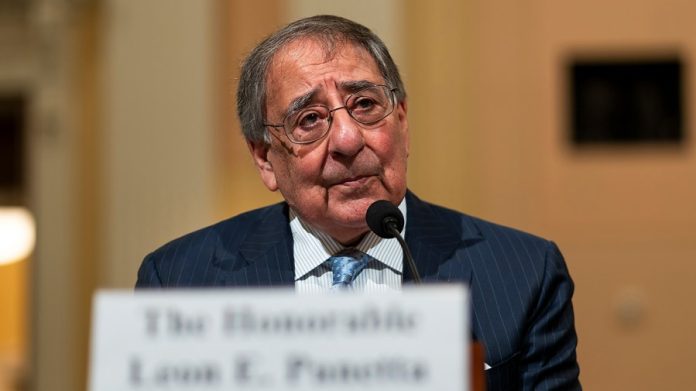
Former Secretary of Defense Leon Panetta weighed in on the FBI’s raid of President Trump’s former national security adviser John Bolton, suggesting Friday night that there’s “some targeting here going on.” 

“We don‘t know all the facts here because we don‘t know what the Justice Department said to a magistrate judge in order to get a warrant,” Panetta said during his appearance on CNN’s “Erin Burnett Outfront.” 

“But when you stand back and you look at the criticism that John Bolton has made and you look at the president and how sensitive he is about having those criticisms, particularly from somebody who was in his administration, it‘s pretty hard not to come to the conclusion that there‘s some targeting here going on,” Panetta told host Erin Burnett. 

Bolton’s Bethesda, Md., home was raided Friday morning. Agents also raided his Washington, D.C., office. The former ambassador, a vocal critic of Trump, was not detained and has not been charged with any crimes. 

The search was related to classified materials. The former national security adviser was previously probed over his memoir about his time in the Trump administration, with the president and his allies saying that Bolton disclosed classified information. The investigation was dropped in 2021 during the administration of former President Biden. 

Vice President Vance said that the raid was not retribution for Bolton’s sharp criticism of Trump’s administration. 

Trump said he was not given advance notice of the raid but criticized Bolton as a “lowlife” who could be “very unpatriotic.”

“He’s not a smart guy. But he could be a very unpatriotic guy. We’re going to find out. I know nothing about it. I just saw it this morning, they did a raid,” the president said Friday morning. 

Robert Kiyosaki Says Most Poor People Are Poor Because They Break These Two Laws of Money

0


Robert Kiyosaki, best known as the author of Rich Dad Poor Dad, has spent decades exploring why some people build wealth while others struggle financially.

In a post on X, he argues that the answer often comes down to a simple truth: too many people ignore the basic “laws of money.” Breaking these rules, he warns, is what keeps many stuck in poverty.

In the post he laid out his understanding of the two most important laws of money. He argued that the poor often violate these laws, leading to their financial struggles.

The first law, according to Kiyosaki, is Gresham’s Law, which states that “When bad money enters a system, good money goes into hiding.”

He believes that in 2025, poor people are working for and saving “fake money” instead of “real money” such as gold, silver, and Bitcoin.

Also Read: ‘Rich Dad Poor Dad’ Author Warns Of Economic Pain, Says Baby Boomers Will Be ‘Biggest Losers’

The second law Kiyosaki referred to is Metcalf’s Law, the law of “Networks.” He used the examples of McDonald’s and FedEx, both successful networks, to illustrate his point.

He contrasted these with “Mom Pop burgers” and “Joe’s 1 truck package delivery,” which he considers non-networks and therefore less successful.

Kiyosaki’s views on money and wealth have been influential in shaping the financial literacy of millions around the world. His latest comments provide insight into his investment strategy and his belief in the power of networks and “real money.”

He also quoted Michael Saylor‘s words of wisdom, “Only invest in things a rich person will buy from you,” and stated that he does not save US dollars or invest in cryptocurrencies without networks, as they violate Gresham’s and Metcalf’s laws respectively.

Instead, Kiyosaki revealed that he saves gold, silver, and acquires Bitcoin, as they obey these laws.

His views serve as a reminder of the importance of understanding and adhering to the fundamental laws of money to achieve financial success.

Read Next

‘Rich Dad Poor Dad’ Author Robert Kiyosaki Sees Wealth Accumulation In Market Declines: ‘Markets Are Crashing, Great News, This Is Your Turn To Get Richer’

Image: Semafor/hamdi bendali

Up Next: Transform your trading with Benzinga Edge’s one-of-a-kind market trade ideas and tools. Click now to access unique insights that can set you ahead in today’s competitive market.

Get the latest stock analysis from Benzinga?

This article Robert Kiyosaki Says Most Poor People Are Poor Because They Break These Two Laws of Money originally appeared on Benzinga.com

© 2025 Benzinga.com. Benzinga does not provide investment advice. All rights reserved.

Women’s Rugby World Cup 2025: Francesca McGhie – the ballerina who became Scotland’s hero

0


Rugby was not McGhie’s first love.

Dancing was her passion, and her talents as a ballet and contemporary dancer earned her a place at the Royal Conservatoire of Scotland.

That nimble footwork would serve her well in her ultimate calling as a rugby player, but it was not until 2018 that she took up the game as a 15-year-old.

She joined Watsonians the following year and helped the club to the Premiership title in 2023.

She received her first Scotland call-up that same year, announcing herself in the Test arena with a stunning solo try in the victory over Ireland, which led to a nomination for World Rugby’s Breakthrough Player of the Year award.

McGhie has proved herself to be a player for the big occasion.

She came up with a last-gasp match-winning try against Ireland in this year’s Six Nations, and her hat-trick against Wales took her international try-scoring record to 13 in 23 games.

“When you put Fran McGhie in space, my God, what a finisher,” Scotland head coach Bryan Easson told BBC Scotland after Saturday’s win.

“I’d said to her this morning she’ll get a couple of scores, but I said to her at half-time, ‘come on, that’s not enough’.

“One-on-one, I don’t think there’s anybody better in the world. She’s a world-class finisher without a doubt.”

Congress should create a public AI wealth fund

0


Artificial intelligence threatens to cause a jobs shock across offices, warehouses, call centers, clinics, classrooms and more. Faced with backlash among displaced workers, the industry and its lobbyists will likely lean on cash‑transfer schemes — universal basic income and its like — as a release valve. 

That path would paper over dislocation while entrenching gatekeepers. It would weaken bargaining power at work and create new and unintended social and fiscal dependencies.

We can do better than that. We have an opportunity instead to bend the trajectory, level the playing field and ensure that the public that pays for the externalities of AI also benefits from its returns. 

What does this entail? Open and contestable markets; modern data rights; liability that governs control; guard-railing technological change to serve the shared good; and most importantly, public sharing in AI’s upside.

The U.S. should establish a professionally managed, firewall‑insulated Public AI Wealth Fund that holds diversified stakes across the AI stack and distributes an annual dividend tied to the AI upside (i.e. realized returns).

This would put the focus on public dividends, not basic income; it would give the public a meaningful, lasting stake in AI’s returns, while using competition, data, labor and energy rules to keep the field open and the harms in check.

The deal between Nvidia and AMD and the U.S government, which involves payments of 15 percent of revenue from sales of some advanced chips, provides precisely the platform to kick-start the creation of this Public AI Wealth Fund.

Capitalize it with equity warrants from firms receiving large subsidies, tax credits or preferential contracts; a compute excise above thresholds set by rulemaking; a windfall‑profits surtax on extraordinary AI margins; and location‑based fees where data centers draw on subsidized energy or water. 

Adopt a simple fiscal rule: preserve principal and pay a universal dividend from realized returns. Dividends will start off modest and grow as the fund matures, aligning public returns with performance rather than with permanent deficit finance.

Sharing in the upside should complement — not replace — open markets and individual economic choice.

Congress should treat exclusive deals as presumptively anticompetitive once market‑share triggers are met; bar self‑preferencing in AI marketplaces; and scrutinize “model‑plus‑platform” tie‑ups as potential vertical restraints. Interoperability and portability — APIs, export formats, and the ability to move fine‑tunes — should be the default, with clear timelines and contractual exit rights. These rules ensure the public is not forced to buy into entrenched barriers.

Individuals need a clear opt‑out for the use of personal data in training, a right to know whether their data was used, and remedies for unauthorized use. For high‑risk uses — hiring, housing, health care, finance and critical infrastructure — deployers should bear a duty of care: documented impact assessments, human‑in‑the‑loop plans, incident reporting, and audit trails. The burden should rest on those who profit from deployment to show they have met these duties.

The Federal Trade Commission can scrutinize deceptive AI claims, dark patterns and data misuse. The Justice Department and the FTC can challenge exclusionary bundles and exclusivity in contracts. The Securities and Exchange Commission can require disclosure of material workforce impacts from AI deployments, not just AI “strategies.” Civil‑rights agencies can enforce explainability, auditing and appeal rights in automated decisions. Energy and water regulators can require facility‑level reporting from hyperscale data centers and condition interconnects on demand‑response and conservation plans.

The executive branch and states should move in parallel. States should seed their own AI wealth funds with data‑center and related revenues and equity warrants tied to subsidized projects, coordinated with — but independent from — the national fund. A federated research cloud across universities, national labs and state innovation hubs would give academia and students access to shared AI infrastructure without having to depend on vendor credits.

Ask schools, employers and hospitals which systems they use, how they were evaluated, and how you can appeal decisions. Insist that public dollars tied to AI come with ownership, transparency and exit rights.

Talk to your elected officials and those that are running for office; tell them it is time for our nation to build a Public AI Wealth Fund.

John deVadoss was a general manager at Microsoft for two decades. He did his Ph.D. work in AI, at the University of Massachusetts at Amherst, specializing in Machine Learning.