A new analysis from Seniorly has put the American retirement crisis into black-and-white numbers. On a national basis, seniors in 41 of the 50 states, along with those in Washington, D.C., are projected to outlive their savings. Specifically, Seniorly sees those seniors falling short of their retirement needs by an average of $115,000.
Unfortunately, this is the stark reality that many Americans are facing when it comes to retirement. But as bad as these stats from Seniorly are, things are even worse in the great state of New York.
According to Seniorly, New York is No. 1 in the nation when it comes to coming up short in terms of retirement needs. The average senior in New York is expected to face a $448,000 shortfall in retirement. Total expenses are projected at $1.12 million, but retirement income is only $670,000 on average, according to the data.
New York is not the most expensive state. In fact, four other states (as well as Washington, D.C.) have higher projected expenses:
Hawaii: $1.74 million
Massachusetts: $1.31 million
California: $1.26 million
Washington, D.C.: $1.14 million
But New York is still tops in terms of a retirement savings deficit because incomes are higher in these locations. Hawaii, for example, has the highest total retirement income in the nation, at $1.32 million. That’s almost double the income in New York, resulting in the disparity.
However, Hawaii still ranks No. 2 in terms of a retirement deficit for its seniors. Massachusetts, California and Washington, D.C., rank No. 6, No. 5 and No. 3, respectively.
Results of the study vary from state to state, but the bottom line is that only nine states have an average income that exceeds the average expenses in retirement.
State
Expected Surplus
Washington
$146,000
Utah
$121,000
Montana
$43,000
Colorado
$38,000
Iowa
$32,000
Minnesota
$23,000
Maryland
$13,000
Kansas
$8,000
South Carolina
$2,000
The good thing about retirement projections is that they are just that — projections. While you can’t control every variable when it comes to retirement planning, you can greatly increase your chances for outliving your money. Here are some important steps, according to Seniorly:
Use tools: There are plenty of online calculators that can help you determine how long your savings will last. Play with different variables, such as your investment return, longevity and expenses, to see how they can affect your overall outcome.
Don’t assume you’re average: No one understands your lifestyle needs better than you do. While the state-by-state averages can be a starting place, tweak that data based on your own personal real-world income and expenses to get a more accurate projection.
Optimize your Social Security strategy: You might want to consider working with a financial professional to help you choose the best time to claim your Social Security benefits.
Factor in unexpected expenses: Income, investment returns and expenses are all variables that may not come in exactly where you project. To help cover unexpected costs that could otherwise derail your financial plan, build an emergency fund and consider additional insurance, such as long-term care and/or umbrella policies.
Talk about your plan: Whether it’s with your spouse, significant other, adult children or financial advisor, bouncing your plan off someone can provide you with insights you might overlook in terms of how your strategy might meet your needs.
Hollywood is mourning the loss of a talented director.
Diego Borella, an assistant director of Emily in Paris, died on Aug. 22 while filming the fifth season of the Netflix show in Venice, Italy, according to multiple local outlets. He was 47.
While preparing to film a final scene inside Venice’s historic Hotel Danieli, local outlets reported that Borella collapsed around 7 p.m. local time. Medical staff on set attempted to revive Borella, per multiple outlets, but he died at the scene.
A local doctor, who had rushed to the scene, confirmed the assistant director’s death, per La Repubblica, and stated that he likely died of a “sudden heart attack.”
“Our ambulance arrived at 18.42 (on Thursday evening),” the Venice health service said, per The Independent. “Medics made attempts to resuscitate him. But in the end all efforts proved fruitless. At around 19.30, he was pronounced deceased.”
Production on the final episode of show’s fifth season was temporarily suspended, according to Il Messaggero, following the incident.
E! News has reached out to Netflix for comment but has not heard back.
Price: $10.99 - $14.99 (as of Aug 23, 2025 15:35:23 UTC – Details)
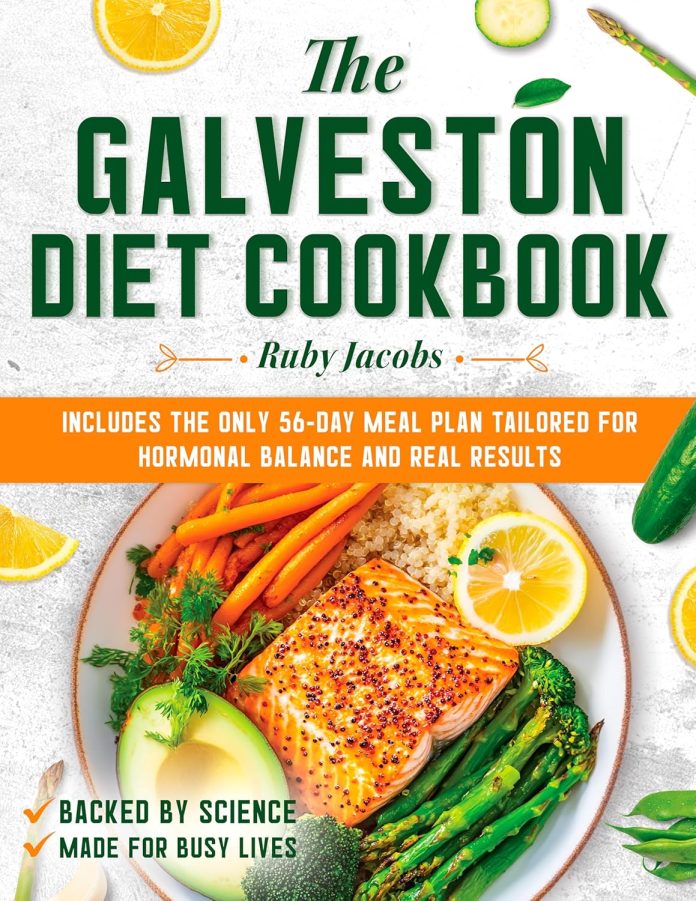
Are you constantly battling stubborn weight, low energy, and hormonal imbalances—despite your best efforts to eat healthy and stay active?
If you’re nodding yes, you’re not alone. These are the most common struggles women face during perimenopause and menopause—when hormones shift and everything from weight to energy feels out of sync.
🎁 Includes 2 FREE BONUSES to jumpstart your transformation:✔️ Visual Cookbook ADD-ON – Get inspired with a beautifully designed companion full of meal visuals and ideas✔️ Your Seasonal Anti-Inflammatory Plan – Fight inflammation year-round with targeted seasonal eating tips🔥 The Galveston Diet Cookbook: Your Blueprint for 2000 Days of Nourishing Recipes and a 56-Day Meal Plan That Works🔥
Title: The Galveston Diet Cookbook: 2000 Days of Simple and Satisfying Recipes with a 56-Day Meal Plan to Help Manage Weight, Reduce Inflammation, and Regain Energy
Say goodbye to guesswork, fad diets, and frustration. Say hello to balance, clarity, and sustainable results.
This cookbook is more than just a collection of recipes—it’s a step-by-step guide designed for women navigating perimenopause, menopause, and midlife weight gain. Reclaim your health, energy, and confidence with every bite.
✅ Why This Cookbook is Changing Lives:Built for Real Bodies, Real Hormones – Anti-inflammatory eating + intermittent fasting tailored for your hormonal stage2000 Days of Flavor-Packed Recipes – From energizing smoothies to one-pot meals and guilt-free desserts56-Day Structured Meal Plan – A full 8-week plan with no guesswork and real resultsFast, Practical, and Delicious – Save time in the kitchen without sacrificing flavor or family-friendlinessDesigned for Midlife Wellness – Improve metabolism, reduce inflammation, and balance hormones naturally 📘 What You’ll Find Inside:Hormone-balancing breakfasts and vibrant smoothiesHearty bowls, wraps, and protein-rich saladsComfort meals, global flavors, and healthy snacksHomemade sauces, superfood add-ins, and drinksA full 56-day week-by-week plan + BONUS resources 👩 Who This Is For:Women 40+ frustrated with stubborn weight and low energyBusy professionals or moms seeking fast, family-friendly mealsAnyone tired of conflicting advice and looking for a clear plan
Still think the Galveston Diet is too complicated or hard to follow? This cookbook makes it simple. No weird ingredients. No extreme restrictions. Just real food and real strategies that get results.
💬 It’s Your Turn to Thrive
Imagine waking up energized, less bloated, and more confident. Imagine feeling like YOU again—stronger, healthier, vibrant.
🔥🔥🔥 SCROLL UP AND CLICK “BUY NOW” 🔥🔥🔥
Take control of your health. Eat with purpose. Thrive with every meal.
ASIN : B0FD8VKSPT Accessibility : Learn more Publication date : June 14, 2025 Language : English File size : 12.0 MB Screen Reader : Supported Enhanced typesetting : Enabled X-Ray : Not Enabled Word Wise : Enabled Print length : 215 pages Page Flip : Enabled Reading age : Baby – 18 years Best Sellers Rank: #448,566 in Kindle Store (See Top 100 in Kindle Store) #86 in Menopause (Books) #121 in Menopause (Kindle Store) #173 in Low Carbohydrate Diets Customer Reviews: 5.0 5.0 out of 5 stars 11 ratings var dpAcrHasRegisteredArcLinkClickAction; P.when(‘A’, ‘ready’).execute(function(A) { if (dpAcrHasRegisteredArcLinkClickAction !== true) { dpAcrHasRegisteredArcLinkClickAction = true; A.declarative( ‘acrLink-click-metrics’, ‘click’, { “allowLinkDefault”: true }, function (event) { if (window.ue) { ue.count(“acrLinkClickCount”, (ue.count(“acrLinkClickCount”) || 0) + 1); } } ); } }); P.when(‘A’, ‘cf’).execute(function(A) { A.declarative(‘acrStarsLink-click-metrics’, ‘click’, { “allowLinkDefault” : true }, function(event){ if(window.ue) { ue.count(“acrStarsLinkWithPopoverClickCount”, (ue.count(“acrStarsLinkWithPopoverClickCount”) || 0) + 1); } }); });
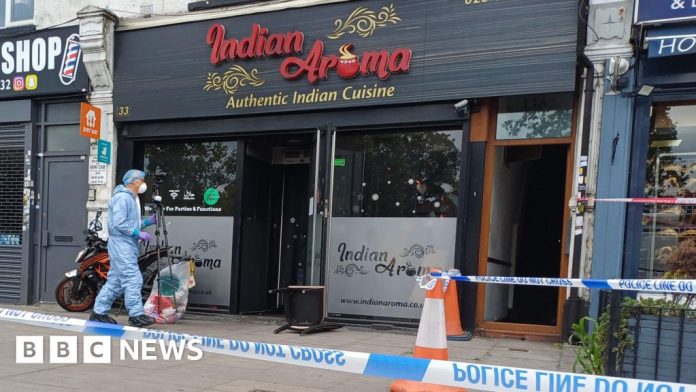
Police, paramedics and firefighters were called to the fire at a restaurant on Woodford Avenue
Five people have been hospitalised, with three in a life-threatening condition, after a suspected arson attack at a restaurant in east London.
Police, paramedics and firefighters were called to the fire on Woodford Avenue in Gants Hill, Ilford, at 21:00 BST on Friday.
Three women and two men were injured in the blaze, and were taken hospital where they remain. A witness said he saw one of the men in the aftermath whose “whole body was burnt”.
The cause of the fire is being investigated by firefighters and the police. No arrests have been made, the Met Police said.
Part of the ground floor of the restaurant was damaged by the flames, which were extinguished by 22:30.
The five people who were hospitalised were rescued from the building by fire crews, with about nine others being able to get out of the building before the brigade arrived.
One witness, hospital porter Edward Thawe, 43, said he saw one of the injured men, whose “whole body was burnt”.
Mr Thawe said he stepped outside his nearby home with his 12-year-old son to see if he could help after hearing screaming.
The police and ambulance were already at the scene, which Mr Thawe described as “horrible” and “the sort of thing that you don’t want to look at twice”.
Det Ch Insp Mark Rogers said: “We understand this incident will cause concern within the community. My team of specialist detectives are working at speed to piece the incident together.
“Locals can expect to see a large police presence in the area. If you have any concerns, please speak to those officers on the ground.”
Health Secretary Wes Streeting, who is the MP for Ilford North, posted on X his thanks to police, fire and ambulance crews for their response.
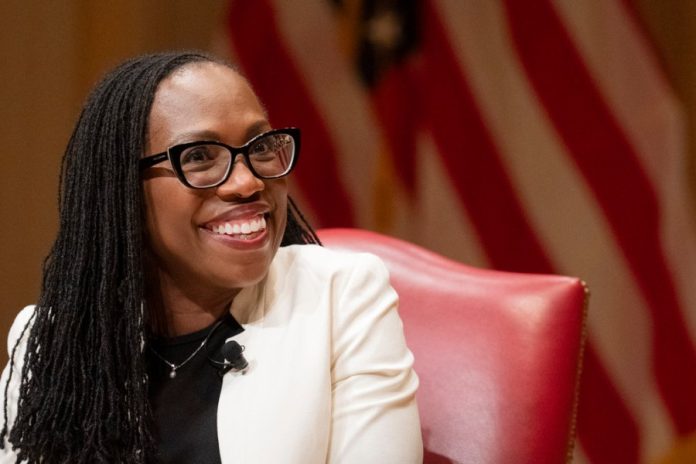
“I just feel that I have a wonderful opportunity.”
Those words of Justice Ketanji Brown Jackson came in a recent interview, wherein the justice explained how she felt liberated after becoming a member of the Supreme Court “to tell people in my opinions how I feel about the issues. And that’s what I try to do.”
Jackson’s sense of liberation has increasingly become the subject of consternation on the court itself, as she unloads on her colleagues in strikingly strident opinions.
Most recently, Jackson went ballistic after her colleagues reversed another district court judge who issued a sweeping injunction barring the Trump Administration from canceling roughly $783 million in grants in the National Institutes of Health.
Again writing alone, Jackson unleashed a tongue-lashing on her colleagues, who she suggested were unethical, unthinking cutouts for Trump. She denounced her fellow justices, stating, “This is Calvinball jurisprudence with a twist. Calvinball has only one rule: There are no fixed rules. We seem to have two: that one, and this administration always wins.”
For some of us who have followed Jackson’s interestingly controversial tenure on the court, it was crushingly ironic. Although Jackson accused her colleagues of following a new rule that they must always rule with Trump, she herself is widely viewed as the very embodiment of the actual rule of the made-up game based on the comic strip of Calvin and Hobbes. In Jacksonian jurisprudence, it often seems like there are no fixed rules, only fixed outcomes. She then attacks her colleagues for a lack of integrity or empathy.
To quote Calvin, Jackson proves that “there’s no problem so awful that you can’t add some guilt to it and make it even worse.”
Jackson has attacked her colleagues in opinions, shattering traditions of civility and restraint. Her colleagues have clearly had enough. She now regularly writes diatribes that neither of her fellow liberals — Justices Sonia Sotomayor or Elena Kagan — are willing to sign on to. Indeed, she has raged against opinions that her liberal colleagues have joined.
Take Stanley v. City of Sanford. Justices Jackson and Neil Gorsuch took some fierce swings at each other in a case concerning a retired firefighter who wants to sue her former employer. The majority, including Kagan, rejected a ridiculous claim from a Florida firefighter who sued for discrimination for a position that she had neither held nor sought. The court ruled that the language of the statute clearly required plaintiffs to be “qualified” for a given position before they could claim to have been denied it due to discrimination. (Stanley has Parkinson’s disease and had taken a disability retirement at age 47 due to the progress of the disease.)
Jackson, however, was irate that Stanley could not sue for the denial of a position that she never sought, held, or was qualified to perform. Jackson accused the majority of once again showing how “pure textualists can easily disguise their own preferences as ‘textual’ inevitabilities.” It was not only deeply insulting, but perfectly bizarre, given that Kagan had joined in the majority opinion. Kagan is about as pure a textualist judge as she is a pure taxidermist.
Gorsuch called Jackson out for once again ignoring the text of federal laws in order to secure the result she preferred in a given case. In other words, Jackson was playing Calvinball with the law.
Jackson, undeterred, has continued these diatribes, with escalating and insulting rhetoric. In Trump v. CASA, the court sought to rein in district courts issuing sweeping injunctions over the Executive Branch. Jackson went ballistic in her dissent, which neither Sotomayor nor Kagan would join.
Jackson accused her colleagues of blindly drifting toward “a rule-of-kings governing system.” She denounced the majority for “enabling our collective demise. At the very least, I lament that the majority is so caught up in minutiae of the government’s self-serving, finger-pointing arguments that it misses the plot.”
This is where Justice Amy Coney Barrett reached a breaking point, unleashing on Jackson in an opinion notably joined by her colleagues. Barrett noted that Jackson was describing “a vision of the judicial role that would make even the most ardent defender of judicial supremacy blush.” She added: “We will not dwell on Justice Jackson’s argument, which is at odds with more than two centuries’ worth of precedent, not to mention the Constitution itself. We observe only this: Justice Jackson decries an imperial executive while embracing an imperial judiciary.”
That is a slightly fancier way of describing Calvinball.
Jackson has also been criticized for making dubious or sensational claims, as in her opinion supporting affirmative action in higher education.
Jackson’s jurisprudence is the very model of a judiciary untethered from constitutional or institutional restraints. Not surprisingly, she is lionized in law schools for her rejection of judicial restraint and her pursuit of progressive outcomes. Yet, her approach is becoming increasingly lawless.
I truly believe that Jackson can leave a lasting legacy and bring an important voice to the court. However, this is one “wonderful opportunity” that Justice Jackson may want to let pass more often. Otherwise, she risks fulfilling that other lament from the cartoon Calvin: “I find my life is a lot easier the lower I keep everyone’s expectations.”
Plug Power(NASDAQ: PLUG) stock hasn’t been a winning investment. Shares of the hydrogen-based energy company plummeted 94% over the last three years, including a 27% decline year to date.
Yet some investors are still betting on a turnaround, and the stock has rebounded over the last several months from an all-time low price. The reason for that recent bounce is also why I am still keeping an eye on Plug Power.
Image source: Getty Images.
Plug Power made an ambitious push into utilizing hydrogen as a fuel. Perhaps it’s been too ambitious, as it poured money into building hydrogen production facilities and other hydrogen infrastructure. But it does now have a growth engine for the business with its fuel cells and electrolyzers.
The company has reduced its capital spending, with operating and investing cash usage down by 40% year over year in the second quarter. At the same time, Q2 revenue jumped by 21%. Orders for its fuel cells and electrolyzer platforms are the reason for that. Electrolyzer sales tripled year over year and represented 25% of total revenue in Q2.
There might be much more to come. Fuel cell peer Bloom Energy is showing investors how that path might look. Bloom recently announced a deal to deploy its fuel cell technology at some of tech giant Oracle‘s cloud infrastructure data centers in the U.S. Data center growth is exploding, creating an increasing need for energy. Rather than taxing electrical grids, local fuel cells are one solution to that need.
Many data center owners also want to utilize renewable energy where possible. That’s where Plug Power can become a big player. Investors need to watch for similar announcements of partnerships between Plug and large tech companies. If Plug Power can ink contracts to supply power to data centers, it could reverse its fortunes and become a winning investment moving forward.
Before you buy stock in Plug Power, consider this:
The Motley Fool Stock Advisor analyst team just identified what they believe are the 10 best stocks for investors to buy now… and Plug Power wasn’t one of them. The 10 stocks that made the cut could produce monster returns in the coming years.
Consider when Netflix made this list on December 17, 2004… if you invested $1,000 at the time of our recommendation, you’d have $649,657!* Or when Nvidia made this list on April 15, 2005… if you invested $1,000 at the time of our recommendation, you’d have $1,090,993!*
The Fairphone 6 arrives almost two years after the 5, a testament to the company’s approach to the upgrade cycle. If anything, I suspect the company would be frustrated if Fairphone 5 owners were considering a new model already — these are phones to keep, to repair, and to hold on to until the bitter end.
The newest Fairphone continues the company’s commitment to user-repairability, long-term customer support, and ethical production. That means compromises for the consumer: You’ll find more powerful phones with prettier displays and more capable cameras for less money. But this year those compromises are smaller and easier than ever before, while the phone remains a lot better for the planet — you can’t say fairer than that.
$899
The Good
Exceptionally user-repairable
Ethically produced
Decent performance
Long-term software support
The Bad
Basic cameras
Only IP55
Expensive in the US
The Fairphone 6 is available now across the UK and Europe. It costs €599 / £499 for a version running Fairphone’s custom Android software, which is fairly close to the stock experience, or €50 / £50 more running /e/OS, a privacy-centric, Google-free version of Android made by Murena. If you’re in the US, that’s the only model available, and you’ll have to buy it directly from Murena for $899, a price that Murena founder and CEO Gaël Duval told me reflects tariffs on US imports. It’s a substantial price difference that takes the Fairphone 6 from competing with midrangers like the Pixel 9A in Europe to flagships like the Pixel 10 or iPhone 16 in the US, making it significantly harder to justify.
/e/OS replaces Google’s Discover feed with a set of dedicated privacy controls.Image: Dominic Preston / The Verge
I’ve been testing the privacy-focused /e/OS version of the phone. It might not look a million miles from stock Android, but the out-of-the-box experience is quite different. It has quick access to options to block tracking cookies within apps, fake your geolocation info, or hide your IP address, along with a “Wall of Shame” listing your apps by how many times they try to track your activity. Murena describes it as “de-Googled,” which means it’s built on the Android Open Source Project, but doesn’t require a Google account to use, includes no Google apps by default, and should share none of your data with Google.
If you’re ready to commit to the Google-free life, there’s an array of relatively simple stock software, like calendar and map apps that look like they’ve been lifted from a decade ago. An app store defaults to open-source options, giving every app a privacy score with details on the trackers it uses and permissions it requires.
You can install open-source apps, or Play Store alternatives like Google and Samsung’s.Image: Dominic Preston / The Verge
The app store also lets you install just about any Android app — even the Google ones — but only if you want to. That’s thanks to microG, an open-source alternative to Google Play Services. The only caveats are that Google Wallet won’t work for NFC payments, and that some apps are a little… janky. Most seem to work, but MyFitnessPal won’t run, and a few others tend to stutter and crash.
On the hardware side, the Fairphone 6 is smaller and lighter than the 5, with a brighter and smoother 6.31-inch 120Hz display. The Qualcomm Snapdragon 7s Gen 3 chipset isn’t flagship hardware, but it’s smooth enough most of the time, and with 8GB of RAM, it’s powerful enough for anything except serious gaming. The 4,415mAh battery lasts more than a day, and the 30W wired charging speed is fine but unimpressive, with no wireless option.
The cameras remain a big downgrade compared to the competition. The 50-megapixel main lens and 13-megapixel ultrawide are fine for the basics — and exceeded my expectations every now and then — but they struggle in the dark, in complex lighting, or with fast-moving subjects. If you just need your phone camera to be good enough then these definitely are, but you can get much better cameras for the same money (or less) elsewhere.
1/13The Fairphone 6’s main camera does the basics well.
The other big addition to the Fairphone 6 is a range of semi-modular accessories, similar to those offered with Nothing’s CMF Phone 2 Pro. There’s a lanyard, a card holder, and a loop grip, but the clever thing is that all three screw onto the phone’s rear, becoming integral parts of the hardware. I hope more options are coming.
More important is the phone’s ability to last for years. Whether you buy from Fairphone or Murena, you’ll get an extended five-year warranty. Fairphone also commits to eight years of software updates and seven Android version updates, though Murena only promises five years of software support for its version — worse than the likes of Apple, Google, and Samsung.
The Fairphone 6’s cameras aren’t anything to write home about.Photo: Dominic Preston / The Verge
I’m a fan of this slight dent on the phone’s back, which becomes a natural place to rest your little finger.Photo: Dominic Preston / The Verge
That blocky yellow button turns off the camera and mic on /e/OS phones, but switches between customizable modes to control notifications and distractions on the regular model.Photo: Dominic Preston / The Verge
The phone is made from fairly sturdy plastic, with Corning Gorilla Glass 7i on the display, and feels tough. There’s one big durability downside, though: it only has an IP55 rating for dust and water protection — good, but not great — which is the drawback of a repairable design that swaps glue for less watertight screws. So while the Fairphone 6 is more repairable than other alternatives, there’s a slightly higher risk of needing that repair in the first place, at least when it comes to sand and water.
Speaking of: you only need a single Torx T5 screwdriver to strip the phone down to parts, which connect and disconnect with a simple push, clicking into place. You can replace the battery, display, rear cover, each individual camera lens, speaker, earpiece, USB-C port, and SIM tray (which doubles as a microSD slot for expandable storage). Spare parts are sold by Fairphone and iFixit, with a promise to stock them for years. In the US, Murena should stock them, but at the time of writing, the parts aren’t on its site yet.
A Torx T5 screwdriver is all you need to take the phone apart.Photo: Dominic Preston / The Verge
Replacing the backplate — and swapping in accessories — involves just a couple of screws.Photo: Dominic Preston / The Verge
Replacing the battery requires a few more…Photo: Dominic Preston / The Verge
And taking the whole thing apart requires a little commitment, but it’s easy work.Photo: Dominic Preston / The Verge
I wanted to confirm if any idiot could pull off a repair, so I took apart every bit of the phone I could and put it back together again, which took a little over an hour and left me with a perfectly functional phone on the other side. Fairphone has some good YouTube videos to run through any given repair step by step, and it couldn’t be much easier, so long as you pay attention to screwing everything back in the right order (ahem, not a mistake I’d ever make…).
The “fair” bit of the name applies to production too. Fairphone claims to use as many recycled materials as possible, and to work with mines, recyclers, component factories, and assembly lines with fair working conditions, from living wages to worker representation. There’s no ethical consumption under capitalism, but Fairphone claims to get as close as it can.
I’ve been cautious to recommend previous Fairphones. The elevator pitch is great, but paying a premium for underpowered hardware is still a hard sell. But pure power isn’t the differentiating factor it once was, so even if the Fairphone 6 is less powerful than its counterparts, it’s still powerful enough for most of us. Still, improvements in software support and durability from other manufacturers have made Fairphone’s offering less unique — though no one offers repairability like this.
Up against midrange alternatives, as it’s priced in Europe, the Fairphone holds its own. There are small compromises, but it remains a fair choice for just about anyone. In the US, where it costs more than some flagships and comes with the de-Googled /e/OS whether you like it or not, it’s only for those truly committed to the cause.
Training camps are winding down, and the 2025 NFL regular season is fast approaching. That’s why this is a perfect time to check in on the 257-member 2025 draft class.
We turned to our NFL Nation reporters to size up how every single draft pick has fared this spring and summer as cut-down day looms Tuesday. Updates on all 257 selections are below, from the top pick, Titans quarterback Cam Ward, all the way to Patriots cornerback Kobee Minor, 2025’s Mr. Irrelevant. Who is in line to start for their team? Who is exceeding their draft position in the preseason and could make an early impact? And which high picks are falling behind?
Rookies are grouped by team below, and each team is listed in the order in which it made its first selection in April. That means we begin with Tennessee’s class.
Round 1 (No. 1): Cam Ward, QB. Titans coach Brian Callahan is taking a day-by-day approach to the QB’s development, but Ward quickly became the starter and has emerged as a team leader. His constant trash talk with defensive tackle Jeffery Simmons provides a charge at practice. Ward has showcased his deep passing ability, especially with veteran receiver Calvin Ridley. He is focused on staying on schedule and getting the ball out when he gets to the top of his drops. “His timing is up to date,” Ridley said. “He whips it, he’s confident, it’s smooth. It’s an easy, catchable ball.”
Round 2 (No. 52): Oluwafemi Oladejo, Edge. Oladejo flashed at times, especially during one-on-one pass-rush drills. He has worked with both the first- and second-team defense but remains a work in progress.
Round 3 (No. 82): Kevin Winston Jr., S. Winston was heavily involved in defensive reps until hamstring and knee soreness landed him on the sideline for the past couple weeks.
Round 4 (No. 103): Chimere Dike, WR. Dike has earned a spot as a reserve slot receiver, giving the Titans a speedy option from that position. He’ll also be in the mix for punt and kickoff returns.
Round 4 (No. 120): Gunnar Helm, TE. Helm’s ability to find windows in zone coverage and win on seam routes has made him a trusted target for Ward. It has given him more reps with the first team in 12 personnel sets and plays when he’s the only tight end on the field.
Round 4 (No. 136): Elic Ayomanor, WR. It’s only a matter of time before Ayomanor takes the starting “X” spot thanks to the big plays he has made down the field and across the middle, but he’ll need to be a more consistent playmaker before he assumes that role.
Round 5 (No. 167): Jackson Slater, G. Slater has earned a depth role at center and guard, where his strength is getting out in space to make blocks on screens or pulling outside to lead the way for running backs.
Round 6 (No. 183): Marcus Harris, CB. Harris has made his mark as an outside cornerback, where he rarely panics if a receiver gets a step on him. He has also shown solid ball skills that have led to pass breakups.
Round 6 (No. 188): Kalel Mullings, RB. Mullings has made tough runs in practice and games, which could cement him as a short-yardage back who could contribute on special teams. — Turron Davenport
Round 1 (No. 2): Travis Hunter, WR/CB. The Jaguars were not shy about planning to play Hunter on offense and defense and discussing the kind of impact he could have for them. GM James Gladstone said Hunter has the ability to “alter the trajectory of the sport itself.” Hunter has been practicing on both sides of the ball and has participated in 364 snaps in 7-on-7 and 11-on-11 drills in the first 15 practices, including 17 on offense and 16 on defense in last Thursday’s scrimmage.
Coaches and teammates have raved about his physical conditioning and how he’s mentally handling the load of learning a new offense and defense while finding a way to seamlessly work between both units. Hunter is dealing with a minor upper-body injury that kept him out of the second preseason game, but he’s expected to be back on the practice field soon — and could start on both offense and defense in Week 1 against Carolina.
Round 3 (No. 88): Caleb Ransaw, S. Ransaw played corner and safety in college, and the Jaguars started him out at safety. He was getting third- and fourth-team reps on defense but playing a lot on special teams before getting hurt (lower body) just before the preseason games began. He will miss the rest of camp and could start the season on injured reserve, but the Jaguars envision him eventually becoming a starter and being a key special teams player.
Round 3 (No. 89): Wyatt Milum, G. Milum played tackle at West Virginia, but the Jaguars drafted him as a guard despite him not working at that spot until the Senior Bowl. Milum has worked with the second-team line at right guard, but he has also gotten reps at tackle. That versatility is something the Jaguars want from of all their offensive linemen. They also love his physical and nasty demeanor, something that has been missing from the offensive line over the past few seasons.
Round 4 (No. 107): Jack Kiser, LB. He was drafted as the eventual replacement for Chad Muma and that changeover is likely going to occur this month. Kiser has had some first-team reps along with work on all four special teams units.
Round 6 (No. 194): Jalen McLeod, LB. He was getting time on special teams until a lower-body injury in the second week of camp kept him off the field.
Round 6 (No. 200): Rayuan Lane III, S. Special teams coordinator Heath Farwell praised Lane on special teams, which is a good sign for his chances to make the roster.
Round 7 (No. 221): Jonah Monheim, C. Monheim was the second-team center in the second preseason game and likely contributed to veteran Luke Fortner being traded to the Saints right after that game.
Round 7 (No. 236): LeQuint Allen Jr., RB. Allen was drafted in part because of his pass blocking, and he has been the best back at picking up blitzes all camp. That should get him on the roster. — Michael DiRocco
Round 1 (No. 3): Abdul Carter, Edge. Carter has lived up to the hype this summer, dominating from the start of camp. His explosiveness and bend immediately caught the attention of his teammates while he played all over the field (outside linebacker, defensive tackle and inside linebacker). Right tackle Jermaine Eluemunor declared a week into camp that he knew Carter was “going to be great.”
Carter flashed that potential in his first preseason game, recording two pressures on three pass rushes. Carter might not start initially, but the Giants are going to have him in a rotation on the edge and get him on the field as much as possible in pass-rush situations.
Round 1 (No. 25): Jaxson Dart, QB. The young quarterback had his ups and downs early in the summer before turning it on in recent weeks. Dart has been especially impressive in his first two preseason appearances, completing 25 of 35 passes for 291 yards with two touchdown passes and no interceptions. Dart explained midway through camp that he started to feel more comfortable when given more freedom at the line of scrimmage.
“That just allowed me to play just faster and be able to make quicker decisions,” he said. Still, Russell Wilson is the starter. That’s highly unlikely to change before Week 1. But the better Dart plays, the more likely he gets in early in the season.
play
1:59
Stephen A.: Giants have ‘no reason to rush’ starting Jaxson Dart
Stephen A. Smith discusses the importance of the Giants being patient with Russell Wilson and not rushing Jaxson Dart.
Round 3 (No. 65): Darius Alexander, DT. He got off to a rocky start this summer after being slowed by an injury this spring. Alexander has flashed in recent weeks, but he still works almost exclusively with the second-team defense. It might take some time before he works his way into a regular rotation spot this season.
Round 4 (No. 105): Cam Skattebo, RB. Just when Skattebo started to hit his stride, he was set back by a hamstring injury that has kept him off the field the past few weeks.
Round 5 (No. 154): Marcus Mbow, OT. Perhaps the biggest surprise of this draft class, Mbow has been impressive this summer while primarily playing right tackle. He could work his way into the swing tackle spot.
Round 7 (No. 219): Thomas Fidone II, TE. Fidone has flashed with his catch radius but has also been inconsistent. But he’s in the mix for a roster spot in a deep tight end room.
Round 7 (No. 246): Korie Black, CB. It might be a long shot for Black to make the active roster. — Jordan Raanan
Round 1 (No. 4): Will Campbell, OT. Campbell has been the starting left tackle from the first day he arrived this spring, and there is a notable drop-off behind him. His aggressive playing style has stood out in preseason games — finishing run blocks down the field — as has his inexperience handling pass-rush stunts (e.g., a sack allowed in the preseason opener).
“Will is a young player that has a ton of respect for what is expected of him. I think he does a good job of gaining information from veteran players,” offensive line coach Doug Marrone said. “I think he’s said this before: There are some things he’ll go out and win on, and if he’s not winning, he’s learning. I think that’s the big thing I see; I see a player who is continuously trying to learn.”
Round 2 (No. 38): TreVeyon Henderson, RB. Henderson has a different gear the Patriots haven’t had in the backfield in a long time. He returned the opening kickoff of the preseason 100 yards for a touchdown. In the second game, he had an impressive 8-yard TD run in which he sliced through the left side despite little daylight. Using the Lions as a template, he’ll be the Patriots’ version of Jahmyr Gibbs, with Rhamondre Stevenson filling the David Montgomery role.
Round 3 (No. 69): Kyle Williams, WR. Williams projects as fifth on the depth chart behind Stefon Diggs, Kayshon Boutte, DeMario Douglas and Mack Hollins, with potential to rise as he continues to develop. Williams is a versatile option with the ability to win with his release at the line of scrimmage and down the field.
Round 3 (No. 95): Jared Wilson, C/G. Wilson opened camp as the backup center to veteran Garrett Bradbury before moving to starting left guard in Week 2. Wilson has now appeared to hit a fork in the road, where he could go in either direction after playing with the second unit in the second preseason game.
Round 4 (No. 106): Craig Woodson, S. Woodson has been the personal protector on the punt team and one of the top three safeties in a defense that often plays three at the same time.
Round 4 (No. 137): Joshua Farmer, DT. The Patriots remain high on Farmer after trading up for him, but he has had a quieter camp that has included missing some time due to an undisclosed injury. He currently projects as a backup/developmental option.
Round 5 (No. 146): Bradyn Swinson, Edge. With Harold Landry III and K’Lavon Chaisson entrenched as edge starters, Swinson should make the team as a backup developmental option and special-teamer.
Round 6 (No. 182): Andy Borregales, K. He has faced a strong charge from Parker Romo for the job, but based on his draft status, Borregales likely has the upper hand. But there have been some predictable growing pains (e.g., coming on the field late for a badly missed 57-yard FG in the second preseason game).
Round 7 (No. 220): Marcus Bryant, OT. Bryant started the first two preseason games as veteran starter Morgan Moses rested and looks like the Patriots’ top backup swing tackle.
Round 7 (No. 251): Julian Ashby, LS. The first long-snapper drafted in the NFL since 2021, Ashby has had a few erratic snaps. But New England continues to ride with him as the only snapper on the roster.
Round 1 (No. 5):Mason Graham, DT. Graham has been transitioning to a new defensive scheme that asks him to penetrate more instead of taking on double-teams. The Michigan product has adjusted well and made strides in recent weeks. He’s projected to start in Week 1.
“I think his pass rush has improved, and his ability to kind of wiggle out of blocks is pretty impressive as well,” left guard Joel Bitonio said.
Round 2 (No. 33):Carson Schwesinger, LB. With Jeremiah Owusu-Koramoah (neck) out for the season and Jordan Hicks retiring, the Browns gave Schwesinger defensive playcaller duties on day one, a testament to their trust in the rookie. Schwesinger is set for a big role as a starter in the middle of the defense.
Round 2 (No. 36):Quinshon Judkins, RB. Judkins hasn’t been with the Browns throughout training camp as he faced a domestic violence charge, but prosecutors declined to formally pursue charges. The NFL is still reviewing the matter, which could lead to a suspension, but he’ll split carries when he returns to the team.
Round 3 (No. 67):Harold Fannin Jr., TE. Fannin has been a mainstay in two-tight end sets with David Njoku. The Browns will look to get Fannin the ball in a bevy of ways.
Round 3 (No. 94):Dillon Gabriel, QB. Gabriel received first-team reps in the Browns’ quarterback competition but fewer snaps than Joe Flacco and Kenny Pickett before suffering a hamstring injury. He will likely be a top backup to open the season.
Round 4 (No. 126):Dylan Sampson, RB. Sampson will make the team, and with Judkins’ status up in the air, Sampson will push Jerome Ford for carries in the backfield early on.
Round 5 (No. 144):Shedeur Sanders, QB. Sanders has been QB4 on the depth chart but impressed in the preseason opener. Flacco is set to start the season as QB1, but Sanders will stick with Cleveland as it continues to develop him. — Daniel Oyefusi
play
1:53
How Shedeur can lock in the QB2 spot with Browns
Stephen A. Smith breaks down the battle for the QB2 position with the Browns after it was confirmed Joe Flacco will be their starter in Week 1.
Round 1 (No. 6):Ashton Jeanty, RB. Jeanty has done nothing but impress his teammates and coaches during training camp. Quarterback Geno Smith said Jeanty has gotten better each day of practice. Following the Raiders’ preseason loss to the 49ers, when Jeanty totaled seven carries for 33 yards and a touchdown, defensive end Maxx Crosby commended the Heisman Trophy finalist for being compact and sudden when he runs the ball.
“That’s why he had so much success with Boise State, so we’re really excited about him and we’re looking forward to him being a big part of what we’re doing,” Crosby said.
Jeanty is expected to be the team’s starting running back right out the gate. He has received first-team reps since OTAs and started in both preseason matchups. Offensive coordinator Chip Kelly anticipates using Jeanty quite a bit in the passing game, too.
Round 2 (No. 58):Jack Bech, WR. Bech provides a physical presence at wide receiver. He is a willing blocker and has a knack for making contested catches. Bech has flashed during camp but has not stood out compared with fellow rookie wideout Dont’e Thornton Jr. Bech has played mostly with the second-team offense, with occasional reps with the starters. He has the potential to make a Year 1 impact, but it’s going to take time before his role comes to fruition.
Round 3 (No. 68):Darien Porter, CB. Porter has a good chance to be a starting cornerback opposite Eric Stokes. He has upside and the size that coach Pete Carroll values at cornerback, and at times, he has shown the ball skills the organization valued during the draft process. Cornerback is one of the biggest question marks on the roster, and the unit’s success will come down to Porter being dependable on the outside.
Round 3 (No. 98):Caleb Rogers, G. The Raiders’ starting offensive line is pretty much set, but Rogers will provide depth along the entire front, given his ability to play multiple spots.
Round 3 (No. 99):Charles Grant, OT. Grant has the potential to start in the future but is currently a developmental player who still has a way to go before playing significant snaps.
Round 4 (No. 108):Dont’e Thornton Jr., WR. Thornton has had a strong camp and is expected to start. Given his speed and size, he could be a big-play threat. Thornton’s presence should also create opportunities for tight end Brock Bowers and wide receiver Jakobi Meyers in the middle of the field. However, Thornton’s struggle to create separation against the 49ers’ cornerbacks during joint practice and the preseason game was noticeable.
Round 4 (No. 135):Tonka Hemingway, DT. Hemingway is expected to be in the Raiders’ defensive line mix. He has received starter reps during practice and made his presence felt in the run game. In two preseason matchups, Hemingway totaled four run tackles and the defense allowed 2.7 yards per carry when he was on the field.
Round 6 (No. 180):JJ Pegues, DT. Similar to Hemingway, Pegues is part of the Raiders’ defensive line rotation and could play significant snaps early. He started at nose tackle in the preseason opener against Seattle.
Round 6 (No. 213):Tommy Mellott, WR. Mellott said the switch from quarterback to wide receiver has been daunting. He has plenty of development to do before playing a meaningful role in the Raiders’ wide receiver room.
Round 6 (No. 215):Cam Miller, QB. A two-time NCAA Division I FCS national champion, Miller is a proven winner — a trait that general manager John Spytek values. Miller is not ready to be a second-string quarterback, but his dual-threat ability makes him someone worth developing.
Round 7 (No. 222):Cody Lindenberg, LB. Due to the Raiders’ linebacker depth, Lindenberg has an uphill climb to make the initial 53-man roster. — Ryan McFadden
Round 1 (No. 7): Armand Membou, OT. Membou became a starter the moment he was drafted. He hasn’t missed a practice, let alone a rep. Membou is “a special player, just a raw talent,” guard Alijah Vera-Tucker said. Membou is far from a finished product, though. In pass protection, he sometimes oversets to the outside, leaving himself vulnerable to outside-inside moves from quick pass rushers. It happened last week against the Giants in joint practices and the game. The coaches love Membou’s long-term potential, but there will be some growing pains.
Round 2 (No. 42): Mason Taylor, TE. He will have a major role on offense. The coaches view him as a true two-way tight end and believe his blocking is better than advertised. Taylor is healthy after missing more than a week with a high-ankle sprain. Jets coach Aaron Glenn likes to say that Taylor, the son of Pro Football Hall of Famer Jason Taylor, has the right DNA for the NFL.
Round 3 (No. 73): Azareye’h Thomas, CB. Thomas got off to a promising start, but he missed the first two preseason games due to a shoulder injury. Thomas is back at practice and should play in the preseason finale. Barring a setback, he is in position to be the CB4.
Round 4 (No. 110): Arian Smith, WR. He’s a lock to make the team and likely will have a small role in Week 1 as a gadget receiver who can also be a vertical threat because of his electrifying speed.
Round 4 (No. 130): Malachi Moore, S. He won’t start right away, but Moore can play safety or the slot. He could be included in certain sub packages.
Round 5 (No. 162): Francisco Mauigoa, LB. He’ll make the 53, but he’s down the pecking order at linebacker. Mauigoa could be inactive for Week 1.
Round 5 (No. 176): Tyler Baron, Edge. He probably will make the team because GMs don’t like to give up on developmental pass rushers. Baron needs to be more consistent to earn a place on the game-day roster, though. — Rich Cimini
Round 1 (No. 8): Tetairoa McMillan, WR. McMillan was penciled in as the No. 1 receiver for QB Bryce Young on draft day. That’s not going to change. He has proved himself with his sharp route running, as well as his ability to adjust on the ball and make the tough catches.
“He did a great job of pulling his line and giving me a spot to throw the ball,” Young said of a 40-yard catch by McMillan in the preseason opener. “It’s a lot harder than I’m sure it looked. I have all the confidence in the world in him.”
Round 2 (No. 51): Nic Scourton, Edge. A collapsed lung puts his short-term availability in question. Long term, Scourton’s ability to create pressure is as advertised. Panthers coach Dave Canales saw it against Browns rookie QB Shedeur Sanders: “Nic pivoted, ran another 40 yards, chased him and knocked him out of bounds. That’s what we saw on film, that relentless pursuit,” Canales said.
Round 3, (No. 77): Princely Umanmielen, Edge. Umanmielen showed his aggressiveness early in camp and continues to be quick off the snap. He had two quarterback hits in the second preseason game, but he still needs to be a more consistent pass rusher who can finish plays. He also needs to tighten up his run defense.
Round 4 (No. 114): Trevor Etienne, RB. Etienne is likely to make the team as the RB3 and return specialist, putting Raheem Blackshear‘s future in doubt.
Round 4 (No. 122): Lathan Ransom, S. He’s playing behind veteran Nick Scott, but it’s only a matter of time before Ransom earns the starting job and becomes an immediate contributor.
Round 5 (No. 140): Cam Jackson, DT. A shoulder issue has slowed his progress, but his size (6-foot-6, 328 pounds) is imposing and his ability to eat up blocks is something the Panthers need.
Round 6 (No. 208): Jimmy Horn Jr., WR. Horn’s exceptional speed and work ethic should earn him a spot on the final roster despite a crowded, talented receiver room. — David Newton
Round 1 (No. 9): Kelvin Banks Jr., OT. It’s been a quiet camp for Banks, and that’s a good thing. The Saints placed him at left tackle immediately after he was drafted, and he has been a mainstay since. Banks is poised to be the left tackle of the future now that 2024 first-round pick Taliese Fuaga has been moved back to right tackle. Banks has already been a steady presence and has not stood out in a negative way since being drafted.
Round 2 (No. 40): Tyler Shough, QB. Shough has had a strong second half of camp and is competing with Spencer Rattler for the starting quarterback job. Shough started the second preseason game and has a shot to start in the regular season, but the competition is close.
Round 3 (No. 71): Vernon Broughton, DT. Broughton is fighting for a spot in a very crowded defensive line room. His draft status will get him a roster spot, but playing time will be hard to come by.
Round 3 (No. 93): Jonas Sanker, S.Justin Reid and Julian Blackmon have the starting spots locked down, but Sanker’s versatility and potential have earned him a backup role.
Round 4 (No. 112): Danny Stutsman, LB. Stutsman has had a very productive camp and has made a case for playing time this season, although Demario Davis and Pete Werner will still get the majority of the snaps.
Round 4 (No. 131): Quincy Riley, CB. Riley has made several plays on the ball at camp, causing a few turnovers. Although he’s not ready to start, he’s showing a lot of potential.
Round 6 (No. 184): Devin Neal, RB. Neal injured a hamstring. Although he is expected to be out for a few weeks, he still has a good shot to make the roster because the RB competition remains open.
Round 7 (No. 248): Moliki Matavao, TE. Matavao is a coin flip to make the active roster, but it could happen due to a combination of injuries at the position and his ability to block.
Round 7 (No. 254): Fadil Diggs, Edge. Diggs has come on strong in the last week of camp and might have earned himself a roster spot as a rotational rusher. — Katherine Terrell
Round 1 (No. 10): Colston Loveland, TE. The Bears are asking Loveland to block defensive ends like a tackle and run routes like a wide receiver. So far, he has demonstrated he can do both. Loveland has a prime opportunity to make hay in the underneath game and has consistently been open in team drills, whether he’s lined up out wide, in the slot or in line. Bears coach Ben Johnson said he isn’t sure how he’ll divvy up workloads between Loveland and fellow tight end Cole Kmet, but it’s safe to say the rookie will be a big part of the Bears’ offense.
“He’s friendly to throw to,” backup quarterback Case Keenum said. “He’s got good body language. There’s that nonverbal communication that lets the quarterback know that he knows where the ball is and should be and has good body position in relation to defenders. And then based on what route it is, knows when to be open in a lot of ways.”
Round 2 (No. 39): Luther Burden III, WR. After being sidelined for two months with a hamstring injury, Burden wasted no time showing off his playmaking skills. His explosive after-the-catch ability translates well to this offense, but the complexity of the Bears’ scheme is something Burden is still trying to master. “He’s just got to [know his] alignment and assignment and line up and [be] ready to go,” Bears wide receivers coach Antwaan Randle El said. “That’s what he’s been picking up on and doing better with.”
Round 2 (No. 56): Ozzy Trapilo, OT. Trapilo earned first-team reps at left tackle in the spring and was firmly in the mix to protect Caleb Williams‘ blind side in the first three weeks of training camp. The Bears then moved him back to right tackle (where he started 24 games at Boston College) with the second-team offense to cross-train him at both positions. Trapilo could begin his career as the team’s swing tackle as the Bears search for clarity at left tackle.
Round 2 (No. 62): Shemar Turner, DT. Turner missed three weeks of camp with an ankle injury before returning to practice Aug. 15. He projects to be part of the Bears’ defensive tackle rotation behind Grady Jarrett, Gervon Dexter Sr. and Andrew Billings.
Round 4 (No. 132): Ruben Hyppolite II, LB. Hyppolite is in the mix to win the strongside linebacker job after routinely showing off an instinctive ability to make plays along with his sub-4.4 speed. He has also carved out a role on all four special teams units.
Round 5 (No. 169): Zah Frazier, CB. Frazier has not practiced since rookie minicamp in May and was absent from the rest of spring workouts. He was excused from training camp for personal reasons.
Round 6 (No. 195): Luke Newman, G. The Bears have tapped into Newman’s versatility by playing him at center and both guard spots. The interior depth he provides strengthens his case to make the 53-man roster.
Round 7 (No. 233): Kyle Monangai, RB. Johnson said he’s pleased with Monangai’s progress and envisions him as someone the Bears can trust this fall. After entering camp as the third running back, Monangai has shown potential as a physical rusher who projects to have a sizable role behind D’Andre Swift. — Courtney Cronin
Round 1 (No. 11): Mykel Williams, Edge. The Niners didn’t go through any charades with Williams, immediately plugging him in as the starter opposite Nick Bosa. And Williams settled quickly into the Arik Armstead role, playing the edge on early downs and kicking inside to rush in obvious passing situations. A hyperextended knee has been a bit of a speed bump, but Williams is expected to be back and in the starting lineup soon.
“Hopefully we’ll get him back here pretty soon, get him back rolling and hopefully he can pick up where he left off,” defensive line coach Kris Kocurek said. “But [he had a] really positive start to camp.”
Round 2 (No. 43): Alfred Collins, DT. Collins battled a calf injury in the spring that contributed to a slow start but has progressed lately, according to coaches. Collins is viewed more as a run stuffer than a pass rusher, which means his playing time will come on early downs, but it wouldn’t be a surprise if he worked his way into the rotation by the time the season starts.
Round 3 (No. 75): Nick Martin, LB. Martin has worked with the second unit throughout camp. Although he has flashed the speed and contact courage the Niners want, the key for Martin will be the game slowing down for him. He has a tendency to overrun plays, leading to missed tackles. He could still push for the starting strongside linebacker job, but pushing Dee Winters for the spot Dre Greenlaw vacated is out the window barring injury.
Round 3 (No. 100): Upton Stout, CB. Perhaps the rookie most ready to contribute, Stout quickly impressed with his work habits, quickness and surprising strength. He has the inside track to be the slot corner in Week 1 so long as the calf issue that kept him out recently subsides.
Round 4 (No. 113): CJ West, DT. West has been a star in one-on-one pass-rush drills and could earn a starting job right away if he can translate it into games.
Round 4 (No. 138): Jordan Watkins, WR. A good start that had him on pace to play early was sidetracked by a high ankle sprain, leaving Watkins’ status in flux for Week 1.
Round 5 (No. 147): Jordan James, RB. James has battled multiple injuries in camp, including a broken finger. So although he will make the team if healthy, early playing time will be harder to earn.
Round 5 (No. 160): Marques Sigle, S. Injuries at safety have opened the door for Sigle, who has pleasantly surprised coaches, to potentially steal a starting spot. He also figures to be a special teams factor early.
Round 7 (No. 227): Kurtis Rourke, QB. Rourke is recovering from an ACL injury, and this year is likely to be viewed as a redshirt season unless other injuries force him into a depth spot midway through the year.
Round 7 (No. 249): Connor Colby, G. Colby struggled in practice early but has come on of late. He was even first up with the starters when left guard Ben Bartch recently left a practice early. Colby should make the roster and provide depth on the interior.
Round 7 (No. 252): Junior Bergen, WR. Drafted to be the primary returner, Bergen had a good return in the first preseason game. He hasn’t shown much as a receiver, but that’s not his path to a roster spot. — Nick Wagoner
Round 1 (No. 12): Tyler Booker, G. He has been a starter for all but one practice since being selected. For 12 years, Zack Martin managed the right guard spot at a Hall of Fame level. The Cowboys don’t need — or expect — Booker to do that, but he has shown he can more than get the job done. He is a powerful run blocker and might be better in space than some think. His pass protection will need some work, but his strength will help him in tight spots against more sudden rushers.
Round 2 (No. 44): Donovan Ezeiruaku, Edge. He was one of the standouts of training camp and will see a major role on defense as a rookie. Ezeiruaku showed an array of moves to get to the quarterback, but he plays stouter against the run than some think.
Round 3 (No. 76): Shavon Revel Jr., CB. Revel will open the season on the non-football injury list as he continues to come back from a torn ACL suffered last season. He had some swelling in the knee in his rehab work in camp, but he’s back to training. Unless they find help elsewhere, the Cowboys need Revel to play a role in sub packages when he is healthy.
Round 5 (No. 149): Jaydon Blue, RB. An ankle injury slowed him late in camp, but before that his explosiveness as a runner and pass catcher was showing. Blue could be a change-of-pace back early.
Round 5 (No. 152): Shemar James, LB. He has earned a roster spot and can fill a role on defense but is likely a core special teamer to open the season.
Round 6 (No. 204): Ajani Cornelius, OT. Cornelius has played better in games than practice, but the depth at tackle might hurt his chances to make the 53-man roster. The practice squad is most likely.
Round 7 (No. 217): Jay Toia, DT. Unless the Cowboys look for a big, veteran D-tackle, Toia should have a spot on the roster. If he closes the preseason strong, he could play a large role in run defense.
Round 7 (No. 239): Phil Mafah, RB. His trajectory has climbed since the pads came on in camp, but Mafah might get caught in a numbers game that leads him to the practice squad.
Round 7 (No. 247): Tommy Akingbesote, DT. He had some positive moments in camp, but the practice squad is Akingbesote’s likely destination at the start of the season. — Todd Archer
Round 1 (No. 13): Kenneth Grant, DT. Grant has stood out since the pads went on at practice and has consistently demonstrated an ability to defend the run. He has also drawn rave reviews from coaches and teammates for his willingness to learn and has essentially been attached by the hip to Zach Sieler. Miami drafted Grant to play right away, and he’s trending toward doing exactly that.
“I think his emotional intelligence on this football team has been phenomenal,” Dolphins coach Mike McDaniel said. “We needed his skill set to contribute and we couldn’t hold our breath if we were going to get a guy that can be a force on our defense. So I think he’s working relentlessly and I like where he’s at right now and I want to see his game continue.”
Round 2 (No. 37): Jonah Savaiinaea, G. Savaiinaea is another expected day one starter for a Dolphins offensive line that believes it added toughness and physicality this offseason. He is still adjusting to the speed of the NFL game, but he has flashed brilliance this summer and should be a solid rookie starter.
Round 5 (No. 143): Jordan Phillips, DT. Not only will Phillips make the roster, but he might also become a key contributor after a stellar summer and preseason.
Round 5 (No. 150): Jason Marshall Jr., CB. Marshall will make the initial roster, in part because of Miami’s depth issues at cornerback; those same issues might also provide a path to early playing time.
Round 5 (No. 155): Dante Trader Jr., S. Trader was banged up at the start of training camp but has flashed when healthy and should make the initial roster as a special teams contributor and depth safety.
Round 7 (No. 231): Quinn Ewers, QB: Ewers is not far behind presumed backup Zach Wilson — if at all. He will be on the initial roster, and Wilson will have his hands full fending off Ewers for the QB2 job.
Round 7 (No. 253): Zeek Biggers, DT. Biggers has lived up to his surname this preseason and has been a disruptive presence at the line of scrimmage — particularly in batting passes down. He should make the initial roster. — Marcel Louis-Jacques
Round 1 (No. 14): Tyler Warren, TE. The Colts were near the bottom of the league in tight end production in 2024, so the selection of Warren was most welcome. So far, he has confirmed practically everything the coaches believed about him, especially his ability to make difficult catches look routine. That has made life easier on the quarterbacks, according to coach Shane Steichen, because passes to Warren don’t need to be perfect. “We know when the ball is in his vicinity, he’s got a high percentage [chance] of catching the football,” Steichen said.
play
1:08
Tyler Warren a rookie TE with upside potential in fantasy
Field Yates on why Warren is a mid-tier TE2 with upside this fantasy season.
Round 2 (No. 45): JT Tuimoloau, Edge. The Colts have good depth on the edge, so what they need from Tuimoloau is rotational help. He has shown that he’s plenty capable of that. But if he breaks out, he could earn even more playing time. He was slowed by a knee injury late in training camp, but the Colts still believe Tuimoloau can be a force as a run stopper and pass rusher.
Round 3 (No. 80): Justin Walley, CB. Walley sustained a torn ACL in a joint practice with the Ravens and is expected to miss the season. It was a huge blow for Walley personally, but also for the Colts’ defense. Walley had already emerged as a standout and was on track to be the team’s No. 3 cornerback.
Round 4 (No. 127): Jalen Travis, OT. Travis has a chance to establish himself as the Colts’ top backup offensive tackle, though he’s still adjusting to NFL speed.
Round 5 (No. 151): DJ Giddens, RB. Giddens has already made a splash and seems destined to be the Colts’ No. 2 running back behind Jonathan Taylor. Giddens’ skills in the passing game complement Taylor nicely, seeing how that is not an area of strength for the veteran.
Round 6 (No. 189): Riley Leonard, QB. Leonard has made some splashes with the backups in training camp, but he has also raised questions about whether he has an NFL-caliber arm. He’ll likely be the third QB.
Round 6 (No. 190): Tim Smith, DT. Smith had a quiet camp and could be destined for the practice squad given the veterans ahead of him on the depth chart.
Round 7 (No. 232): Hunter Wohler, S. Wohler has been flipping back and forth between safety and dime linebacker. He has already solidified a roster spot and is likely to see playing time. — Stephen Holder
Round 1 (No. 15): Jalon Walker, Edge. It has not been the greatest training camp for Walker. After a spring program where coaches were raving about him — Falcons coach Raheem Morris said he had future captain ability — he has missed most of the 11-on-11 periods with a hamstring injury. Walker did play in the first preseason game and had success, but a tweaked groin kept him out of the team’s second exhibition. The plan for Walker, a versatile linebacker, is to use him on the edge initially, have him master that and then move him around when ready. If healthy, he’ll be a regular in the edge rusher rotation.
Round 1 (No. 26): James Pearce Jr., Edge. The speedy pass rusher has been one of the team’s most valuable defenders in camp and will be used often at edge even if he doesn’t start. Pearce seems to be getting more reps in practice than anyone else. He has also been involved in several fights, getting under the skin of the offensive line, which has its positives and negatives. But the Falcons have appreciated the aggression Pearce has brought to the defense. Morris said Atlanta wanted more “natural edge” on the team from a personality standpoint, and Pearce has delivered.
Round 3 (No. 96): Xavier Watts, S. Watts has been dealing with an injury through most of camp but played in both preseason games, ending with five tackles total. He’s part of a competition at safety with veteran Jordan Fuller and DeMarcco Hellams. The Falcons expect Watts to be a real contributor as a rookie.
Round 4 (No. 118): Billy Bowman Jr., CB. The Falcons believe they got a steal and think Bowman will make an impact in his first season, potentially starting in Week 1 at nickel corner.
Round 7 (No. 218): Jack Nelson, OT. Nelson has gotten significant reps, even playing with the first-team offense at times, but has struggled to adjust on some plays and could be looking at a practice-squad role. — Marc Raimondi
Round 1 (No. 16): Walter Nolen III, DT. Nolen has yet to practice since training camp began in July because of a calf injury he suffered while working out ahead of camp. He’s progressing and is at the point in his rehab where he’s supposed to be, coach Jonathan Gannon said recently. “Hasn’t had any, I don’t want to say the word setback, but hasn’t had any setbacks,” Gannon said.
Round 2 (No. 47): Will Johnson, CB. Johnson has impressed from the jump and quickly worked his way onto the field as the starting cornerback in nickel and dime packages. He has stood out, pairing his physical abilities with his mental aptitude. “He’s been able to grasp the playbook rather quickly,” cornerbacks coach Ryan Smith said. “I’ve been impressed.”
Round 3 (No. 78): Jordan Burch, Edge. Burch has caught the eyes of his coaches because of his physical presence and how he’s able to move. It landed him first-team reps during camp and a chance to crack a deep rotation on the edge. “He doesn’t bust [assignments] a lot. He really doesn’t. So he knows what’s going on. He’s executing schematically and he’s playing pretty fast and violent. He’s doing a good job,” Gannon said.
Round 4 (No. 115): Cody Simon, LB. There’s a high probability Simon makes the 53 because of how quickly he has picked up playing inside linebacker in the NFL. With that comes a good chance of seeing the field as a rotational player in addition to special teams duties.
Round 5 (No. 174): Denzel Burke, CB. Burke has to beat out a couple of corners to make the team, but he has had a strong preseason, which could help swing the decision in his favor.
Round 6 (No. 211): Hayden Conner, G. An injury in the second preseason game could affect Conner’s status on the 53, but he was in line to make the team as a swing center and guard.
Round 7 (No. 225): Kitan Crawford, S. Arizona already has a deep and talented safety corps, but Crawford could carve out a niche playing special teams and contribute in spot situations on defense. — Josh Weinfuss
Round 1 (No. 17): Shemar Stewart, Edge. When the Bengals drafted Stewart, there were questions about whether his great traits could help him overcome the limited sack production he had at Texas A&M. And despite a contract dispute that kept him off the field for the start of training camp, he has been as impressive as any Bengals rookie in recent memory. Stewart has been disruptive, lining up across multiple positions on the defensive line and earning respect from all corners of the locker room.
“These are all the things we saw on the tape in terms of being able to position him in different spots and make an impact immediately and disrupt,” coach Zac Taylor said.
play
1:11
‘It’s finally done!’ Barnwell reacts to Stewart’s deal with Bengals
Bill Barnwell joins “SportsCenter” to break down what Shemar Stewart will bring to Cincinnati with his contract finally in place.
Round 2 (No. 49): Demetrius Knight Jr., LB. Knight has been slotted in as a day one starter and has been attentive in learning throughout training camp. The most notable example was Knight working with linebackers coach Mike Hodges on his moves as a pass rusher. Knight also hasn’t been shy about thumping offensive players in practice and making sure his presence is felt.
Round 3 (No. 81): Dylan Fairchild, G. From the moment he was drafted, Fairchild was projected as the starter at left guard. He has lived up to the billing. He has been solid throughout training camp and gone virtually unnoticed, which is good for a rookie interior lineman. Fairchild is arguably the best guard on the roster and should beef up the Bengals’ interior offensive line.
Round 4 (No. 119): Barrett Carter, LB. Carter is projected as a backup but should still have a good shot at getting defensive and special teams reps this season.
Round 5 (No. 153): Jalen Rivers, OT/G. Rivers started camp as the swing tackle but has since shifted to guard, which should help Cincinnati’s shaky depth at that spot.
Round 6 (No. 193): Tahj Brooks, RB. Brooks could be the team’s No. 2 running back behind Chase Brown and should get opportunities to make plays this season. — Ben Baby
Round 1 (No. 18):Grey Zabel, G. With a strong camp and standout performances in both preseason games, Zabel is showing why the Seahawks viewed him as the best interior offensive lineman in this year’s draft. He’s playing left guard after finishing his college career at left tackle, and while athleticism was his oft-mentioned trait leading up to the draft, he looks plenty powerful, too.
“It’s not too big for him,” coach Mike Macdonald said of Zabel’s preseason performances. “There’s poise there. I thought his execution’s been really good. Still plays out on the table for him, which is cool. There’s an opportunity to grow and he’ll hit those things. … He’s done a phenomenal job, and he’s stayed hungry and he’s chasing those little details that’s going to make him a great player.”
Round 2 (No. 35):Nick Emmanwori, S. The Seahawks have a clear role in mind for Emmanwori, who will play regularly in their big-nickel package and will operate near the line of scrimmage. He has made enough plays in camp to look like he has the potential to be an impact player right away, even in a part-time role.
Round 2 (No. 50):Elijah Arroyo, TE. Arguably no member of Seattle’s rookie class has been as consistently impressive as Arroyo. He has shown good hands to go along with excellent speed that has allowed him to frequently make plays downfield. His emergence was one of the factors in Seattle’s decision to release veteran Noah Fant.
Round 3 (No. 92):Jalen Milroe, QB. Milroe’s improvement in accuracy has been evident in camp and both preseason games (9-of-15 for 107 yards), though Macdonald has noted that the QB needs to clean up some operational miscues. While he’s the clear-cut QB3 behind Sam Darnold and Drew Lock, the Seahawks have talked about using Milroe for a handful of plays that take advantage of his legs. He successfully converted a tush push in the second exhibition game.
Round 5 (No. 142):Rylie Mills, DT. Mills is on the non-football injury list while recovering from a December ACL tear and won’t be ready until midseason at the earliest.
Round 5 (No. 166):Tory Horton, WR. Horton has had a strong enough camp to push veteran Marquez Valdes-Scantling for the third receiver job — and for Emmanwori to predict that Horton will be the “steal of the draft.”
Round 5 (No. 175):Robbie Ouzts, FB. A college tight end, Ouzts has converted to fullback and is leading Brady Russell in the competition to fill that role.
Round 6 (No. 192):Bryce Cabeldue, G. Although he hasn’t factored into the competition at right guard, Cabeldue has positioned himself well to make the 53-man roster as a backup.
Round 7 (No. 223):Damien Martinez, RB. Kenny McIntosh‘s season-ending knee injury opened the door for Martinez to be Seattle’s third running back — likely his only ticket to a spot on the 53 since Seattle will also keep a fullback — but George Holani currently appears to be ahead of Martinez.
Round 7 (No. 234):Mason Richman, OT. Richman hasn’t done enough to pass Michael Jerrell for the fourth spot on the tackle depth chart, so don’t expect him to make the 53.
Round 7 (No. 238):Ricky White III, WR. White also looks like a long shot to make the 53, but he has made enough plays and brings enough on special teams to make him a strong practice squad candidate. — Brady Henderson
Round 1 (No. 19):Emeka Egbuka, WR. Whether he’s formally listed as a starter or not, Egbuka will get those types of snaps in the Bucs’ offense. He can line up at any receiver position, and with Chris Godwin still recovering from ankle surgery (plus Jalen McMillan taking a hard fall on his neck in the second preseason game), Egbuka will be counted on early. “[He is] already a true professional,” Mike Evans said. “He is an unbelievable playmaker and is going to have a great career in this league.”
Round 2 (No. 53): Benjamin Morrison, CB. Morrison has been sidelined all preseason due to a hamstring injury, and this comes after missing months due to hip surgery. The hope is that he’ll be ready for Week 1, but that could be difficult.
Round 3 (No. 84): Jacob Parrish, CB. Coach Todd Bowles believes Parrish is the fastest guy on the roster, and his physical traits and ball skills make up for his 5-foot-10 height. He has learned the Bucs’ defense at both nickel and on the outside and could be their starting nickelback for Week 1.
Round 4 (No. 121): David Walker, Edge. The Bucs had high hopes for Walker as a rotational edge who could potentially blossom into a starter in coming seasons, but he suffered a torn ACL in the first week of practice, so he’ll spend the season on injured reserve.
Round 5 (No. 157): Elijah Roberts, DT. After a quiet preseason opener, Roberts recorded a quarterback pressure and a tackle on a kick return in the second game as he vies for the fifth defensive lineman spot.
Round 7 (No. 235): Tez Johnson, WR. Johnson missed the first preseason game with a leg injury but made his presence known in the second with a 34-yard punt return. He did muff another one in that game, but his speed as both a returner and a receiver is apparent. He should make the team. — Jenna Laine
Round 1 (No. 20):Jahdae Barron, CB. Barron was a top-10 player on the Broncos’ draft board, so they gladly reeled him at No. 20. He has not disappointed given he has already spent plenty of time in situational work with the starters and has lined up both outside and at nickel. The Broncos have kept him concentrated on cornerback, but Barron has the ability to line up as a dime linebacker and at safety. As Broncos coach Sean Payton has said: “He’s very instinctive. He’s very smart, exceptionally smart. I think that’s a big plus for him.” Expect Barron to get situational work in Week 1.
Round 2 (No. 60):RJ Harvey, RB. Harvey and free agent signee J.K. Dobbins have received most of the starting work throughout training camp. When the starters were playing in the preseason opener, Harvey was the early-down back with Dobbins playing on third down or longer passing situations. Harvey will get plenty of work this season, and Payton sees him as a potential lead back.
Round 3 (No. 74):Pat Bryant, WR. The Broncos have a crowded receiver room, but Bryant is poised to carve out snaps when the regular season opens. Bryant has shown physicality in contested-pass situations and the ability to create space on his release from the line of scrimmage, which is what Denver hoped for when it selected him.
Round 3 (No. 101):Sai’vion Jones, DT. Jones caught the Broncos’ eye with his high-motor play, and they value the 6-foot-5, 289-pounder’s length. But with four veterans — Zach Allen, John Franklin-Myers, D.J. Jones and Malcolm Roach — getting most of the defensive line snaps, Jones is battling for a rotational spot. He has done enough to make the team if Denver keeps six defensive linemen, but DL is one of the deepest spots on the Broncos’ roster.
Round 4 (No. 134):Que Robinson, Edge. Robinson missed some time early in training camp with a bone bruise in his leg but was one of the best special teams players on the Broncos’ board. Robinson has also shown enough potential as a situational rusher to make the roster.
Round 6 (No. 216):Jeremy Crawshaw, P. Crawshaw has been the only punter in training camp, so he figures to be the guy in the regular season. But the Broncos would like to see more consistency to go with his rare leg power.
Round 7 (No. 241):Caleb Lohner, TE. Lohner played only one year of college football after playing basketball at Baylor and BYU, so he is a developmental prospect with red zone upside. — Jeff Legwold
Round 1 (No. 21): Derrick Harmon, DT. Harmon’s future isn’t immediately clear after he was carted off with a knee injury in the preseason finale against the Panthers. Harmon, who recorded a sack and a tackle for loss in the second preseason game, was tabbed a starter during minicamp and backed it up with a strong camp, filling out a defensive line that also includes stalwart Cameron Heyward and Keeanu Benton. A significant injury to Harmon would be a major loss for a team that drafted him to help rectify a porous run defense that heavily contributed to the Steelers’ season-ending five-game losing streak a year ago.
“We think he’s had a really good camp,” assistant general manager Andy Weidl said. “His explosiveness, his length, his hands … the ability to escape blocks and both phases, the energy comes off the ball with the explosiveness. All those things are attractive.”
Round 3 (No. 83): Kaleb Johnson, RB. Drafted for his instincts and power, Johnson started to show that more in the second preseason game as he got more comfortable with the speed of the NFL. But through two preseason games, he’s averaging only 3.5 yards per carry on 19 rushes. His pass pro also took a step forward in his second game, but he’s still the RB2 behind Jaylen Warren.
Round 4 (No. 123): Jack Sawyer, Edge. Sawyer was a luxury pick for an already stacked linebacker room, but he has looked more like a developmental player and special teams contributor through two preseason games.
Round 5 (No. 164): Yahya Black, DT. Black turned heads throughout camp, using his long arms and solid timing to be a disruptive force at the line of scrimmage. Look for him to be a solid rotational player up front.
Round 6 (No. 185): Will Howard, QB. Howard had a promising start to camp but was sidelined with a spiral fracture to a finger in his throwing hand. He should still make the team.
Round 7 (No. 226): Carson Bruener, LB. The son of former Steelers tight end and scout Mark Bruener, Carson is in a battle for a roster spot. Other inside linebackers’ experience and contributions on special teams might bump Bruener to the practice squad.
Round 7 (No. 229): Donte Kent, CB. Kent is on the losing end of a numbers game. The acquisition of Jalen Ramsey, along with a deep, veteran group of cornerbacks, makes Kent unlikely to make the 53-man cut. — Brooke Pryor
Round 1 (No. 22): Omarion Hampton, RB. Players and coaches have raved about Hampton since he arrived at the team’s facility in April. At first, it was Hampton’s stature. He’s 6-foot, 221 pounds but almost looks bigger than that, towering over his Chargers running back counterparts. Hampton also moves with a rare swiftness for a back his size.
“I don’t want to say how he’s impressed me, but I can tell,” edge rusher Khalil Mack said. “If you play football, then you know. It’s going to be fun to watch him play.”
Round 2 (No. 55): Tre Harris, WR. Harris had an inconsistent training camp, struggling with drops at practice. But he dazzled in the third preseason game against the Rams, leading the Chargers with six catches for 85 yards. “He had a heck of a game,” coach Jim Harbaugh said.
Round 3 (No. 86): Jamaree Caldwell, DT. Caldwell has been a consistent disruptor in the Chargers’ three preseason games. His best game came against the Saints, where he had a sack and four tackles, including a tackle for loss. Defensive coordinator Jesse Minter said Caldwell is a “dominant block disruptor.”
Round 4 (No. 125): Kyle Kennard, Edge. Kennard has been hurt for most of training camp but will make the team. He has serious competition for playing time, however, with third-year veteran Caleb Murphy, who has emerged this summer.
Round 5 (No. 165): Oronde Gadsden II, TE. Gadsden has fared well this offseason, and his upside as a pass catcher could get him opportunities this season.
Round 6 (No. 199): Branson Taylor, G. Taylor will be in a reserve role this season, but the Chargers’ shaky, injury-laden offensive line could thrust him into playing time.
Round 6 (No. 214): RJ Mickens, S. Mickens has dazzled on special teams and defense, and his versatility will likely earn him a roster spot.
Round 7 (No. 256): Trikweze Bridges, CB. Bridges appears to be facing an uphill battle to make the roster, but a good performance in the Chargers’ final preseason game could change things. — Kris Rhim
Round 1 (No. 23): Matthew Golden, WR. It’s hard to imagine a rookie receiver getting off to a better start. He has shown his 4.29 speed, ability to get open and the ease with which he catches the ball. What more could anyone want in a receiver? Golden is in line to get regular targets and opportunities in the passing game right away. “He’s one of those rookies that has made one or two plays every day,” Packers GM Brian Gutekunst said. “When you start to see that, the consistency of that, there’s a lot of history here that those guys make it and are pretty good players in this league.”
Round 2 (No. 54): Anthony Belton, OT. Belton has shown his power, especially as a run blocker, but has to clean up his technique and penalty issues — he had five in the first half of the Week 2 preseason game. The good thing is that barring injuries, the Packers don’t need him to play immediately, so Belton has time to work through it. He’s likely fourth on the tackle depth chart to open the season.
Round 3 (No. 87): Savion Williams, WR. If Williams can stay healthy — he has been slowed by a shoulder injury — then he can be a multifaceted weapon as a receiver and a ball carrier. He already has shown that despite being in and out of practice.
play
0:47
Harry Douglas has a high ceiling for the Packers
Harry Douglas breaks down why the Packers could make an NFC championship run.
Round 4 (No. 124): Barryn Sorrell, Edge. Sorrell looked set for a rotational role as a pass rusher until he sustained a knee injury in the second preseason game against the Colts. Now he is likely to miss the start of the season.
Round 5 (No. 159): Collin Oliver, DE. Oliver hasn’t taken a single practice rep. He was coming off a foot injury in college and has dealt with a hamstring injury this offseason, so Oliver is likely to begin the season on the physically unable to perform list.
Round 6 (No. 198): Warren Brinson, DT. Brinson appears to have a shot to be in the defensive line rotation to start the season.
Round 7 (No. 237): Micah Robinson, CB. The Packers’ top four cornerbacks appear set, so Robinson is likely in a battle for one of the final spots.
Round 7 (No. 250): John Williams, G. Williams has not taken a single practice snap because of a back injury that has him on the PUP list. — Rob Demovsky
Round 1 (No. 24): Donovan Jackson, G. Jackson appears set to be a Week 1 starter after taking every rep at left guard during the public portion of training camp. An anticipated competition with veteran Blake Brandel never materialized, in part because Brandel was filling in at right guard while Will Fries finalized his recovery from a fractured leg. Jackson has found himself in some vulnerable spots with veteran defensive tackles Jonathan Allen and Javon Hargrave, but coach Kevin O’Connell said he has been impressed with Jackson’s ability to “salvage a really competitive rep, and then mentally the next time anticipate it and kind of be prepared for it.”
Round 3 (No. 102): Tai Felton, WR/KR. Felton has demonstrated speed and open-field running ability while competing for the No. 4 receiver position. It’s also clear that the Vikings hope he can fill their kick returner role, despite some preseason struggles that have included a fumble and a kick that ricocheted off his leg.
Round 5 (No. 139): Tyrion Ingram-Dawkins, DT. Ingram-Dawkins has gotten enough work with the second team, and with the first team when starters took veteran rest days, to suggest he will be part of the defensive line rotation at some point during the season.
Round 6 (No. 201): Kobe King, LB. There appears to be a big special teams role in store for King, who also has been good enough at inside linebacker to prompt the Vikings to waive veteran backup Brian Asamoah II..
Round 6 (No. 202): Gavin Bartholomew, TE. Bartholomew hasn’t participated in a single practice, dating to OTAs, because of a back injury. It does not appear he will be a contributor in 2025. — Kevin Seifert
Round 1 (No. 27): Malaki Starks, S. Starks will start immediately, filling the biggest hole in a talented secondary that features five first-round picks. The Ravens’ coaches been thrilled with his maturity, leadership and playmaking ability. Starks has made a couple of interceptions in training camp, including one where he leapt in front of a receiver to pick off Lamar Jackson in the end zone.
“If you were going to sit there and say what was one of the biggest reasons we drafted him, it’s because of [his takeaway ability],” Ravens coach John Harbaugh said. “He just has great ball skills. He has great range.”
Round 2 (No. 59): Mike Green, Edge. Green will be used heavily in the Ravens’ edge rotation with Odafe Oweh and Kyle Van Noy because, as outside linebackers coach Matt Robinson said, Green really “pops out on tape.” Green plays with a relentless mindset and is tenacious at the point of attack.
Round 3 (No. 91): Emery Jones Jr., OT. Jones has yet to practice for the Ravens because of a shoulder injury he suffered before the draft. He was expected to return in the middle of training camp, but if Jones remains on the non-football injury list to start the season, he will miss at least the first four games.
Round 4 (No. 129): Teddye Buchanan, LB. Known for his communication on the field, Buchanan will be the primary backup at middle and weakside linebacker while being a core special teams player.
Round 5 (No. 141): Carson Vinson, OT. The Ravens see Vinson as a developmental blocker who will make the team as the No. 4 offensive tackle.
Round 6 (No. 178): Bilhal Kone, CB. Kone will miss his entire rookie season after suffering a gruesome left knee injury in the preseason opener.
Round 6 (No. 186): Tyler Loop, K. The recently named successor to Justin Tucker, Loop has shown a strong leg and consistency during training camp.
Round 6 (No. 203): LaJohntay Wester, WR. Wester solidified himself as the Ravens’ primary punt returner after scoring an 87-yard touchdown in the preseason opener.
Round 6 (No. 210): Aeneas Peebles, DT. The Ravens have been impressed with the quickness of Peebles, who provides interior pass-rushing depth.
Round 6 (No. 212): Robert Longerbeam, CB. Baltimore placed Longerbeam on season-ending injured reserve on Aug. 10 after he injured a knee during a training-camp collision.
Round 7 (No. 243): Garrett Dellinger, G. With the Ravens’ previous three seventh-round picks making the team, Dellinger is looking to land one of the final offensive line spots. — Jamison Hensley
Round 1 (No. 28): Tyleik Williams, DT. Williams brings confidence and has a high football IQ, and he’s expected to contribute immediately this season. He has taken first-team reps at defensive tackle all summer as the Lions will start the season without starting defensive tackle Alim McNeill, who is recovering from a season-ending ACL injury in 2024. Williams shined in his preseason debut at Atlanta despite failing to log any official defensive statistics in limited action, displaying quick feet and power that have coach Dan Campbell excited.
Round 2 (No. 57): Tate Ratledge, G. Ratledge continues to fight for a starting role on a line that lost key starters in Pro Bowl center Frank Ragnow (retirement) and veteran guard Kevin Zeitler (free agency). After the first day of joint practices against the Dolphins on Aug. 13, Campbell was impressed with Ratledge and thought he “looked like a starting NFL guard.”
Round 3 (No. 70): Isaac TeSlaa, WR. TeSlaa continues to improve and earn trust as a playmaker. He scored receiving touchdowns in back-to-back preseason games. He has shined throughout training camp and preseason and could emerge as a sleeper pick. He has earned some first-team reps with the offense in practice. GM Brad Holmes called him a “gritty, tough, physical guy with a lot of confidence in himself.”
Round 5 (No. 171): Miles Frazier, G. Frazier has yet to play after being placed on the active/PUP list with a knee injury ahead of training camp. That will keep him out until September or October.
Round 6 (No. 196): Ahmed Hassanein, Edge. Campbell loves Hassanein’s effort and enthusiasm, describing him as “a sponge.” However, Hassanein suffered a pectoral injury and will “be down for a while” according to Campbell, who said he was unsure if Hassanein would return this season.
Round 7 (No. 230): Dan Jackson, S. The Lions placed the rookie safety on injured reserve on Aug. 4, a day after he left practice because of a leg injury.
Round 7 (No. 244): Dominic Lovett, WR. Lovett was an early training camp standout who could be useful on special teams. He could be Holmes’ next late-round gem. — Eric Woodyard
Round 1 (No. 29): Josh Conerly Jr., OT. Conerly was competing with veteran Andrew Wylie at right tackle early in training camp but has taken the bulk of the work with the starters lately as Wylie fills in for injured players elsewhere. Conerly looked sluggish early as he adjusted to playing in the NFL and playing on the right side as opposed to the left, where he played at Oregon. But he has been solid of late. Coach Dan Quinn said he likes his “quickness off the ball,” which works well with the team’s desire to use pulling action and screens.
If Conerly doesn’t start the opener, he’ll earn a starting nod at some point early in the season. But having a veteran such as Wylie (88 career starts) provides Washington insurance early in the season. “We don’t expect him to be an All-Pro on Day 1,” running back Brian Robinson Jr. said of Conerly. “He’s making strides; I definitely see improvement.”
Round 2 (No. 61): Trey Amos, CB. He has been impressive throughout training camp as a starting outside corner opposite Marshon Lattimore. Coaches have praised Amos’ patience at the line of scrimmage, with defensive coordinator Joe Whitt Jr. saying his ability to play press man has stood out the most.
Round 4 (No. 128): Jaylin Lane, WR. Lane will serve as the Commanders’ top punt returner, and his speed will help him get playing time at receiver.
Round 6 (No. 205): Kain Medrano, LB. Medrano’s speed has the Commanders wanting to develop him as a cover linebacker, though any early impact will come on special teams.
Round 7 (No. 245): Jacory Croskey-Merritt, RB. Washington likes its running back depth, but Croskey-Merritt has an excellent chance to make the roster; Quinn likes his “violent cuts.” — John Keim
Round 1 (No. 30): Maxwell Hairston, CB. Hairston suffered a right LCL sprain on July 29 and hasn’t returned. Before the injury, Hairston was competing with Tre’Davious White for the No. 2 cornerback job, but White appeared to be in the lead. Hairston is now off his crutches, but Bills coach Sean McDermott didn’t rule out him starting the year on injured reserve.
“When you get injured, unfortunately as a young player, you’re missing a ton of fill-in-the-blank, reps, experience, technique work, fundamentals, all those things,” McDermott said. “And so, there’s going to be a lot of work to get done here as he continues to get going.”
Round 2 (No. 41): T.J. Sanders, DT. Sanders has made a splash at times during both practice and in the preseason. He should be expected to be part of the defensive line rotation and play significant snaps during the season.
Round 3 (No. 72): Landon Jackson, Edge. Jackson hasn’t necessarily flashed as he makes his way through camp, but he did lead the team with four pressures in the second preseason game. He’s set to be a backup but will be part of the defensive line rotation.
play
0:47
Stephen A.: Bills can beat anybody because of Josh Allen
Stephen A. Smith discusses how far he believes Josh Allen can take the Bills.
Round 4 (No. 109): Deone Walker, DT. Walker is set to make the 53-man roster and has flashed at times, including putting up a strong performance in the first preseason game. He’s set for a backup role.
Round 5 (No. 170): Jordan Hancock, CB. Hancock came into the second preseason game in position to earn his way to the 53-man roster but suffered a shoulder injury in third quarter, so he’ll be one to monitor.
Round 5 (No. 173): Jackson Hawes, TE. A roster spot is largely secure for Hawes, who has put together a solid camp, especially as a blocker. He’s in position to be the Bills’ third tight end.
Round 6 (No. 177): Dorian Strong, CB. Strong is on the roster bubble after having some up-and-down moments. There are limited open spots, so he’s a player to watch on cut-down day.
Round 6 (No. 206): Chase Lundt, OT. Lundt is another player on the bubble. The Bills are trying him at guard and tackle to see if he can crack the offensive line room.
Round 7 (No. 240): Kaden Prather, WR. Prather missed a significant amount of training camp with a hamstring injury. With limited spots available, he’s not expected to make the roster. — Alaina Getzenberg
Round 1 (No. 31): Jihaad Campbell, LB. Running back Saquon Barkley likened Campbell’s build to Micah Parsons‘ and predicted he is going to be “a real big problem for a lot of guys in the league who have to go against him and block him.”
Campbell has gotten first-team reps this summer in place of Zack Baun, who had been sidelined with a back contusion. He has made a number of impact plays, with his speed and physicality on full display. It hasn’t been perfect — Campbell has had some lapses in pass coverage — but there’s plenty for defensive coordinator Vic Fangio to be excited about with his game. Campbell will get snaps right away in Week 1.
Round 2 (No. 64): Andrew Mukuba, S. Mukuba was slowed with a shoulder injury for part of camp but has come on lately. He made a big splash with an interception return for a touchdown and a fumble recovery in the second preseason game against the Browns, flashing the kind of playmaking ability that helped him lead the SEC in interceptions in 2024. He has been competing with third-year player Sydney Brown for the starting spot opposite Reed Blankenship.
Round 4 (No. 111): Ty Robinson, DT. Robinson registered a sack and a QB hit in the preseason opener against the Bengals and has a chance to work his way into Fangio’s defensive tackle rotation.
Round 5 (No. 145): Mac McWilliams, CB. Able to play both outside corner and nickel, McWilliams will probably start off as a versatile depth player who could elevate to a greater role before long.
Round 5 (No. 161): Smael Mondon Jr., LB. Mondon has worked with the first team some and has acquitted himself pretty well, earning himself a spot in a talented linebacker room.
Round 5 (No. 168): Drew Kendall, C. He is vying for the backup center role and has shown an ability to play guard.
Round 6 (No. 181): Kyle McCord, QB. McCord has had an up-and-down summer as he competes with Dorian Thompson-Robinson for the No. 3 QB role.
Round 6 (No. 191): Myles Hinton, OT. Hinton is listed as the third-team left tackle and is fighting for a roster spot.
Round 6 (No. 207): Cameron Williams, OT. Williams needs some developing and could be a practice-squad candidate.
Round 6 (No. 209): Antwaun Powell-Ryland Jr., Edge. He has had a relatively quiet camp, but with 30 career college sacks, the Eagles might want to keep him around and see how he develops. — Tim McManus
Round 1 (No. 32): Josh Simmons, OT. Through camp and two preseason games, Simmons has been nearly flawless based on the team’s expectations. Simmons has taken every repetition at left tackle and has been impressive in limited action in the preseason. If Simmons can continue to improve, the Chiefs’ offense, led by quarterback Patrick Mahomes, should be one of the NFL’s best units.
“The kid has come out here and shown a little attitude and swagger,” general manager Brett Veach said of Simmons during camp. “He’s a gifted dude.”
Round 2 (No. 63): Omarr Norman-Lott, DT. He had a strong start to camp, earning reps with the first-team defense, but Norman-Lott sustained a left ankle injury that slowed his progress. He is projected to be a rotational player along the Chiefs’ defensive line and could earn a bigger role as the season progresses.
Round 3 (No. 66): Ashton Gillotte, Edge. Although he is not flashy, Gillotte should be a solid contributor. He has already shown he can be an above-average player on special teams this preseason. Gillotte will play a limited role early behind George Karlaftis, Mike Danna and Charles Omenihu.
Round 3 (No. 85): Nohl Williams, CB. Williams was always going to be a project, perhaps a defender who could play a pivotal role late in his rookie season. He has shown physicality, but he sustained a concussion in the second preseason game.
Round 4 (No. 133): Jalen Royals, WR. Royals has already been one of the Chiefs’ most reliable rookies, a player who could fill in if/when No. 1 receiver Rashee Rice is suspended.
Round 5 (No. 156): Jeffrey Bassa, LB. Bassa has had the most highlight-worthy plays among the defensive rookies and should be a core player on special teams.
Round 7 (No. 228): Brashard Smith, RB. Despite his impressive speed, Smith hasn’t made much of an impact in the preseason and could need time to find his NFL role. — Nate Taylor
Round 2 (No. 34): Jayden Higgins, WR. Higgins is fighting for a starting job, competing with Xavier Hutchinson for an outside receiver spot. Higgins has been running with the first- and second-team offense throughout camp and preseason, so he’ll get significant playing time regardless of whether he starts.
Round 2 (No. 48): Aireontae Ersery, OT. Ersery is expected to start because he is one of the team’s best five offensive linemen. He will either start at left tackle, with Cam Robinson on the bench, or he’ll play right tackle with Robinson at left tackle and Tytus Howard shifting to right guard.
Round 3 (No. 79): Jaylin Noel, WR. Noel is slotted as the fourth receiver and is backing up Christian Kirk in the slot. Noel has special teams value as a punt returner.
Round 6 (No. 197): Graham Mertz, QB. Mertz is likely to get cut, as he’s the fourth quarterback and had a three-interception outing against the Vikings in the first preseason game.
Round 7 (No. 224): Kyonte Hamilton, DT. Hamilton suffered a lower-leg injury during the early part of training camp and could start the year on the PUP.
Round 7 (No. 255): Luke Lachey, TE. Lachey is unlikely to make the team. The Texans have signed or traded for multiple tight ends throughout camp, though some of those transactions came before tight end Brevin Jordan suffered a season-ending knee injury. — DJ Bien-Aime
Round 2 (No. 46): Terrance Ferguson, TE. Ferguson has been dealing with a groin injury and has not practiced since July 31. The second-round pick is in a crowded tight ends room with Tyler Higbee, Colby Parkinson and Davis Allen but could still contribute once healthy.
Round 3 (No. 90): Josaiah Stewart, Edge. Stewart had a hamstring injury after the draft, so he didn’t have much time on the field during the offseason program. But once the pads were on, defensive coordinator Chris Shula said that Stewart really showed up. “He’s a great rusher, but he’s also a tough guy [against] the run,” Shula said. “And [he] doesn’t take any plays off.”
Round 4 (No. 117): Jarquez Hunter, RB. Hunter is expected to be the Rams’ third running back behind Kyren Williams and Blake Corum but could see playing time as a change-of-pace back.
Round 5 (No. 148): Ty Hamilton, DT. Hamilton has improved as training camp has progressed and should make the 53-man roster. “I think he’s really ascended over the last week,” coach Sean McVay said. “He’s playing with leverage and he’s understanding what he’s supposed to get done snap in and snap out.”
Round 5 (No. 172): Chris Paul Jr., LB. Paul missed time during training camp with a hamstring injury but wore the green dot in the Rams’ preseason opener. “He’s a running-hit type of guy,” McVay said. “I thought you felt his presence and you felt his range out there.”
Round 7 (No. 242): Konata Mumpfield, WR. Mumpfield is expected to be the Rams’ sixth receiver. He had two catches for 12 yards and a touchdown on Saturday against the Chargers. — Sarah Barshop
Sam Nicoresti won the award for Best Comedy Show at the Edinburgh Fringe
British comedian Sam Nicoresti has won the award for Best Comedy Show at the Edinburgh Fringe – the first transgender person to win the award.
Nicoresti took the accolade for the show Baby Doomer, which explores life as a trans woman.
Ayoade Bamgboye won best newcomer for her show Swings and Roundabouts – making her the first black woman to take the award.
This is the first year the Fringe has scrapped the annual award for funniest joke – a mainstay of the festival for the best part of two decades.
The esteemed but separate Edinburgh Comedy Awards main prize recognises the best performance and routine overall each year.
It launched in 1981 and takes credit for helping establish the careers of modern comedy greats.
This year it also handed its Victoria Wood award – a panel prize for those who “embody the true spirit of the Fringe” – to Comedy Club 4 Kids.
‘Brilliant future’
Nicoresti took the award and a prize of £10,000 in a shortlist described as the “stars of tomorrow”.
The Guardian awarded the show Baby Doomer four stars, calling it “an ebullient hour with a sky-high joke count”.
Meanwhile Bamgboye’s show Swings and Roundabouts, which draws on her move to the UK from Nigeria, has been described as a “thrilling debut”.
She told BBC News the show was a running commentary on what it means to suffer – a particular suffering “because of the circumstances of your birth and identity”.
Audiences, she said, have come to her shows “wide-eyed” and with “open hearts”.
“The reception has been more and better than I could have dreamed,” she said. “No one is asking you to prove you’re funny, they’re there to have a good time and to listen.
“It’s always important to be doing this craft, throwing my hat into the ring and to be recognised in this way is just the start of something – not just for me but for people who look like me.”
Allow Instagram content?
This article contains content provided by Instagram. We ask for your permission before anything is loaded, as they may be using cookies and other technologies. You may want to read and before accepting. To view this content choose ‘accept and continue’.
Nica Burns, director of the Edinburgh Comedy Awards, said the winners capture the spirit of modern comedy – “bold, brilliant, and deeply connected to audiences”.
She said: “Sam Nicoresti’s Baby Doomer is a masterfully woven, polished and delightfully human show that captures an essential moment with, to paraphrase her words, laughs by the seconds.
“Ayoade Bamgboye’s debut hour is electric, constantly keeping you on your toes.
“What begins as an everyday anecdote about the Co-Op unfolds into a rich, often surreal world, layered with profound emotional depth. She delivers it all with remarkable charisma and presence. Ayoade has a brilliant future ahead of her.”
The Edinburgh Comedy Awards is in its 45th year.
Prevous winners include Stephen Fry, Steve Coogan, Lee Evans, Al Murray, Sarah Millican, Omid Djalili, Eddie Izzard, Tim Minchin, The League of Gentlemen, Jenny Eclair and Frank Skinner.
Former FBI deputy director Andrew McCabe questioned the veracity of statements made by Ghislaine Maxwell during an interview with Deputy Attorney General Todd Blanche after transcripts were released on Friday.
“It‘s so suspicious. When you listen to the tapes, you get the sense that Ghislaine Maxwell went into that room knowing what information she had to deliver to get their attention and to get their approval and to get some sort of benefit that she is pursuing from the administration,” McCabe said during a Friday appearance on CNN’s “Erin Burnett OutFront.”
“And the administration, in the form of Todd Blanche, went into that room knowing what information he needed, which was what she was going to say about Donald Trump‘s involvement or non-involvement and both sides delivered to each other’s satisfaction,” he added.
The transcript and audio of Maxwell’s interview were released Friday for public review. The longtime partner of convicted sex offender Jeffrey Epstein said she believes he died by suicide in prison and that there was no client list.
Maxwell also said she doesn’t remember receiving a birthday card from President Trump for Epstein’s 50th birthday as reported by the Wall Street Journal, adding that she never saw the president in an inappropriate setting.
“Ghislaine Maxwell, unprompted, spoke glowingly of the president, referred to him only in the most respectful term, which you know, is obviously the way that he prefers to be treated,” McCabe, who served under both former President Obama and Trump, said.
“Nothing about this process was conventional or normal, but it does seem that both the administration and Ghislaine Maxwell got exactly what they wanted from it,” the Trump critic continued.
After meeting with Blanche earlier this summer, Maxwell was moved to a federal prison in Texas that houses just over 600 inmates, most of whom are convicted of nonviolent crimes.
Some lawmakers have raised questions about the transfer following her interview with Justice Department officials amid Maxwell’s attempts to appeal her conviction with the Supreme Court.
The public has also scrutinized the Trump administration for failing to release files tied to Epstein’s dealings as promised by the president on the campaign trail.
House Republicans in Congress have subpoenaed government officials for testimony in an effort to uncover more details about the case. On Friday, the Justice Department also turned over its first batch of files related to the case to the House Oversight and Government Reform Committee.