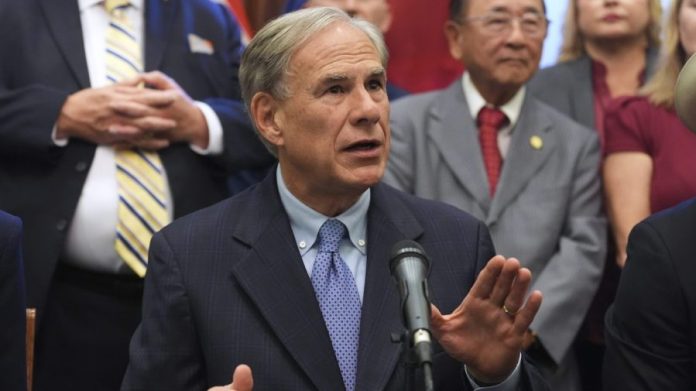
The Texas state Senate early Saturday signed off on a new congressional map, sending the legislation to Gov. Greg Abbott (R) to sign into law ahead of the 2026 midterms.
The vote passed the upper chamber in a 18-11 party-line vote as expected, with Democrats denouncing the effort as a power grab. It came after the state House approved the map also in a party-line vote after Democratic members of the body returned to the state and ended a two-week standoff over the map proposal.
The Senate had already passed the new map proposal last week, but the body needed to approve it again because the first special legislative session that Abbott called ended. The Republican governor called a second session that began this week.
A key Senate panel in charge of overseeing redistricting approved the House-passed map earlier on Thursday, sending it to the full Senate.
Democrats were prepared to show resistance and push the vote into the early morning hours, as state Democratic Caucus chair Sen. Carol Alvarado (D) announced on social media that she would filibuster the bill. The Senate broke for a long break just as she planned to start and Republicans were able to block the planned speech, according to The Associated Press.
Abbott is expected to sign the map into effect quickly, though court challenges are also likely to come soon after to try to stop it. Democrats have already vowed to appeal.
Texas Republicans’ actions have seemed to set off an arms race of sorts with multiple other Republican- and Democratic-led states seeking to also conduct redistricting and try to pick up seats. California lawmakers met this week to approve a ballot measure that would allow voters to weigh in on whether the state should redraw its lines to be in effect for the rest of the decade.
The Golden State Legislature formally approved the measure on Thursday and Gov. Gavin Newsom (D) signed the legislation not long after. The new map could also give Democrats up to five additional seats in the U.S. House.
Still, Republicans may have more opportunities to redistrict, with states like Florida and Missouri also looking at drawing new Congressional lines.
September S&P 500 E-Mini futures (ESU25) are trending up +0.26% this morning, attempting to snap a five-session losing streak, with focus squarely on a highly anticipated speech from Federal Reserve Chair Jerome Powell.
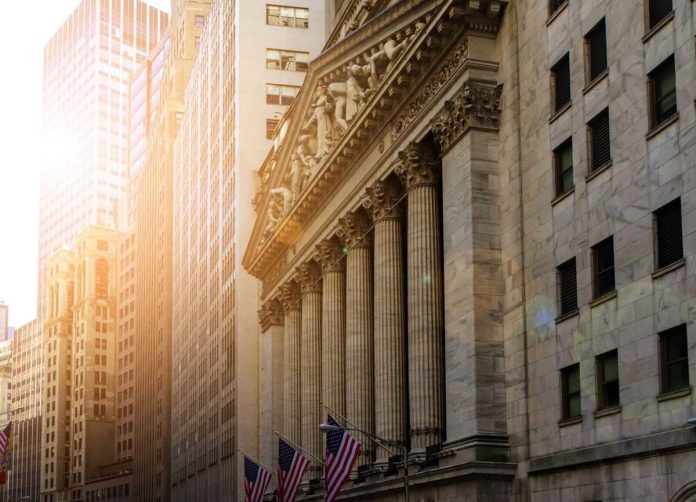
In yesterday’s trading session, Wall Street’s major indices ended in the red. Renewable energy stocks slumped after President Trump said in a social media post that the U.S. would not approve solar or wind power projects, with First Solar (FSLR) sinking about -7% to lead losers in the S&P 500 and Sunrun (RUN) sliding more than -4%. Also, Walmart (WMT) fell over -4% and was the top percentage loser on the Dow after the world’s largest retailer posted weaker-than-expected Q2 adjusted EPS. In addition, Coty (COTY) tumbled more than -21% after the cosmetics company posted an unexpected quarterly loss and projected that steep sales declines would continue in FQ1. On the bullish side, Nordson (NDSN) rose +3% after the manufacturing company reported better-than-expected FQ3 results and raised its full-year earnings guidance.
Economic data released on Thursday showed that the U.S. S&P Global manufacturing PMI unexpectedly rose to a 3-year high of 53.3 in August, stronger than expectations of 49.7. Also, U.S. existing home sales unexpectedly rose +2.0% m/m to 4.01 million in July, stronger than expectations of 3.92 million. At the same time, the number of Americans filing for initial jobless claims in the past week rose by +11K to a 2-month high of 235K, compared with the 226K expected.
“The great PMI numbers have made it more difficult for Powell to pivot to employment weakness… No fun in the equity space either,” said Andrew Brenner at NatAlliance Securities.
Cleveland Fed President Beth Hammack said on Thursday that she would not support lowering interest rates if policymakers were making a decision tomorrow. “We have inflation that’s too high and has been trending upwards over the past year,” Hammack said. Also, Atlanta Fed President Raphael Bostic said he still views just one rate cut as appropriate for this year, but added that the labor market’s trajectory is “potentially troubling” and warrants close attention. In addition, Kansas City Fed President Jeffrey Schmid said that inflation risks still outweigh risks to the labor market. Finally, Chicago Fed President Austan Goolsbee said that although some recent inflation data have come in better than expected, he hopes one “dangerous” reading proves to be just a temporary blip.
Meanwhile, U.S. rate futures have priced in a 69.3% chance of a 25 basis point rate cut and a 30.7% chance of no rate change at September’s policy meeting.
Today, all eyes are focused on Fed Chair Jerome Powell’s speech at the central bank’s annual Economic Policy Symposium in Jackson Hole, Wyoming. Investors are watching to see whether Powell provides any signal about what the Fed might do at the September meeting. However, it may be difficult for him to give a clear signal, especially with some of his colleagues still not in a rush to cut rates.
A survey conducted by 22V Research revealed that 43% of investors expect the market reaction to Jackson Hole to be “neutral,” 39% anticipate “risk-off,” and only 18% expect “risk-on.”
“Key to the Jackson Hole symposium will be whether Fed Chair Powell updates his monetary policy reaction function. In our base case, Powell sticks to his reaction function laid out in July. We think this would surprise markets hawkishly,” said Calvin Tse at BNP Paribas.
The U.S. economic data slate is empty on Friday.
In the bond market, the yield on the benchmark 10-year U.S. Treasury note is at 4.340%, up +0.21%.
The Euro Stoxx 50 Index is up +0.31% this morning, edging closer to an all-time high, with focus firmly on Fed Chair Jerome Powell’s annual speech at the Jackson Hole symposium. Chemical stocks led the gains on Friday, lifted by a more than +5% advance in Akzo Nobel (AKZA.NA) after activist investor Cevian Capital took a 3% stake in the paints maker. Automobile stocks also gained ground. The benchmark index is on track to post its third consecutive weekly gain. Final data from the statistics office Destatis released on Friday showed that Germany’s economy contracted more than initially estimated in the second quarter, with industry performing worse than expected as U.S. tariffs weighed on exports. Separately, data showed that France’s business climate indicator held steady in August. Meanwhile, the European Union pressed for lower U.S. tariffs on select sectors after Brussels and Washington issued the long-awaited joint statement sealing the trade deal they reached nearly a month ago. The EU said on Thursday it would work to ensure that lower tariffs on car exports are applied retroactively from August 1st while continuing to push for a preferential tariff on wine and spirits. In other news, UBS Global Wealth Management has projected a 3% contraction in the Eurozone’s corporate earnings growth this year, compared to a prior estimate of flat growth, as weak second-quarter results and currency headwinds threaten to weigh on profits. In other corporate news, Hensoldt AG (HAG.D.DX) rose over +3% after Citi upgraded the stock to Neutral from Sell.
Germany’s GDP and France’s Business Survey data were released today.
The German GDP has been reported at -0.3% q/q and +0.2% y/y in the second quarter, weaker than expectations of -0.1% q/q and +0.4% y/y.
The French August Business Survey came in at 96, in line with expectations.
Asian stock markets today closed in the green. China’s Shanghai Composite Index (SHCOMP) closed up +1.45%, and Japan’s Nikkei 225 Stock Index (NIK) closed up +0.05%.
China’s Shanghai Composite Index closed sharply higher today, hitting a fresh 10-year high, as renewed tech optimism added further momentum to the ongoing rally. Semiconductor stocks jumped on Friday after The Information reported that Nvidia had told some component suppliers to halt production tied to the H20 AI chip. The directive comes just weeks after Beijing urged local companies to avoid using the H20 due to alleged security concerns. The news boosted hopes that more of the chips used in China will be produced locally. Analysts noted that another boost for chip stocks on Friday came from Chinese AI startup DeepSeek, which hinted in a technical paper that the next generation of AI chips from Chinese companies is on the way. Meanwhile, the benchmark index posted its best weekly gain in nearly nine months. Chinese shares have been climbing in recent weeks, supported by easing trade tensions between the world’s two largest economies and improved liquidity conditions, as well as investors rotating out of bonds and into stocks. Goldman Sachs analysts said, “For now, FOMO sentiment still dominates, leading to buy-the-dip flow on every market correction.” In other news, China on Friday issued interim rules for overseeing and managing its rare earths mining, smelting, and separation activities. In corporate news, Li Ning surged over +8% in Hong Kong after the sportswear maker posted better-than-expected first-half net income.
Japan’s Nikkei 225 Stock Index closed just above the flatline today as investors digested fresh inflation data from the country and braced for Fed Chair Jerome Powell’s speech at the Jackson Hole symposium. Insurance and bank stocks outperformed on Friday as Japanese government bond yields climbed following stronger-than-expected domestic inflation data and tracking a rise in U.S. Treasury yields overnight. Higher bond yields improve the outlook for revenue from investment and lending. Still, the benchmark index notched a weekly loss. Government data released on Friday showed that Japan’s core inflation slowed in July but remained well above the Bank of Japan’s 2% target, reinforcing market expectations that the central bank will raise its benchmark interest rate again this year. The data came about a week after U.S. Treasury Secretary Scott Bessent took the unusual step of criticizing the BOJ’s handling of inflation, saying that “they’re behind the curve.” With trade uncertainty easing somewhat after a deal between Tokyo and Washington in late July, market participants anticipate the BOJ to hike its policy rate in the near term as persistent cost pressures weigh on consumers’ wallets. Capital Economics’ senior APAC economist, Abhijit Surya, wrote in a note, “With the economy holding up well and tariff-related uncertainties abating, the Bank should feel comfortable with resuming policy normalization before long.” BOJ Governor Kazuo Ueda is attending the Kansas City Fed’s conference in Jackson Hole, Wyoming, this weekend. Investors will be watching for any signals from the gathering that could point to the potential timing of another BOJ rate hike. The Nikkei Volatility Index, which takes into account the implied volatility of Nikkei 225 options, closed up +0.20% to 25.11.
The Japanese July National Core CPI rose +3.1% y/y, stronger than expectations of +3.0% y/y.
Pre-Market U.S. Stock Movers
Zoom Communications (ZM) climbed over +5% in pre-market trading after the videoconferencing platform posted upbeat Q2 results and raised its full-year guidance.
Ulta Beauty (ULTA) rose over +1% in pre-market trading after Barclays upgraded the stock to Overweight from Equal Weight with a price target of $589.
Nvidia (NVDA) fell more than -1% in pre-market trading after multiple reports said that the chipmaker had told some component suppliers to halt production tied to the H20 AI chip.
Intuit (INTU) slumped over -5% in pre-market trading after the company issued tepid FY26 guidance.
Workday (WDAY) slid more than -5% in pre-market trading after the human-resources software company provided slightly weaker-than-expected Q3 subscription revenue guidance and announced an agreement to acquire Paradox.
You can see more pre-market stock movers here
Today’s U.S. Earnings Spotlight: Friday – August 22nd
BJ’s Wholesale Club (BJ), RLX Technology (RLX), Buckle (BKE).
On the date of publication, Oleksandr Pylypenko did not have (either directly or indirectly) positions in any of the securities mentioned in this article. All information and data in this article is solely for informational purposes. This article was originally published on Barchart.com
He has made 73 appearances for the club, scoring two goals and assisting three.
Alvarez was an unused substitute in West Ham’s opening Premier League defeat at Sunderland but was not part of the squad for Friday’s 5-1 home defeat by Chelsea.
However, he captained his national side and scored the winner for Mexico in the Concacaf Gold Cup final against hosts the USA in the summer.
Super Lig club Fenerbahce are managed by Jose Mourinho and signed full-back Nelson Semedo from Wolves this summer, while former Aston Villa striker Jhon Duran has arrived on loan from Saudi side Al-Nassr.
sup, sub { font-size: 100% !important; } sup { mso-text-raise:10% } sub { mso-text-raise:-10% }
Welcome to The Hill’s Business & Economy newsletter
{beacon}
Business & Economy
Business & Economy
<!–
The Big Story
Powell tees up rate cut, but warns of inflation risks
Federal Reserve Chair Jerome Powell said Friday the central bank faces “significant uncertainty” as it attempts to navigate the impact of President Trump’s policies, suggesting the bank could cut rates as the job market weakens.
In remarks at the Fed’s annual summit in Jackson Hole, Wyo., Powell said the Fed needs to determine whether the impact of Trump’s tariffs, immigration restrictions and tax cuts will be temporary, or lead to permanent changes in the U.S. economy.
Even so, Powell said, the weakening of the U.S. labor market could push the Fed to slash interest rates at a point to be determined.
“There is significant uncertainty about where all of these polices will eventually settle and what their lasting effects on the economy will be,” Powell said.
The Fed, Powell said, is facing two conflicting trends: rising inflation, which would call for higher rates, and a weakening labor market, which would lend support for cuts.
“In the near term, risks to inflation are tilted to the upside, and risks to employment to the downside — a challenging situation. When our goals are in tension like this, our framework calls for us to balance both sides of our dual mandate,” Powell said.
Powell said that while the impact of Trump’s tariffs is “clearly visible,” it is not yet clear if they will lead to a one-time increase in prices or trigger a longer-term inflation surge.
“We expect those effects to accumulate over coming months, with high uncertainty about timing and amounts,” Powell said.
The stock market closed at record highs Friday after Federal Reserve Chair Jerome Powell sparked confidence in a September rate cut among Wall Street traders.
President Trump said he spoke to Canadian Prime Minister Mark Carney, who told him he would remove some of the retaliatory tariffs against the United States and calm trade tensions between the neighboring nations.
Walmart on Thursday increased its customer discounts to counteract the impact of tariffs as President Trump’s trade policies threaten to continue to drive up prices around the country.
China’s rise in biotech innovation offers the world a potentially cheaper alternative to costly healthcare products from Western suppliers, but geopolitical tensions remain a major challenge for the country’s globalisation efforts, according to a local investor in the sector.
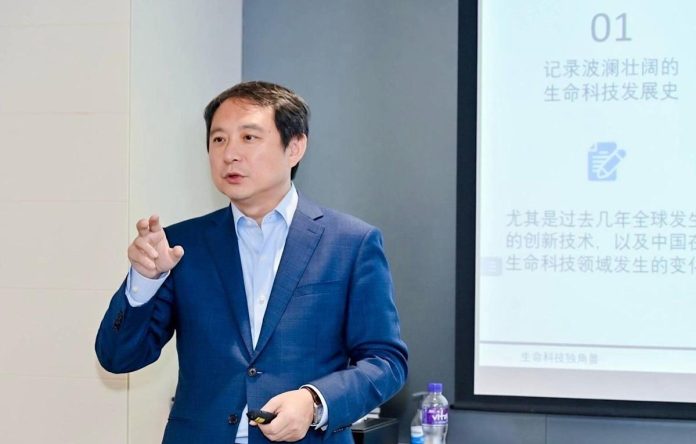
“We can lower the cost of healthcare and benefit more people through technological innovation and efficiency improvement,” Da Liu, managing director of CR-CP Life Science Fund, said in an interview with the Post earlier this week. “China’s recent achievements in biotech show that it’s possible.”
The CR-CP Life Science Fund was launched in 2019 by the state-run China Resources Group and Thai conglomerate Charoen Pokphand Group, with US$170 million under management. Companies the fund has backed include Legend Biotech, which went public in New York in 2020, and Singapore-based Mirxes, which listed its shares in Hong Kong in May this year.
Do you have questions about the biggest topics and trends from around the world? Get the answers with SCMP Knowledge, our new platform of curated content with explainers, FAQs, analyses and infographics brought to you by our award-winning team.
Innovative drugs coming out of China’s biotech firms have become increasingly popular licensing targets among multinational corporations (MNCs) in recent years, leading to what some are calling a “DeepSeek moment” for the local industry.
Da Liu, managing director of CR-CP Life Science Fund. Photo: Handout alt=Da Liu, managing director of CR-CP Life Science Fund. Photo: Handout>
Multinationals have turned their attention to Chinese biotech companies and assets because of their “cost efficiencies, accelerated timelines and promising quality”, US investment bank Jefferies said in a report last month.
Of the top 10 global drug deals by transaction volume in the first half of the year, seven involved licensing from Chinese firms, according to a July report by data provider PharmCube.
However, China was still in the early stages of innovative life sciences, and domestic companies faced “a torturous pathway ahead” in becoming global leaders, Liu wrote in his book, Life Sciences Unicorns: From a China Investment Perspective, published in 2023.
“China won’t be able to produce [biopharmaceutical] MNCs for [another] 10 to 20 years,” Liu said on Tuesday.
Western biopharmaceutical MNCs came about mostly through mergers and acquisitions, benefiting from increased globalisation in recent decades, according to Liu. The current geopolitical environment has hampered cross-border merger efforts for Chinese companies, he said.
For Chinese biotech firms to become large multinational players in the industry, they would need to have a dominant position in at least one or two fields, which has become increasingly difficult amid intensifying competition, according to Liu.
As his next project after the eight-year CR-CP Life Science Fund matures, Liu wants to set up an investment fund in Hong Kong that would also focus on life sciences.
“Hong Kong serves as a connecting point between China and Southeast Asia, and many from the US and Europe still choose Hong Kong as their first stop for business,” Liu said. “It still holds an advantage. I hope to leverage Hong Kong to build this two-way bridge.”
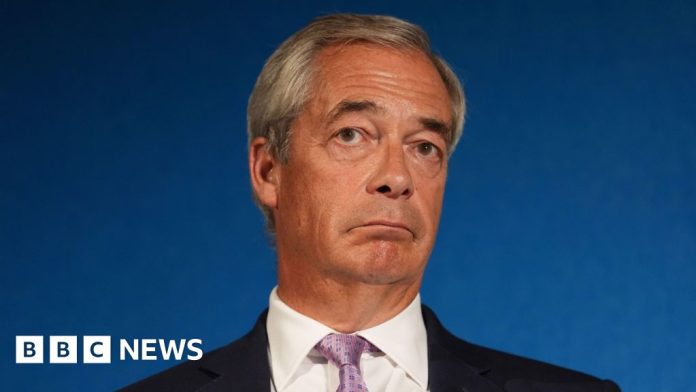
Reform UK is pledging mass deportations of asylum seekers who arrive in the UK in small boats.
The party’s leader – Nigel Farage – has told The Times that there is a “massive crisis” in the UK, which threatens national security and could lead to public disorder.
Under the plans, people could be arrested on arrival, detained on disused RAF bases and, if agreements were reached, returned to Afghanistan, Eritrea and other countries that are significant sources of arrivals.
Many of these measures could face legal challenges and political opposition. Labour has branded them “pie in the sky”, while the Conservatives said Reform were recycling their ideas.
Reform said the plans would cost £10bn over five years, but would save the government money as it would not be spending money on asylum hotels and other costs.
Under the proposed Illegal Migration (Mass Deportation) Bill, Farage’s party would consider sending migrants to British overseas territories like Ascension Island as a “fallback” option.
It would also consider using “third countries” like Rwanda and Albania to house asylum seekers.
The previous Conservative government’s Rwanda scheme was beset by legal challenges and saw just four people sent there before it was ended by the Labour government.
Farage told the Times that if people know they will be detained and deported they will stop coming “very quickly”.
“The aim of this legislation is mass deportations,” he told the Times.
“We have a massive crisis in Britain. It is not only posing a national security threat but it’s leading to public anger that frankly is not very far away from disorder.
“There is only one way to stop people coming into Britain and that is to detain them and deport them.”
Farage also wants to take Britain out of the European Convention on Human Rights (ECHR).
The ECHR was established in 1950 and sets out the rights and freedoms people are entitled to in the 46 signatory countries.
The treaty is a central part of UK human rights law and has been used to halt attempts to deport migrants who are deemed to be in the UK illegally.
Figures released by the Home Office this week said that despite increased applications, spending on asylum in the UK was down by 12%.
The total stood at £4.76bn in the year ending March 2025, down from £5.38bn the previous year.
Those figures cover Home Office costs related to asylum, including direct cash support and accommodation, but not costs relating to intercepting migrants crossing the Channel.
Small boat arrivals saw a 38% increase from the previous year, with more than half of those arrivals from Afghanistan, Eritrea, Iran, Sudan and Syria.
She said the new government had strengthened immigration controls and “sharply increased” enforcement and returns.
Responding to the Reform leader’s proposals, Angela Eagle, Labour’s border security minister, said: “Nigel Farage is simply plucking numbers out of the air, another pie in the sky policy from a party that will say anything for a headline.”
“We are getting a grip of the broken asylum system,” she added. “Making sure those with no right to be here are removed or deported.”
The Conservatives said Reform UK was recycling their ideas.
“This big reveal is just recycling many ideas the Conservatives have already announced,” said shadow home secretary Chris Philp.
“Nigel Farage previously claimed mass deportations were impossible, and now he says it’s his policy,” Philp added. “Who knows what he’ll say next.”
Bolton investigated over classified documents, Vance says
The FBI raided the home of John Bolton, President Trump’s former national security adviser, early Friday. Vice President Vance pointed to classified documents as the reason.
Vance said in an interview with NBC News’s Kristen Welker for “Meet the Press” that “classified documents are certainly part of” the reason for the raid, in addition tobroader concernsabout Bolton that investigators are planning “to look into.”
“If there’s no crime here, we’re not going to prosecute it. If there is a crime here, of course, Ambassador Bolton will get his day in court,” Vance added. “That’s how it should be. But again, our focus here is on, did he break the law? Did he commit crimes against the American people? If so, then he deserves to be prosecuted.”
During Trump’s first term in office, Bolton was investigated for what the administration said was classified information published in his memoir, “The Room Where It Happened.”
The investigation was later dropped during the Biden administration.
Ever since his tenure as national security adviser came to a close, Bolton has become a harsh critic of Trump, often appearing on cable news outlets to bash the president’s foreign policy.
Trump said Friday he had no advanced notice of the raid, but he referred to Bolton as “very unpatriotic.”
Welcome to The Hill’s Defense & National Security newsletter, I’m Emily Martin, filling in for Ellen — your guide to the latest developments at the Pentagon, on Capitol Hill and beyond.
Programmingnote: This newsletter will not publish next week. We’ll be back in your inboxes Sept. 2!
Secretary of Defense Pete Hegseth terminated the director of the Defense Intelligence Agency (DIA), according to two sources familiar with the matter. A senior defense official, speaking on the condition of anonymity, told The Hill on Friday that Lt. Gen. Jeffrey Kruse “will no longer serve” as the director of the military intelligence organization.
The Pentagon said Friday that National Guard members deployed in Washington, D.C., will soon be carrying service-issued weapons while supporting law enforcement efforts in the city.
Russia is not ready to agree to a meeting between President Vladimir Putin and Ukrainian President Volodymyr Zelensky, according to Moscow’s top diplomat. “Putin is ready to meet with Zelensky when the agenda is ready for a summit, and this agenda is not ready at all,” Foreign Minister Sergey Lavrov told NBC News’s Kristen Welker in an upcoming interview. The full conversation is scheduled to air on …
When President Trump sat down for a high-stakes meeting in Alaska with Russian President Vladimir Putin, there were two men by his side: Secretary of State Marco Rubio and special envoy Steve Witkoff. … They have emerged as the key players shaping foreign policy in the second Trump administration and have been at the center of efforts in recent weeks to pursue an end to the war in Ukraine.
Trump says Putin may attend North America’s FIFA World Cup
President Trump on Friday said Russian President Vladimir Putin may attend the 2026 FIFA World Cup being co-hosted by the U.S., Canada and Mexico, showing off a photograph in the Oval Office of the two leaders together.
Five people have died after a tourist bus returning from Niagara Falls crashed on the motorway in western New York.
Witnesses saw the vehicle lose control and turn over approximately 40 miles (64km) from Niagara Falls, a major tourist destination on the US-Canada border.
Most of the 52 people on board are from India, China and the Philippines. Some were thrown from the vehicle, and others were trapped inside the wreckage for several hours, police have said. It is believed most were not wearing seat belts.
The cause of the crash is not known and authorities have urged drivers with dashcam footage to come forward.
Ambulances and medical helicopters were sent to the crash site, near the town of Pembroke, 30 miles (48km) east of the city of Buffalo.
Translators and translation devices were brought to the scene and hospitals to assist in the investigation.
Andre Ray major, New York State Police troop commander, told a news conference: “The cause of the collision is still under investigation. However, mechanical failure as well as operator impairment have been ruled out at this time.
“The operator has been cooperative and with the investigation still underway. No charges have been filed at this point.”
The bus was heading eastbound and lost control, veering into the median and then into a ditch, according police.
The passengers were aged between one and 74. Several children were on board at the time of the crash, police say.
Twenty-four adult patients were admitted to one local hospital, and doctors say they’re expected to make a full recovery. Other area hospitals also received patients, and those under 16 who survived were taken to a children’s hospital.
One witness told The Buffalo News that he saw a bus lying on its side and items strewn on the roadway following the crash.
“There was glass all over the road and people’s stuff all over the road,” said Powell Stephens, who drove past the crash site.
“Windows were all shattered. Everyone seemed conscious and OK, but I only saw the scene for about 15 seconds.”
ConnectLife, an organisation that provides blood to hospitals in the region, has issued an emergency appeal for blood donations.
“Our community is facing a crisis,” said spokeswoman Sarah Diina.
“This is one of those moments when your action can directly save lives,” said Diina.
The Red Cross has opened a family reunification centre to connect children and parents who were transported to different hospitals.
Bolton investigated over classified documents, Vance says
The FBI raided the home of John Bolton, President Trump’s former national security adviser, early Friday. Vice President Vance pointed to classified documents as the reason.
Vance said in an interview with NBC News’s Kristen Welker for “Meet the Press” that “classified documents are certainly part of” the reason for the raid, in addition tobroader concernsabout Bolton that investigators are planning “to look into.”
“If there’s no crime here, we’re not going to prosecute it. If there is a crime here, of course, Ambassador Bolton will get his day in court,” Vance added. “That’s how it should be. But again, our focus here is on, did he break the law? Did he commit crimes against the American people? If so, then he deserves to be prosecuted.”
During Trump’s first term in office, Bolton was investigated for what the administration said was classified information published in his memoir, “The Room Where It Happened.”
The investigation was later dropped during the Biden administration.
Ever since his tenure as national security adviser came to a close, Bolton has become a harsh critic of Trump, often appearing on cable news outlets to bash the president’s foreign policy.
Trump said Friday he had no advanced notice of the raid, but he referred to Bolton as “very unpatriotic.”
Welcome to The Hill’s Defense & National Security newsletter, I’m Emily Martin, filling in for Ellen — your guide to the latest developments at the Pentagon, on Capitol Hill and beyond.
Programmingnote: This newsletter will not publish next week. We’ll be back in your inboxes Sept. 2!
Secretary of Defense Pete Hegseth terminated the director of the Defense Intelligence Agency (DIA), according to two sources familiar with the matter. A senior defense official, speaking on the condition of anonymity, told The Hill on Friday that Lt. Gen. Jeffrey Kruse “will no longer serve” as the director of the military intelligence organization.
The Pentagon said Friday that National Guard members deployed in Washington, D.C., will soon be carrying service-issued weapons while supporting law enforcement efforts in the city.
Russia is not ready to agree to a meeting between President Vladimir Putin and Ukrainian President Volodymyr Zelensky, according to Moscow’s top diplomat. “Putin is ready to meet with Zelensky when the agenda is ready for a summit, and this agenda is not ready at all,” Foreign Minister Sergey Lavrov told NBC News’s Kristen Welker in an upcoming interview. The full conversation is scheduled to air on …
When President Trump sat down for a high-stakes meeting in Alaska with Russian President Vladimir Putin, there were two men by his side: Secretary of State Marco Rubio and special envoy Steve Witkoff. … They have emerged as the key players shaping foreign policy in the second Trump administration and have been at the center of efforts in recent weeks to pursue an end to the war in Ukraine.
Trump says Putin may attend North America’s FIFA World Cup
President Trump on Friday said Russian President Vladimir Putin may attend the 2026 FIFA World Cup being co-hosted by the U.S., Canada and Mexico, showing off a photograph in the Oval Office of the two leaders together.