Women who used the Tea app in the US are facing backlash after their data was leaked
Sally was stalked by her ex-boyfriend.
After ending their relationship, he would turn up at work – and even her friends’ houses. She eventually had to move.
When she finally got back on to the dating scene, she was wary. She decided to sign up for a new app where women could do background checks and share experiences of men they were dating.
Users of the US-based Tea Dating Advice app, which is only available in America, could flag if potential partners were married or registered sex offenders.
They could run reverse image searches to check against people using fake identities. It was also possible to mark men as red or green flags, and share unproven gossip.
The app was founded in 2023 but climbed the charts in the US to the number one spot in July this year. It reportedly attracted more than a million users.
Sally, whose name has been changed to protect her identity, thought it was interesting to read what was being said about men in her area. But she found it “gossip-y” and that some of the information on it was unreliable.
In late July, the app was hacked. Over 70,000 images were leaked and posted on the online message board 4chan – including IDs and selfies of users which were meant to have been for verification purposes only and “deleted immediately”.
The leak was seized on by misogynist groups online, and within hours, several websites had been created to humiliate the women who’d signed up.
Two maps were published on social media, showing 33,000 pins spread across the United States. Fearing the worst, Sally zoomed in, looking for her home.
She found it – although it wasn’t linked to her name, her exact address was highlighted for anyone to see.
She was worried her stalker ex-partner could now track her down. “He didn’t know before where I lived or worked and I’ve gone to great lengths to keep it that way,” she says. “I’m very freaked out.”
The BBC alerted Google of the two maps hosted on Google Maps purporting to represent the locations of women who had signed up for Tea.
The company said the maps violated their harassment policies and deleted them. Since the breach, more than 10 women have filed class actions against the company which owns Tea.
A spokesperson for Tea app said they were “working to identify and notify users whose personal information was involved and notify them under applicable law” and that affected users would be “offered identity theft and credit monitoring services”.
They also said that they “bolstered resources” to enhance security for current membership, that they’re “proud of what [they’ve] built”, and that their “mission is more vital than ever”.
Misogynists ‘rank’ leaked selfies
Since the breach, the BBC has found websites, apps and even a “game” featuring the leaked data which encourages harassment towards women who had joined the app.
The “game” puts the selfies submitted by women head-to-head, instructing users to click on the one they prefer, with leaderboards of the “top 50” and “bottom 50”. The BBC could not identify the creator of the website.
Users outside of the misogynistic groups were also reposting content deriding the appearance of women on X and TikTok.
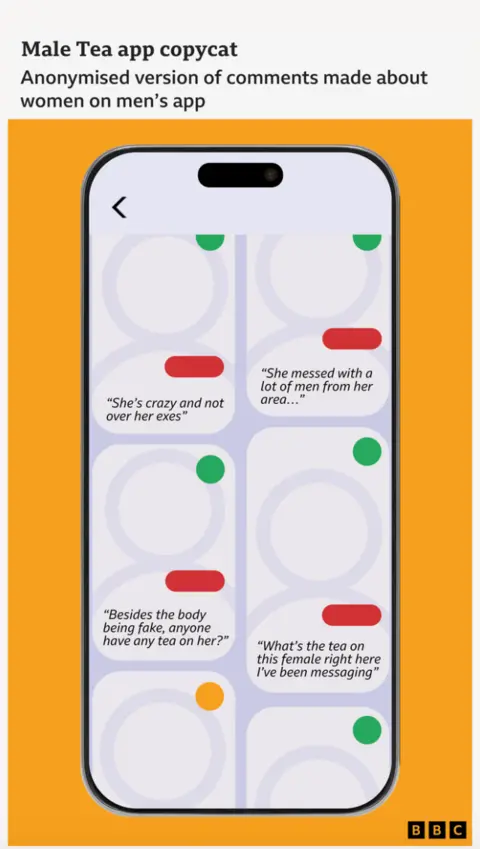
Copycat Tea apps for men have also proliferated – but there’s no suggestion the men are doing this for their safety. Instead, users post harsh derogatory reviews of women.
Men posted asking for reviews of women on one of the male tea apps, some objectified women, while other’s racially or sexually abused women that were posted
In screen recordings seen by the BBC, users comment on women’s sexuality and post intimate images of women without their consent in the apps.
The BBC also identified more than 10 “Tea” groups on the messaging app Telegram where men share sexual and apparently AI-generated images of women for others to rate or gossip. They post the women’s social media handles, revealing their identities.
A spokesperson for Telegram said that “illegal pornography is explicitly forbidden” and “removed when discovered”.
John Yanchunis, a lawyer representing one of the women against the company that owns the app, said she had been subject to immense online abuse.
“It caused a tremendous amount of emotional distress,” he told the BBC. “She became the subject of ridicule.”
It is unsurprising that the leak was exploited.
The app had drawn criticism ever since it had grown in popularity. Defamation, with the spread of unproven allegations, and doxxing, when someone’s identifying information is published without their consent, were real possibilities.
Men’s groups had wanted to take the app down – and when they found the data breach, they saw it as a chance for retribution.
“This leak was picked up by misogynist communities as a great cause and one that they obviously take a lot of pride in,” says Callum Hood, head of research at the Centre for Countering Digital Hate.
More than 12,000 posts on 4Chan referenced Tea Dating app from 23 July, three days before the leak, to 12 August, he adds.
A rift between men and women?
Online, the Tea app leak is being referred to as part of a “gender war” and the final straw in heterosexual dating.
There is growing evidence that suggests that heterosexual young people are turning away from traditional dating and long-term romantic relationships.
Negative experiences in online dating are adding to these tensions.
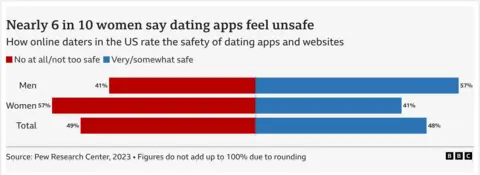
A 2023 Pew research found that in the US, over half of women’s experiences on dating apps have been negative, with women being more likely to report unwanted behaviours from men and feeling unsafe on dating apps.
Dr Jenny Van Hooff, a sociologist at Manchester Metropolitan University, says the perceived lack of safety impacts how many young women may want to take part in online dating.
Unlike meeting partners through friends or work, there are fewer repercussions for poor online dating behaviour.
“Women’s experiences of the opposite sex on dating apps is a feeling of fear and lack of trust,” she says. “Misogyny is just getting more entrenched in dating.”
Previous incarnations to the Tea app, such as ‘Are We Dating the Same Guy’ social media groups with thousands of followers, have existed for years globally.
At first, they were hailed as a new way to hold men accountable. But, like Tea, controversy followed, and many men felt misrepresented by what was posted.
With reportedly more than a million users, the Tea App took this concept to a new scale.
But experts have also questioned possible profit motivations behind the app, alongside the trustworthiness of the information posted.
For women wishing to use the app for safety, verifying the information can be challenging. Meanwhile, men, who are unable to access the app, have no way of knowing if false information is posted about them.
Dr Van Hooff said the leak was “proving women’s point to why this app was felt to be necessary”.
“It’s definitely not disabusing these women of any thoughts they have about men and male behaviour.”
She believes women’s safety has been compromised, and men have felt their actions were taken out of context and exploited for gossip.
For Sally, the leak has impacted her sense of protection.
“I’m moving in with loved ones just to feel safe,” she says.
A federal judge in Florida ordered late Thursday that some of Alligator Alcatraz be shut down and barred the Sunshine State from bringing in more migrants to the detention facility in a blow to the administration as it ramps up its immigration crackdown.
U.S. District Judge Kathleen Williams, an appointee of former President Obama, ruled Florida must halt the expansion of Alligator Alcatraz and the installation of more lighting. She also ordered the removal of all “generators, gas, sewage, and other waste and waste receptacles that were installed to support this project” within 60 days.
Williams, in her 82-page ruling, said the government must remove temporary fencing to allow Miccosukee Tribe members “access to the site consistent with the access they enjoyed before the erection of the detention camp.”
The ruling is a win for environmental organizations that have argued the detention facility, which opened last month at the Dade-Collier Training and Transition Airport, poses a danger to the Florida Everglades and the surrounding wildlife.
Williams said the project creates “irreparable harm in the form of habitat loss and increased mortality to endangered species in the area.”
Welcome to The Hill’s Energy & Environment newsletter, I’m Rachel Frazin — keeping you up to speed on the policies impacting everything from oil and gas to new supply chains.
Air pollutants from U.S. oil and gas operations are causing 91,000 premature deaths and hundreds of thousands of health issues each year — with racial and ethnic minority populations bearing the biggest burden, a new study has found.
Federal agents searched the home of former national security adviser John Bolton on Friday, targeting one of President Trump’s most outspoken critics. Read more
Strange as it may sound, among the more anxiety-inducing parts of the fantasy football experience centers around one’s draft position. Whether it’s fretting that your most desired player won’t be there by the time you get to pick, the bother of not knowing your slot until an hour beforehand (as is the case in ESPN default leagues), or the fear that you’ll pick the inevitable “first-rounder who is a bust” and be openly ridiculed by your counterparts, we collectively exhaust far too much energy sweating this particular topic.
Thankfully, you’ve come to the right place. It’s here where I annually walk you through the twists and turns of your draft’s first two rounds, helping ease your mind and maximize your chances at starting your team off strong. After all, we all know that age-old fantasy mantra: “You can’t win your league in the first round, but you can certainly lose it.”
Below is an outline of the specific candidates for selection from each draft spot, the potential combinations for your first two picks, and I offer my ideal selections from each slot in your league.
This edition covers 10-team ESPN standard leagues with PPR scoring. Under each draft slot, you’ll find a “players unlocked” section, which highlights the earliest pick at which you should consider selecting that player (this does not mean that you should select him, but rather that you could if you wish to).
Round 1 (Pick 1 overall):Ja’Marr Chase is coming off one of the most prolific seasons by a wide receiver, he’s a prime-age 25, and his Cincinnati Bengals return a near-identical offense for 2025. Chase’s 403.0 fantasy points were fourth best in history by a wide receiver, his 23.7 points per game was 12th since the merger, and he joined Charley Hennigan (1961), Isaac Bruce (1995) and Davante Adams (2020) as the only wide receivers to score 40-plus points in a game three times in a season. Chase at No. 1 is a no-brainer.
Round 2 (Pick 20): In a 10-team league, there’s a path to one-slot teams enjoying a dream start to the draft, should any of the running backs from the Derrick Henry/Bucky Irving/Josh Jacobs tier, or the wide receivers from the Nico Collins/A.J. Brown/Drake London tier, or even better, multiples, make it this far. If Jacobs is the only one there, he is a great selection this late. Additionally, a WR-RB start to the draft gives this team the luxury of considering Brock Bowers in Round 3. Bowers scored 12.9 more fantasy points than the second-best TE and 114.2 more than the 11th best last season, while projecting for 100-plus more points than the No. 11 tight end for 2025.
Round 1 (Pick 2): You’ll notice both Bijan Robinson and Saquon Barkley alongside Chase among “unlocked” players at No. 1 overall, in large part due to the perennial debate about the impact and scarcity of three-down, 360-touch running backs (they’re the only ones with at least that many in 2024 and in our 2025 projections). Barkley averaged the position’s most fantasy points per game (22.2), while Robinson’s 341.7 total points were 11th best by any second-year running back in history, making either a viable choice for managers who prefer to prioritize the position. I’m not going running back at No. 1 overall, but I would from this spot, with Robinson preferred between the two.
Round 2 (Pick 19): Getting the No. 1 running back, and a prime-age one at that, provides this team lots of second-round flexibility, to the point that the two-slot manager might be thinking about breaking the seal on either the quarterback or tight end position. I wouldn’t, as there are enough of the former in the top tier, the latter has historically unearthed enough low-cost breakthroughs to warrant draft patience, and the third round should still provide a wealth of options at either spot. Lamar Jackson, for example, by all rights should be there at 22nd overall.
Running back remains the way to go from this slot, with Josh Jacobs, Jonathan Taylor or Bucky Irving often the names available. Taylor, for all his injury risk, is one of the most reliable three-down backs, his 15 games exceeding 20 touches in a game the past two seasons trailing only Saquon Barkley and Kyren Williams (17 apiece).
Players unlocked: None.
Tristan’s picks: Robinson and Taylor.
Draft Slot 3
Round 1 (Pick 3): If you’re a Saquon Barkley believer — and I’m not, concerned that players of his age (28) coming off his 2024 workload (482 total touches, including the postseason) have a poor track record of repeating (detailed in my video above) — you shouldn’t let him sneak past this draft slot. Ja’Marr Chase, Bijan Robinson and Barkley are projected for 100-plus more points than the No. 21 player at their positions, the only running backs and wide receivers who can claim that.
This is a year, however, where personal opinion can come into play between picks 3 and 6, meaning Justin Jefferson, Jahmyr Gibbs and CeeDee Lamb, all “unlocked” at the previous slot, are fair game. I’m among the most pro-Jefferson fantasy managers around, pointing out his wide receiver-record 1,492.4 fantasy points through his first five NFL seasons.
Players unlocked: None.
Round 2 (Pick 18): Bucky Irving is the most intriguing second-round running back, at least relative to what are generally modest projections. I can formulate a case that he almost scratches the top-10 overall picks, though many people rank him outside the top 20. This seems like the sweet spot for him, but don’t be afraid to reach with one of the lower draft slots, if you share similar optimism.
Round 1 (Pick 4): Jahmyr Gibbs ultimately outscored Saquon Barkley last season (362.9 to 355.2), and while Barkley sitting out the Week 18 finale contributed, Gibbs’ performances in Weeks 15-18 and the divisional round gave him the look of a player ready to take his game to another level. If Ja’Marr Chase, Bijan Robinson and Justin Jefferson are already off the board, this slot should come down to your Gibbs/Barkley personal preference.
Players unlocked: None.
Round 2 (Pick 17): I’m fading Derrick Henry more than most — more on why under Draft Slot 10 — but this is about as far as I’d allow him to slip in any draft, 10 teams or otherwise. Running backs will be plentiful from this spot in drafts where the Brian Thomas Jr./Nico Collins/A.J. Brown/Drake London wide receiver tier goes early in the second round, and Henry is a cut above Bucky Irving, Jonathan Taylor and Josh Jacobs.
Players unlocked: None.
Tristan’s picks: Gibbs and Henry.
Draft Slot 5
Round 1 (Pick 5): Don’t get me wrong, my fading of Saquon Barkley is no hater’s angle. The 5-slot is the furthest I’d let him slide in any 2025 draft of 10 teams or greater. Any more than that and you run the danger of gifting your competition a massive value pick … kind of like Barkley wound up being in 2024.
Players unlocked: None.
Round 2 (Pick 16): The danger for this team is being cornered into a Philadelphia Eagles strategy, should Brian Thomas Jr., Nico Collins and Drake London all already be off the board. If that’s the case, taking a second running back in De’Von Achane, Derrick Henry or Bucky Irving, then drafting wide receivers aggressively in the next three to five rounds, is reasonable. It’s also not outrageous to take No. 1 tight end Brock Bowers this early.
Round 1 (Pick 6): If it’s not either of the top two draft slots, this is my preferred position for 2025, as the first point at which there’s a noticeable drop-off in terms of talent. Ja’Marr Chase, Bijan Robinson, Justin Jefferson, Jahmyr Gibbs, Saquon Barkey and CeeDee Lamb make up the top tier of six, meaning you should select the one remaining from this slot. For those feeling super-bold, this is the earliest possible slot from which you should even consider drafting the top-ranked rookie, Ashton Jeanty.
Round 2 (Pick 15): This team also runs the risk of the dual-Eagles start, albeit with more control over it in the second round. A non-A.J. Brown member of the Brian Thomas Jr./Nico Collins/Brown/Drake London wide receiver tier, or a RB1 like De’Von Achane, should still be there. Incidentally, I wouldn’t pass up one of the wide receivers even if I took Lamb in the first round. Chase Brown, Kyren Williams and James Cook have been known to make it back to this pick in Round 3.
Round 1 (Pick 7): Picks 7 through 11 overall come down largely to personal preference, from the trio of wide receivers (Puka Nacua, Amon-Ra St. Brown and Malik Nabers) and the two high-ceiling running backs (Christian McCaffrey and Ashton Jeanty) unlocked in the 6-slot. I’ve vacillated between the three receivers in my own early drafts, though St. Brown, the only wide receiver to score 300-plus fantasy points in each of the past two seasons, has most often risen to the top of my board.
Players unlocked: None.
Round 2 (Pick 14): If you’re more pro-Henry than I am, selecting him here makes a bit of sense, even if you took a running back in the first round. I prefer one of the Brian Thomas Jr./Nico Collins/Brown/London wide receiver quartet, but as long as you’re not selecting a running back ranked beneath De’Von Achane or Henry, you’re starting off fine. Jaxon Smith-Njigba, Tyreek Hill, Tee Higgins and Garrett Wilson are typically among wide receivers available from this slot in the third round.
Players unlocked: None.
Tristan’s picks: St. Brown and Collins.
Draft Slot 8
Round 1 (Pick 8): Puka Nacua is the next wide receiver on my draft board. He has a more reliable quarterback throwing him the football than Malik Nabers, and he has scored 15-plus fantasy points in 17 of the first 28 games of his career. Nacua also finished last season on a high note, scoring 159.4 fantasy points over the final eight weeks (third best among wide receivers, despite sitting out the finale).
Round 2 (Pick 13): I’m an Achane fan, so I must point out the following: Since his breakthrough game in Week 3 of 2023 (but not including that one), he has averaged 16.8 PPG, eighth best among running backs. That’s production I can’t pass up in the hopes of piecing a Zero-RB strategy together in the later rounds.
Players unlocked: Josh Jacobs, Brock Bowers.
Tristan’s picks: Nacua and Achane.
Draft Slot 9
Round 1 (Pick 9): Here is where fantasy managers face their toughest draft decision, as Christian McCaffrey, despite the glut of top-6 wide receivers, becomes too difficult to pass up. Over the past seven NFL seasons, covering the time he has been a full-time starter, he has averaged a league-leading (among all players) 23.7 fantasy points per game. Yes, McCaffrey is now 29 years old, with 1,871 career touches on his résumé, and he averaged barely half that per-game rate in his four games played last season, but the upside of a healthy McCaffrey is unquestionably first-round talent. I wouldn’t fault anyone for picking any of the earlier wide receivers (if still available) or Ashton Jeanty over McCaffrey, but this is the furthest I would allow him to slip in any draft.
Players unlocked: Nico Collins, Derrick Henry.
Round 2 (Pick 12): My valuations have there being a gap between the top 11 picks and the next tier that includes Brian Thomas Jr., Nico Collins and De’Von Achane, meaning that if any player targeted for earlier slots makes it this far, snatch him up quick. Failing that, those who select McCaffrey might be tempted to take Achane, or perhaps Derrick Henry, though that’s absorbing a good amount of risk at the position. I’d go wide receiver, and Thomas, from here.
Players unlocked: None.
Tristan’s picks: McCaffrey and Thomas.
Draft Slot 10
Round 1 (Pick 10): The reason to shy away from the 10-slot in a 10-team league, if you at all have the opportunity to choose, is what will likely be available come the Rounds 3-4 turn, not these two picks. If everything plays out as outlined above, Malik Nabers and Ashton Jeanty provide an excellent starting point. That said, once Christian McCaffrey is gone, it’s time to bring up the other highly debatable running back, Derrick Henry. Henry was fourth in scoring among RBs in 2024, and he’s a three-down back for one of the most run-friendly offenses in football. That said, among the previous 20 players with at least the same as Henry’s 2,529 career touches through his age-30 season, only Walter Payton (three), Ricky Watters and Curtis Martin enjoyed a season of 220-plus fantasy points at an older age. Henry is a risk/reward pick, and I’m not yet ready to take the chance.
Players unlocked: Bucky Irving, Jonathan Taylor, A.J. Brown, Drake London.
Round 2 (Pick 11): If you’re thinking about going WR-WR rather than selecting Jeanty, or if Jeanty goes earlier and you’d rather pass on De’Von Achane, bear in mind that every one of the top 12 running backs will likely be gone by the Rounds 3-4 turn. Be prepared to go heavily Zero-RB if selecting Nabers and Brian Thomas Jr., for example.
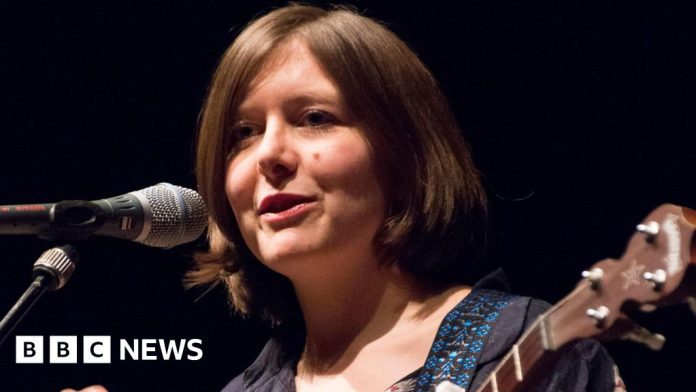
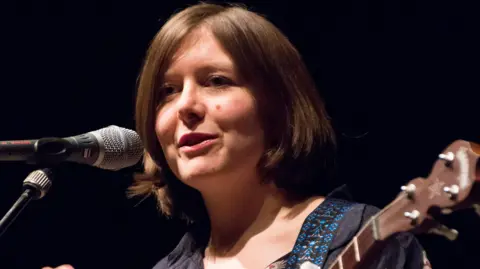
Emily Portman says the AI version of her was “really creepy”
Last month, award-winning singer Emily Portman got a message from a fan praising her new album and saying “English folk music is in good hands”.
That would normally be a compliment, but the Sheffield-based artist was puzzled.
So she followed a link the fan had posted and was taken to what appeared to be her latest release. “But I didn’t recognise it because I hadn’t released a new album,” Portman says.
“I clicked through and discovered an album online everywhere – on Spotify and iTunes and all the online platforms.
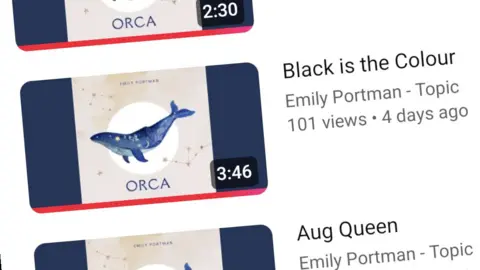
“It was called Orca, and it was music that was evidently AI-generated, but it had been cleverly trained, I think, on me.”
The 10 tracks had names such as Sprig of Thyme and Silent Hearth – which were “uncannily close” to titles she might choose. It was something that Portman, who won a BBC Folk Award in 2013, found “really creepy”.
When she clicked to listen, the voice – supposedly hers – was a bit off but sang in “a folk style probably closest to mine that AI could produce”, she says. The instrumentation was also eerily similar.
The Orca album was released under Emily Portman’s name on a range of digital platforms including YouTube
While AI-generated music is rife online, it’s often released under fictitious names, or imitates big stars, but it doesn’t normally appear on their official streaming pages.
There’s now a growing trend, though, for established (but not superstar) artists to be targeted by fake albums or songs that suddenly appear on their pages on Spotify and other streaming services. Even dead musicians have had AI-generated “new” material added to their catalogues.
Portman doesn’t know who put the album up under her name or why. She was falsely credited as performer, writer and copyright holder. The producer listed in the credits was Freddie Howells – but she says that name doesn’t mean anything to her, and there’s no trace online of a producer or musician of that name.
As for the music itself, while it was enough to convince some fans, the lack of actual human creative input made it sound “vacuous and pristine”, she says.
“I’ll never be able to sing that perfectly in tune. And that’s not the point. I don’t want to. I’m human.”
A few days later, another album popped up on Portman’s streaming pages. This time, less effort had been made to emulate her. It was “20 tracks of instrumental drivel”, she says. “Just AI slop.”
She filed copyright complaints to get the albums taken down, and says the episode has redoubled her “belief in the importance of real creativity, and how it moves people”.
“I hope that the AI music didn’t do that for people,” she continues. “Although I did get an email from somebody saying, ‘Where’s Orca? That’s been on repeat.’ So people have been hoodwinked by it.”
Getty Images
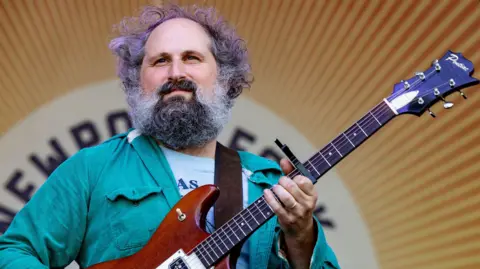
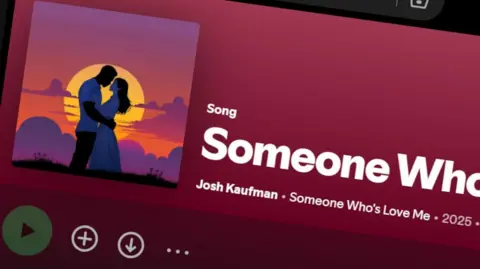
Josh Kaufman says his AI song sounded like “a Casio keyboard demo with broken English lyrics”
Whoever posted the albums online will receive any royalties, but no song on Orca had more than 2,000 plays on Spotify – so the revenue wouldn’t have exceeded $6 (£4.40) per track.
If that information is incorrect, and a song wrongly gets listed under an existing artist’s name, it’s down to them or their label to complain and get it removed.
Portman says some platforms were quick to remove Orca from their platforms, but Spotify took three weeks, and she still hasn’t regained control of her Spotify artist profile.
In a statement, Spotify said: “These albums were incorrectly added to the wrong profile of a different artist by the same name, and were removed once flagged.”
Portman questions that. Although there is another singer of the same name on Spotify, the albums didn’t sound like her and haven’t since been added to her profile.
She says the “distressing” experience feels like “the start of something pretty dystopian” – and also highlights a lack of legal safeguards for artists.
She suspects independent artists are being targeted because star names have more protection and more power to get fraudulent releases removed swiftly.
‘Signature of our soul’
Like Portman, New York-based musician, producer and songwriter Josh Kaufman, who played on Taylor Swift’s Folklore album, was alerted to fake new material by his listeners.
“I just started getting messages from fans and friends about some new music I just released, and how much of a shift it was [stylistically],” he says.
“I think most people were hip to the fact that it was somebody else just using my artist profile as a way to release some strange music that clearly was computer generated.”
In Kaufman’s case, his identity had been used to release a track called Someone Who’s Love Me, which sounded like “a Casio keyboard demo with broken English lyrics”.
“It was embarrassing and then just kind of confusing,” he adds. “This [music] is the thing that we do, right? This is the signature of our soul, and that someone else can walk in there and just have access like that…”
He’s one of a number of Americana and folk-rock artists who have had fake tracks posted using their names in recent weeks – apparently all from the same source.
Others include Wilco frontman Jeff Tweedy, J Tillman (now known as Father John Misty), Sam Beam (aka Iron & Wine), Teddy Thompson and Jakob Dylan.
All the releases used the same style of AI artwork and were credited to three record labels, two with apparently Indonesian names. Many listed the same name as a songwriter – Zyan Maliq Mahardika.
That name has also been credited on other songs mimicking real US Christian musicians and metalcore bands.
Spotify said it had flagged the issue with the distributor and removed these tracks as they “violated our policy against impersonating another person or brand.”
It added it would “remove any distributor who repeatedly allows this type of content on our platform”.
A similar style of artwork was used on songs released under the names of Josh Kaufman and a number of other Americana artists
Kaufman made a playlist of all the tracks he could find and gave it a derogatory name. “It’s more fun to laugh about it than to feel bad about it,” he says. “But it is disconcerting that this can happen.”
And it was strange to him, as a musician and producer who generally goes “under the radar”, to be targeted. “Why not go for someone big?” he asks. “If you’re trying to accumulate royalties of some kind.”
Where any royalties may have gone, he has no idea. “I don’t even know what the enemy is, to be honest,” he says. “Is it a computer? Is it a person sitting somewhere developing this music to just mess with someone?”
One thing is for sure – he wants companies such as Spotify to be more proactive about preventing fraudulent music appearing on their platforms.
Tatiana Cirisano from media and technology analysis company Midia Research says AI is “making it easier for fraudsters” to fool listeners, who are also more “passive” in the algorithmic age.
She thinks bad actors posing as real-life artists are hoping their fraudulent tracks will “rack up enough streams” – hundreds of thousands – to earn them a nice payday.
“I would think that the AI fakes are targeting lesser-known artists in the hopes that their schemes fly under the radar, compared to if they were to target a superstar who could immediately get Spotify on the line,” she notes.
But streaming services and distributors are “working hard” and getting better at spotting it, she stresses, “ironically, also by using AI and machine learning!
“I think it’s clear to everyone that every stakeholder must do their part,” she says. “But it’s complicated.”
Three chords and the mistruth
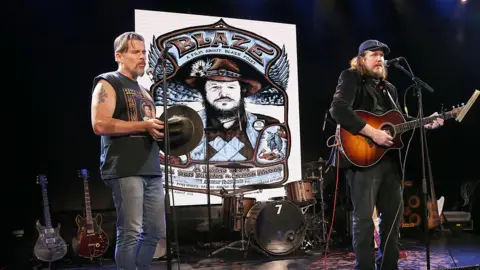
When a new song appeared last month on US country singer Blaze Foley’s verified artist page, it came as a big surprise to Craig McDonald, owner of Foley’s record label – not least because Foley died in 1989.
The “AI schlock”, as McDonald puts it, was evidently not in Foley’s “Texas singer-songwriter from the heart” style.
“Blaze had a songwriting talent but along with that talent, a total authenticity,” he says. “As they say, three chords and the truth. And this clearly wasn’t it.”
McDonald, who runs Lost Art Records, is concerned AI dupes could damage the credibility of artists like Foley, especially for people who don’t know their sound.
Getty Images
Ethan Hawke (left) and Ben Dickey performed after a screening of a biopic about Blaze Foley in Austin, Texas, in 2018
What would Foley have made of all this? “Blaze might have liked it because the photo that accompanied it really slimmed him down, it took off about 30lb and also gave him a modern haircut,” McDonald laughs.
“But he would also say, ‘I want that 10% of a penny that Spotify is collecting. Send that my way’.”
Considering how the streaming era has already made a big dent in many artists’ incomes, Emily Portman says this affair has felt like a “very low blow”.
As well as attempting to tackle her faceless AI impostor, she is now recording her first (real) solo album for 10 years – which, unlike AI, takes time, money and deep personal creativity. She says it will cost at least £10,000 to make, to pay the people who play on, produce, release and promote it.
But the result, she enthuses, will be something genuine and human.
“I’m really looking forward to bringing some real music into the world!”
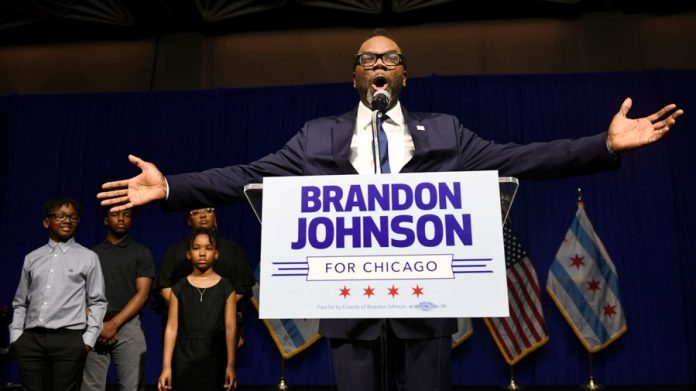
Chicago Mayor Brandon Johnson (D) slammed President Trump over possibly sending the national guard to Chicago after his D.C. crime crackdown, calling the president’s plans to target the Windy City “offensive.”
“Certainly, we have grave concerns about the impact of any unlawful deployment of National Guard troops to the City of Chicago. The problem with the President’s approach is that it is uncoordinated, uncalled for, and unsound,” Johnson wrote in a Friday statement.
Trump told reporters in the Oval Office on Friday that he would send the National Guard to other Democrat-run cities, including Chicago.
“Chicago’s a mess. You have an incompetent mayor. Grossly incompetent and we’ll straighten that one out probably next. That will be our next one after this. And it won’t even be tough,” Trump said.
Crime rates have been down in Chicago, according to the city’s website.
“Here’s the bottom line – as mayor of this city, and mayors across this country, we know exactly what it takes to drive down violence and crime in our cities because we’re actually doing it,” Johnson told Nexstar affiliate WGN.
“It’s really a shame, quite frankly, and offensive that this president speaks in the name of law and order would do the opposite,” he continued.
The mayor mentioned in his statement that the unlawful deployment of national guard troops to Chicago “would threaten to undermine the historic progress we have made. In the past year alone, we have reduced homicides by more than 30%, robberies by 35%, and shootings by almost 40%.”
Last week, Trump federalized the D.C. Metropolitan Police Department under the Home Rule Act and deployed 800 D.C. National Guardsmen to fight crime. On Tuesday, he doubled the number of National Guard troops who are patrolling the city, bringing the total up to almost 1,750 military personnel.
As of Tuesday, 556 arrests had been made in the nation’s capital since Aug. 7, according to the White House. D.C. officials, especially Mayor Muriel Bowser (D), said the administration’s crackdown on the city is about immigration and exerting power.
Democrats across the country have criticized Trump’s crime policies.
“We know that our communities are safest when we fully invest in housing, community safety, and education,” reads Johnson’s statement. “There are many things the federal government could do to help us reduce crime and violence in Chicago, but sending in the military is not one of them.”
We recently published 10 Big Names With Surprising Gains. Viking Therapeutics, Inc. (NASDAQ:VKTX) is one of Wednesday’s best performers.
Viking Therapeutics bounced back by 5.46 percent on Wednesday to finish at $25.69 apiece as investors resorted to early bargain-hunting to take advantage of its cheap valuations.
This followed the company’s 42-percent decline on Tuesday, dragged by results of its weight loss clinical trial that saw a huge dropout rate in the number of enrollees due to mild to moderate adverse effects, including nausea and vomiting.
Viking Therapeutics (VKTX) Rebounds on Bargain-Hunting. Are You Missing Out?
In a statement, Viking Therapeutics, Inc. (NASDAQ:VKTX) said it registered a 28-percent dropout rate in the overall number of enrollees for the second phase of its VK2735 clinical study, sparking concerns about the drug’s tolerability.
In a call with analysts, Viking Therapeutics, Inc. (NASDAQ:VKTX) CEO Brian Lian said that GI-related adverse event rates might be further reduced through lower starting doses and or slower dose escalation.
He added that the company was looking to explore it further in an upcoming maintenance dosing study.
Following the resu
While we acknowledge the potential of VKTX as an investment, our conviction lies in the belief that some AI stocks hold greater promise for delivering higher returns and have limited downside risk. If you are looking for an extremely cheap AI stock that is also a major beneficiary of Trump tariffs and onshoring, see our free report on the best short-term AI stock.
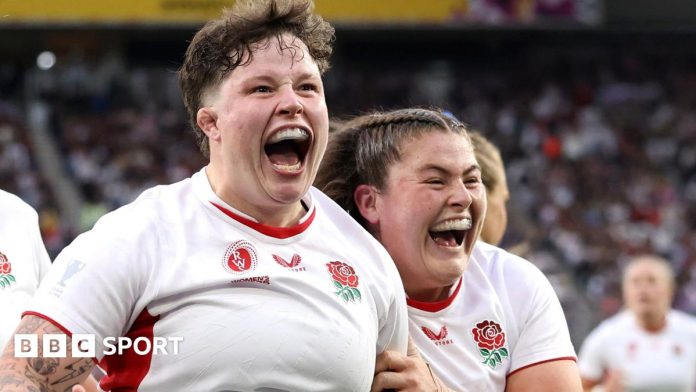
To many first-time viewers of this England team, it was a sight to behold.
None of what occurred will be news to head coach John Mitchell, however. He will be looking more closely at the fine detail of his team, rather than Kildunne’s well-known headline-grabbing abilities.
The neat dovetailing of Tatyana Heard and Megan Jones – a centre partnership that combines power, pace and nous – will have been particularly pleasing.
Jones made perhaps the tackle of the match, marching Lotte Sharp at pace and drawing winces from the stands.
Her break, followed by Heard’s quick hands, set up Abby Dow’s score just after half-time.
It is difficult to see veteran Emily Scarratt, who arrived off the bench in the second half, edging her way back into a first-choice pairing any time soon.
Loose-head Hannah Botterman raged around in the loose and stole a prime turnover off the floor, perhaps inspired by the chance to show up United States’ Hope Rogers who was picked in World Rugby’s Team of the Year in her position.
Sadia Kabeya buzzed with energy in the back row, while fly-half Zoe Harrison’s kicking for posts was superb.
With Emma Sing, the squad’s most impressive off the tee, on the bench and the small change potentially crucial in the knockout rounds, it is an area where high standards must be maintained.
The driving maul is still a trump card and the neat off-the-top variation that gave hooker Amy Cokayne her try will have opponents second-guessing themselves afresh.
The scrum was dominant, especially in the early exchanges.
However there is room for improvement.
Some of the intricacies, tip-on passes in midfield particularly, went astray. Better teams will bring more line speed and pressure to bear on those skills.
Jess Breach scored two tries but won’t want to watch the way she was shrugged off by Erica Jarrell-Searcy for the United States’ score.
Claudia Moloney-MacDonald, who missed this match with a minor injury, will be back to put pressure on Breach soon.
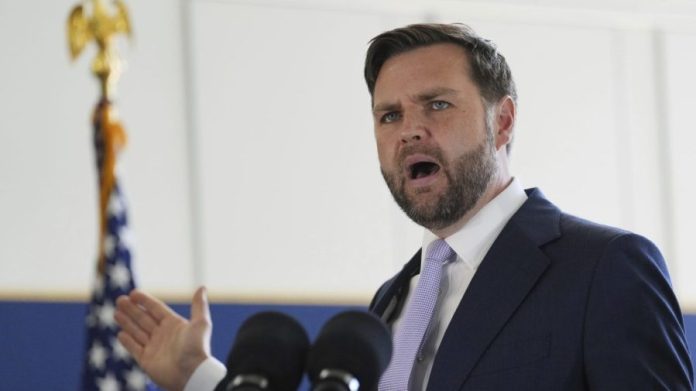
Vice President Vance said the Friday raid on former national security adviser John Bolton’s residence was not retribution for his political commentary critiquing the Trump administration.
“We’re in the very early stages of an ongoing investigation into John Bolton. I will say we’re gonna let that investigation proceed,” Vance said during a clip of his interview with MSNBC’s “Meet the Press.”
“What I can tell you is that, unlike the Biden DOJ and the Biden FBI, our law enforcement agencies are going to be driven by law and not by politics. And so, if we think that Ambassador Bolton has committed a crime, of course, eventually prosecutions will come,” he added.
His full interview with Kristen Welker is expected to air Sunday, with the vice president addressing questions about Bolton’s unexpected probe.
In recent months, Bolton has been a vocal critic of President Trump’s foreign policy dealings, especially in relation to his meetings with Russian President Vladimir Putin, claiming the leader knows the way to “Trump’s heart.”
His regular appearance on cable talk shows has caused some to speculate that the raid at his residence near Washington was motivated by his frequent rebukes to the current administration’s diplomatic efforts.
However, Vance rejected those allegations and said the probe was tied to an investigation linked to classified documents potentially being stored at Bolton’s home. Both Trump and former President Biden, in addition to corresponding administration officials, have been accused of mishandling high-level paperwork in the past.
“We are investigating Ambassador Bolton, but if they ultimately bring a case, it will be because they determine that he has broken the law. We’re going to be careful about that,” he told Welker in reference to potential criminal prosecution from the Department of Justice (DOJ).
“We’re going to be deliberate about that, because we don’t think that we should throw people, even if they disagree with us politically, maybe especially if they disagree with us politically, you shouldn’t throw people willy-nilly in prison,” he added.
“You should let the law drive these determinations, and that’s what we’re doing.”
On Friday, the president said he was unaware of the sting at Bolton’s home and added that he would remain uninvolved in the current investigation.
“I know nothing about it. I just saw it this morning, they did a raid,” Trump told reporters when asked about the search while referring to Bolton as “unpatriotic.”
“I tell [Attorney General Pam Bondi], and I tell the group, I don’t want to know, but you have to do what you have to do. I don’t want to know about it,” Trump continued. “It’s not necessary. I could know about. I could be the one starting it. I’m actually the chief law enforcement officer. But I feel that it’s better this way.”


 Getty Images/ Carlos Barquero